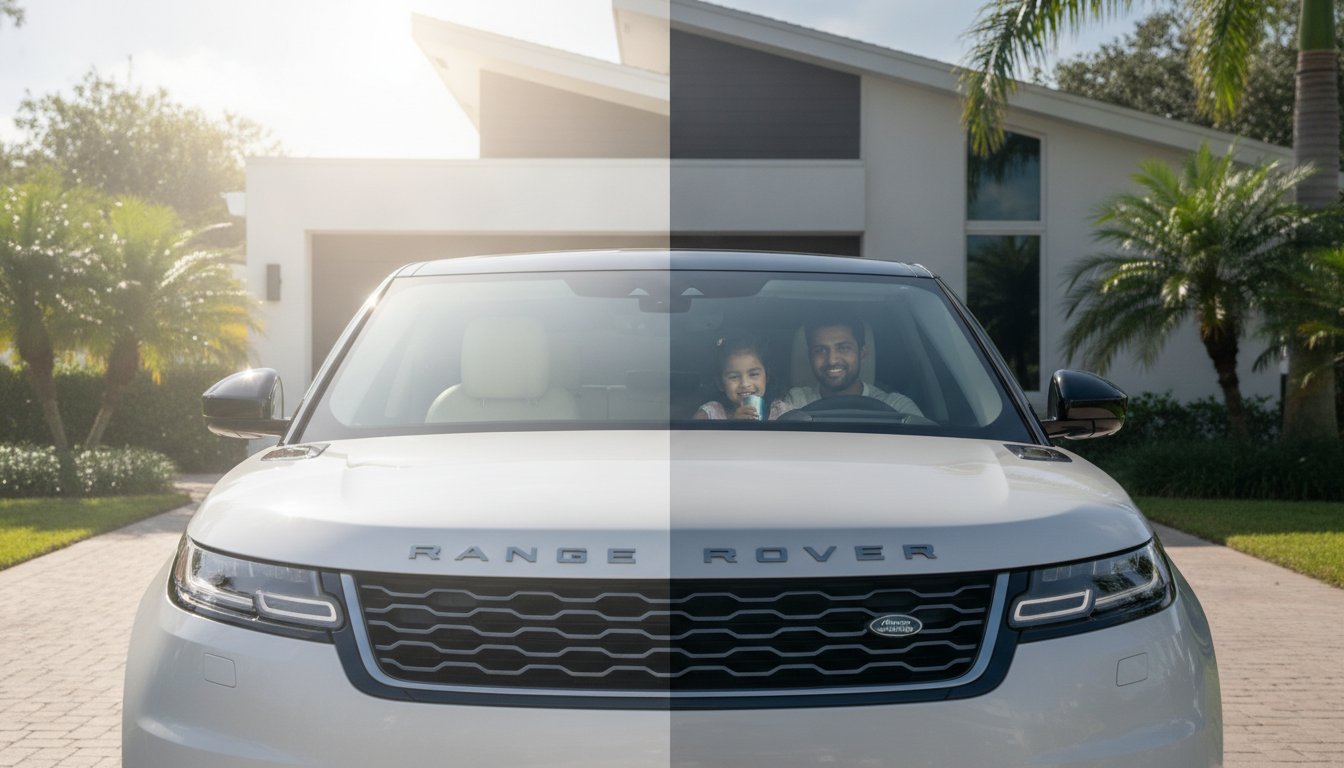
Did you know that the highest quality ceramic window tints can lower your vehicle's interior temperature by as much as 30°F during a peak Florida afternoon? We all know the feeling of stepping into a cabin that feels like a preheated oven or watching your home's cooling costs climb as the summer sun beats down on your windows. It is frustrating to invest in a tint only to realize it isn't doing enough to stop the relentless glare and rising temperatures. You deserve a solution that provides more than just a darker aesthetic.
In this guide, you will discover the specific window film technologies that actually block infrared rays and provide 99% UV protection to keep your interior cool and your investment safe. We will help you identify the best window tint for Florida heat by breaking down the latest 2026 performance data. We also preview the essential differences between carbon and ceramic films while ensuring your choice stays fully compliant with current state laws for visibility and reflectivity. From protecting your upholstery to cutting energy costs, we've gathered the expert insights you need to stay comfortable all year long.
Key Takeaways
- Understand why infrared (IR) light is the true culprit behind South Florida’s extreme heat and why blocking it is essential for real cabin comfort.
- Learn why nano-ceramic technology is widely considered the best window tint for Florida heat due to its ability to reject solar energy without interfering with your GPS or cell signals.
- Compare the trade-offs between budget-friendly dyed films and high-performance options to find the right balance of privacy and protection for your vehicle or property.
- Discover how specialized window films can eliminate stubborn "hot spots" in your home or office, leading to lower cooling costs and a more consistent indoor climate.
- See why professional installation is critical for surviving Florida’s humidity and ensuring your investment remains free of bubbles and peeling for years to come.
The Science of Florida Heat: Why Standard Tint Fails
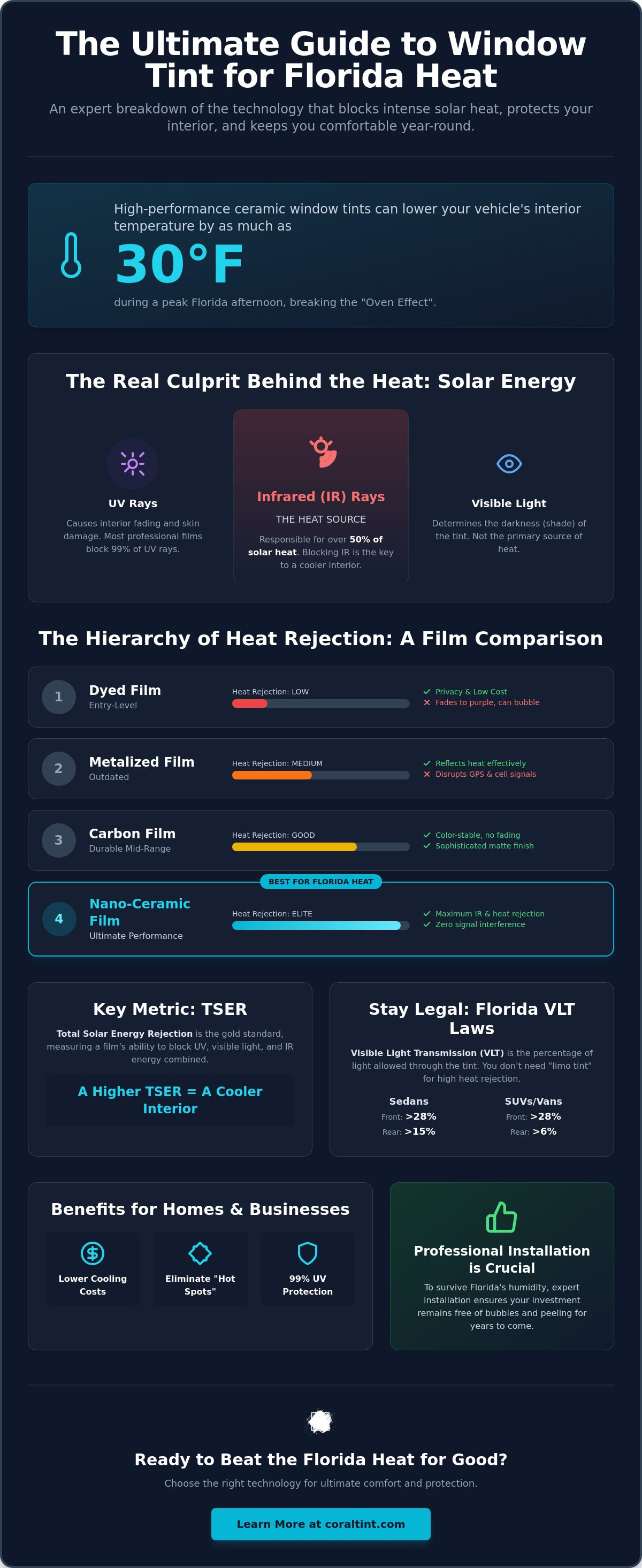
To find the best window tint for Florida heat, you have to look beyond how dark the film is. Solar energy hits your windows in three distinct forms: Ultraviolet (UV) rays, visible light, and near-infrared (IR) radiation. While many people focus on the shade of the tint, it's actually the infrared light that is responsible for over 50% of the solar heat you feel. Standard dyed films often fail because they only address visible light, leaving that intense infrared energy to pass straight through the glass and bake your interior.
This creates what experts call the "Oven Effect." Untreated glass acts as a heat trap; it allows short-wave solar radiation to enter your car or home, where it is absorbed by seats, dashboards, and flooring. These surfaces then radiate that energy back as long-wave heat, which cannot easily escape through the glass. Modern window film technology is designed to break this cycle. To compare products accurately, you should look for the Total Solar Energy Rejection (TSER) rating. TSER is the gold standard metric because it measures the film's ability to block UV, visible light, and IR energy combined. A higher TSER means a significantly cooler environment.
UV Protection vs. Heat Rejection
It's a common misconception that UV protection and heat rejection are the same thing. Almost all professional-grade films offer 99% UV protection, which is essential for preventing interior fading and protecting your skin from South Florida's relentless sun. However, a film can block 99% of UV rays and still let in a massive amount of heat. True climate control comes from IR-blocking layers. Without these specialized components, your air conditioner will struggle to keep up with the radiant heat coming through the windows, even if the glass looks dark.
VLT: Understanding Light Transmission and Legality
Visible Light Transmission (VLT) refers to the percentage of light that passes through the film. In Florida, staying compliant with state laws is vital for safety and avoiding fines. For sedans, front side windows must allow more than 28% of light to pass through, while rear side and back windows must stay above 15%. SUVs and vans have more flexibility, allowing for a darker 6% VLT on rear windows. The good news is that you don't need a "limo tint" to stay cool. The best window tint for Florida heat often uses nano-ceramic particles that provide elite heat rejection even in lighter, legal shades that maintain crystal-clear visibility at night.
Comparing Film Technologies: Which One Beats the Heat?
Choosing the right material is the most important decision you'll make for your property or vehicle. While every film looks similar on the roll, their internal chemistry determines whether you'll actually stay cool or just stay in the dark. To find the best window tint for Florida heat, you need to understand the hierarchy of performance. Dyed films are the entry-level choice; they provide privacy and a sleek look but offer the lowest heat rejection. Metalized films use reflective particles to bounce heat away, while carbon films use stable particles for a matte look and better durability. At the top of the pyramid, ceramic films use advanced nanotechnology to block the vast majority of infrared energy without compromising your view.
The Problem with Metalized Tints in 2026
In 2026, staying connected is a non-negotiable part of daily life. This is exactly why metalized films have fallen out of favor for many South Florida residents. These films contain microscopic layers of aluminum or other metals that can act like a Faraday cage around your cabin or home. They frequently disrupt GPS signals, cellular reception, and even the smart home hubs that control your lighting and security. Beyond the technical headaches, there is also a clear aesthetic shift. Homeowners in coastal communities are moving away from the "shiny" look of the 1990s in favor of high-clarity films that reduce solar heat gain without turning their windows into mirrors.
Carbon Tint: The Durable Mid-Range Solution
Carbon window film represents the ideal middle ground for many of our clients in Boca and Parkland. Unlike dyed films that can turn purple or bubble after a few seasons of intense UV exposure, carbon particles are incredibly color-stable. This material provides a sophisticated matte finish that complements luxury paint jobs and modern architecture perfectly. It offers zero signal interference, making it a safe choice for tech-heavy electric vehicles. While it blocks significantly more heat than dyed options, it still can't quite match the 80% to 98% infrared rejection found in premium ceramics. If you're trying to balance style and performance, you can compare our film options with our expert team to find your perfect match.
While carbon is durable, ceramic remains the undisputed champion for those who want the absolute best window tint for Florida heat. It's the only technology that allows for high light transmission while maintaining extreme temperature control. Nano-ceramic particles are the ultimate weapon against the South Florida sun, providing a level of comfort that other materials simply can't achieve.
Why Ceramic is the Best Window Tint for Florida Heat
Nano-ceramic technology has completely redefined what we expect from window protection. Unlike older technologies that rely on heavy dyes or reflective metals, ceramic films use microscopic particles that are non-conductive and non-metallic. These particles are small enough to allow visible light to pass through while acting as a formidable barrier against heat. This unique composition is why ceramic is widely regarded as the best window tint for Florida heat. It provides a high level of performance that doesn't interfere with your phone signals or the sophisticated sensors found in modern vehicles and smart homes.
The most impressive feature of ceramic film is its unmatched infrared (IR) rejection. While standard films might keep the sun out of your eyes, they often do little to stop the thermal energy that makes your skin sting on a July afternoon. High-performance nano-ceramic films can achieve between 80% and 98% IR rejection. In practical terms, this means the interior of your car or home can feel 10 to 20 degrees cooler compared to untreated glass. As the U.S. Department of Energy explains window films, these products are especially effective in climates with long cooling seasons like ours, where reducing solar heat gain is a year-round priority.
Durability is another area where ceramic outshines the competition. South Florida's extreme humidity and salt air are brutal on inferior materials. Cheap dyed films often bubble, peel, or turn a distracting shade of purple within just a few years because the dyes break down under intense UV exposure. Ceramic particles are inherently stable. They don't degrade over time, ensuring your windows maintain their crystal-clear clarity and sleek appearance for the long haul. This clarity also improves safety by significantly reducing glare during the blinding afternoon "golden hour" on the Sawgrass Expressway or I-95.
The ROI of Ceramic Tint
Investing in ceramic film is a financially sound decision for any property owner. By blocking the majority of solar heat, you significantly reduce the load on your air conditioning system. This leads to lower fuel consumption in your vehicle and reduced monthly utility bills for your home or office. Beyond energy savings, ceramic film acts as a shield for your interior. It prevents leather seats from cracking and keeps expensive hardwood floors from fading. A one-time professional car window tinting service essentially pays for itself through preserved resale value and lower operating costs.
Ceramic Tint for Marine Use
For boaters in South Florida, the stakes are even higher. The sun's intensity is doubled by the reflection off the water, which can quickly overheat a cabin and damage sensitive navigation electronics. Specialized marine window tinting using ceramic technology provides the necessary heat rejection without compromising the optical clarity needed for safe navigation. It allows captains to maintain a clear view of markers and other vessels while keeping the bridge or salon at a comfortable temperature, even in the middle of the Gulf Stream.
Maximizing Heat Rejection for Homes and Businesses
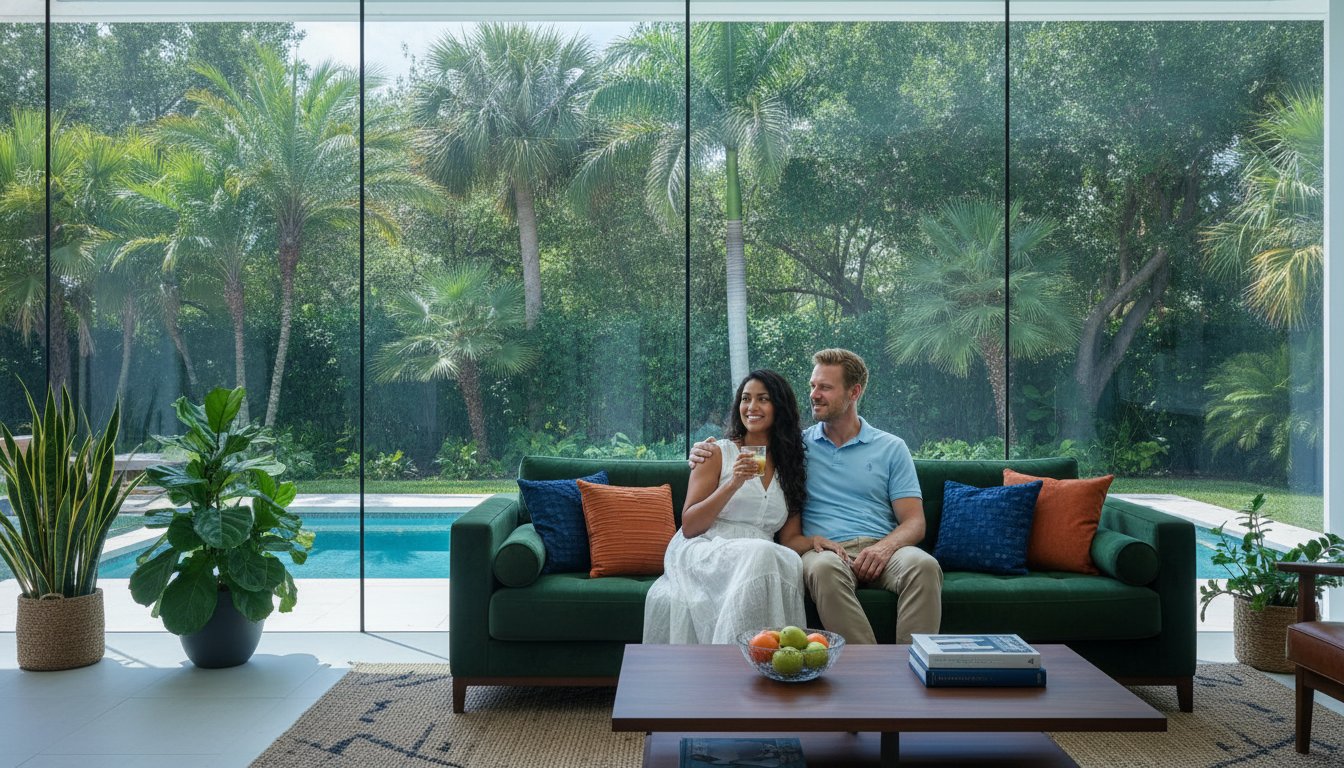
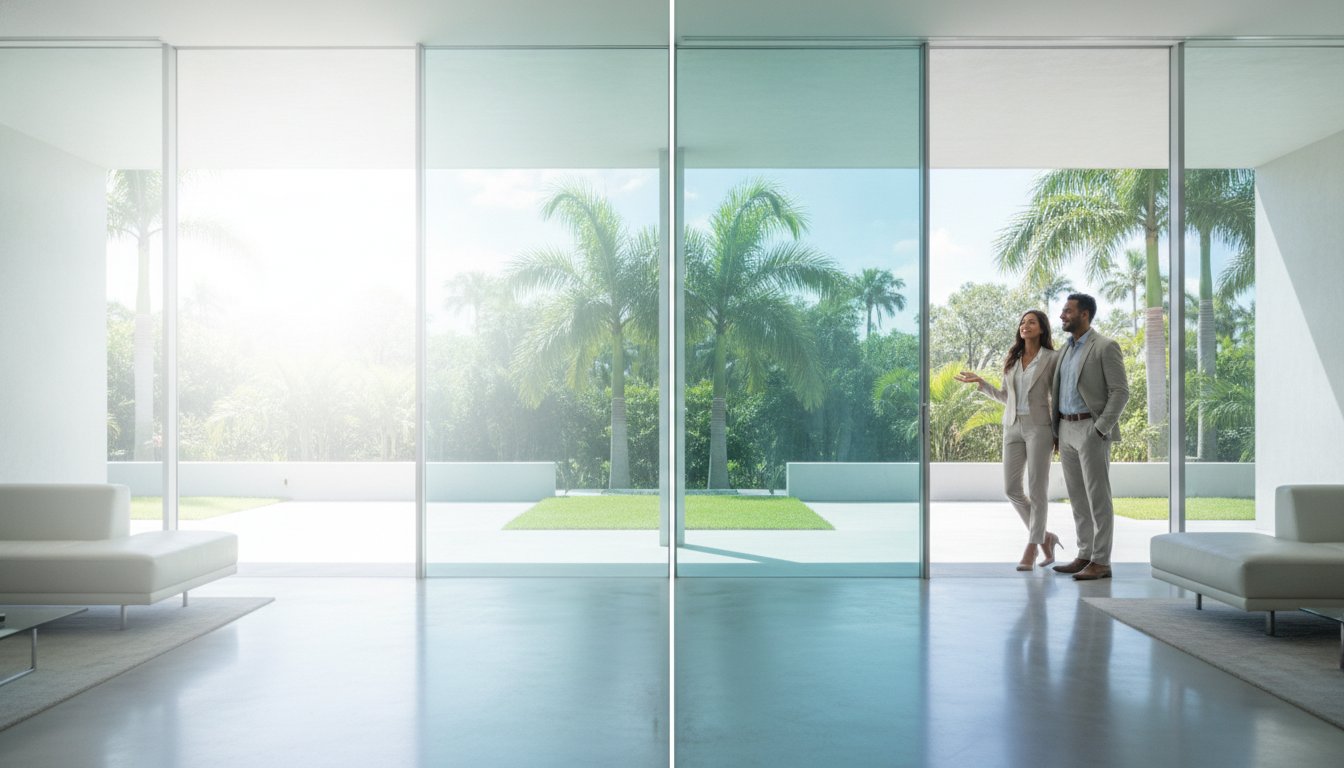
While vehicles get the most attention, your home or office faces the same solar assault every single day. Many Coral Springs homeowners notice that certain rooms stay warm even when the air conditioning is blasting. This is usually due to large, west-facing windows that absorb massive amounts of infrared energy, creating localized "hot spots" that your HVAC system simply can't balance. You shouldn't have to choose between a dark, cave-like room and a hot one. The best window tint for Florida heat allows you to keep your curtains open and enjoy the natural South Florida light without the overwhelming solar gain.
Investing in professional residential window film installation is one of the most effective ways to lower Broward County utility bills. By rejecting up to 80% of solar heat before it ever enters your living space, you can reduce your cooling costs by 20% or more. For many of our neighbors, we also recommend combining heat rejection with security & safety film. This dual-purpose solution provides an essential layer of storm protection by helping to hold shattered glass together during high-wind events or attempted break-ins. If you're ready to cool down your property, schedule your residential or commercial consultation with our local experts today.
Commercial Solutions for Florida Businesses
Large-scale solar control films are a powerful tool for reducing corporate overhead. In glass-heavy office buildings, the heat gain from the afternoon sun can cause employee productivity to plumment as comfort levels drop. Modern ceramic films stabilize indoor temperatures, creating a more consistent and professional environment for both staff and clients. For businesses looking to enhance their branding or add privacy to conference rooms, decorative window film offers a versatile way to combine style with performance. These films provide the high-end look of etched or frosted glass while still contributing to the overall thermal efficiency of the building.
Protecting Your Interior Investment
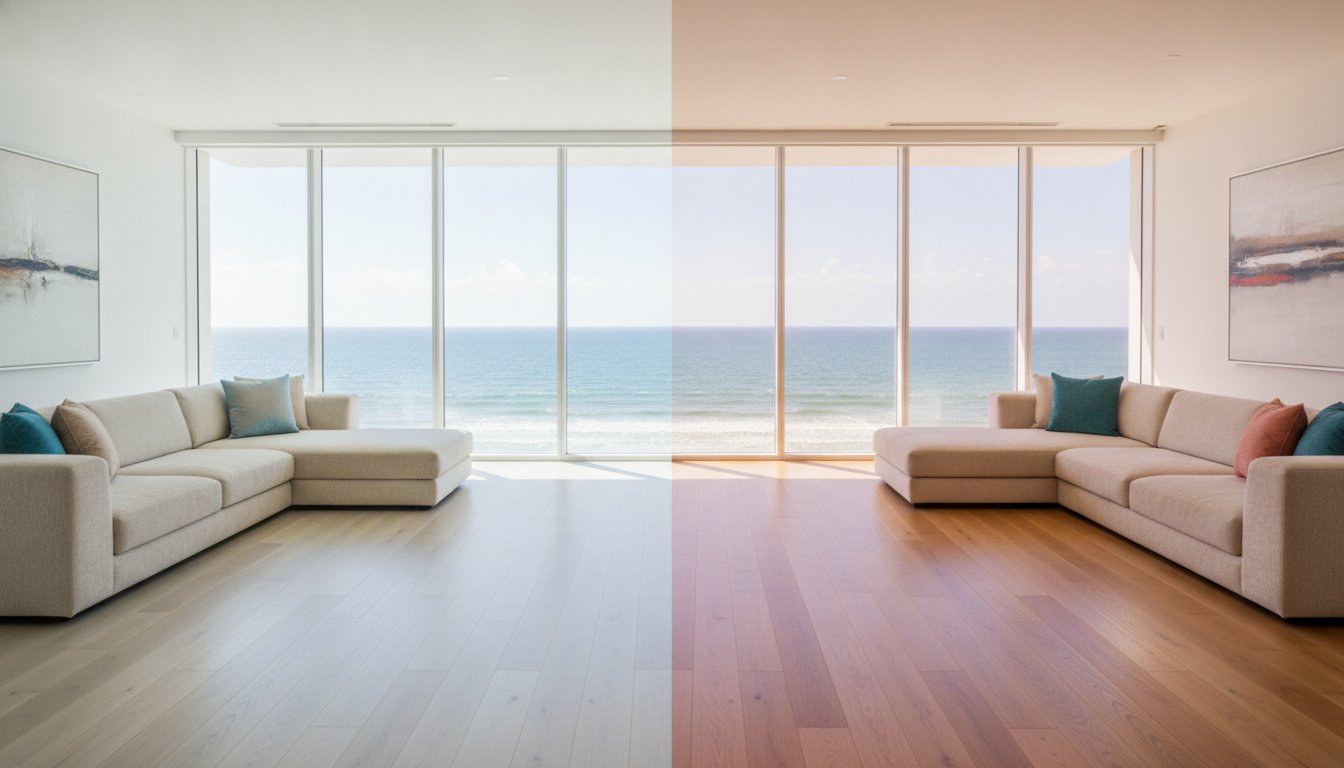
Fading is a silent investment killer that affects everything from expensive hardwood floors to delicate artwork and designer rugs. Florida storefronts are particularly vulnerable, as the constant sun exposure can ruin window displays and inventory in a single season. This is why "Invisible Shield" clear UV films have become so popular; they offer maximum protection without changing the appearance of the glass. 99% UV rejection is the primary defense against interior fading. By blocking the most damaging wavelengths of the solar spectrum, you ensure that your furniture and valuables stay looking new for years to come.
Professional Installation: The Key to Heat Rejection Longevity
Even the highest-rated ceramic film can't perform its job if the application is flawed. Finding the best window tint for Florida heat is only half the battle; the other half is ensuring it's bonded to your glass in a controlled environment. Our state's extreme humidity is a major factor that many DIY enthusiasts and mobile installers overlook. High moisture levels in the air can trap microscopic water pockets behind the film, leading to unsightly bubbling and premature peeling within just a few months. A professional installation ensures the glass is surgically clean and the adhesive cures correctly despite our tropical climate.
Precision is another hallmark of a quality install. We use computer-aided patterns to ensure every piece of film is cut to the exact specifications of your specific make and model. This eliminates the risk of light gaps or jagged edges that often occur with hand-cutting. Equally important is the "clean room" factor. Attempting an outdoor install in South Florida means fighting a losing battle against wind-blown sand, pollen, and debris. By choosing a window tint company near me with a dedicated, climate-controlled facility, you're guaranteeing a finish that's free of the tiny contaminants that ruin optical clarity.
What to Look for in a South Florida Tint Shop
When you're vetting a local shop, look for deep roots in the community. Businesses that have been operating since the 1980s offer a level of stability that "here today, gone tomorrow" shops can't match. It's also vital to verify that they use premium, name-brand ceramic films rather than generic "house" products. A reputable shop will provide a clear manufacturer warranty that protects you against fading or bubbling nationwide, backed by their own local service guarantee for the labor itself. This multi-generational commitment to excellence is what keeps your investment safe for the long haul.
Getting an Accurate Estimate
While it's tempting to look for quick car tint prices near me online, a physical inspection is always superior for home and marine projects. Every piece of glass is different, and factors like existing tint removal or complex window accessibility play a huge role in the final cost. For the most reliable results and a protected investment, you should always speak with a seasoned expert who understands the nuances of the best window tint for Florida heat. Request a professional tint quote from Coral Tint today to start your journey toward a cooler, more comfortable environment.
Take Control of Your Comfort Today
Protecting your property from the relentless South Florida sun requires more than just a dark film. You now understand that blocking infrared energy is the secret to true climate control and that nano-ceramic technology remains the gold standard for performance. By choosing high-TSER films, you aren't just improving your comfort; you're preserving your interior and reducing your energy footprint for years to come. These modern solutions ensure you stay cool without sacrificing the clear views and natural light that make Florida living so beautiful.
Finding the best window tint for Florida heat shouldn't be a guessing game. Since 1987, our family-run business has provided award-winning local service in Coral Springs. As expert ceramic film specialists, we combine decades of craftsmanship with the latest precision technology to ensure your investment is protected. We're here to help you navigate the technical details and find the perfect fit for your vehicle, home, or boat. You can trust our seasoned team to deliver a frictionless experience and results that last.
Get Your Free Heat Rejection Quote at Coral Tint today and start enjoying the view without the heat. We look forward to helping you stay cool all year long.
Frequently Asked Questions
Is ceramic window tint worth the extra cost in Florida?
Yes, ceramic window tint is absolutely worth the investment because it offers the highest level of infrared heat rejection available. While standard films only block visible light, ceramic particles target the thermal energy that makes your car feel like an oven. This results in a cabin that is significantly cooler and reduces the strain on your air conditioning system. Over time, the energy savings and interior protection make it the high-value choice for South Florida residents.
Will window tinting interfere with my GPS or cell phone signal?
Only traditional metalized films will interfere with your electronic signals. Modern nano-ceramic and carbon films are completely non-metallic, meaning they won't disrupt your GPS, cellular reception, or toll transponders. This is a critical factor for 2026 vehicles that rely on high-tech sensors and constant connectivity. Choosing a non-conductive film ensures you stay cool without losing your connection to the world around you.
What is the legal tint limit for cars in Florida in 2026?
For sedans, Florida law requires the front side windows to have a Visible Light Transmission (VLT) of at least 28%. The rear side and back windows must allow more than 15% of light through. SUVs, vans, and trucks have more flexibility, allowing a darker 6% VLT on the rear windows. Windshields can only have non-reflective tint above the manufacturer's AS-1 line. Staying within these limits avoids fines and ensures your vehicle remains street-legal.
Can window film help lower my home electric bill in South Florida?
Professional window film can lower your monthly cooling costs by as much as 20% by blocking solar heat before it enters your home. In South Florida, where air conditioners run nearly year-round, reducing the workload on your HVAC system leads to immediate savings. By eliminating hot spots and stabilizing indoor temperatures, you'll find that your home stays comfortable without having to constantly lower the thermostat during peak afternoon hours.
How long does professional window tinting last in the Florida sun?
High-quality professional films, such as ceramic or carbon options, are designed to last 10 years or longer even under the intense Florida sun. These materials are color-stable and won't turn purple or bubble like cheap dyed alternatives. When installed in a controlled environment by seasoned experts, the bond is incredibly durable. Most premium films also come with a manufacturer warranty that protects against common defects for as long as you own the vehicle.
Does window tint go on the inside or outside of the glass?
Window tint is almost always applied to the interior surface of the glass to protect it from the elements. While our installers may cut and heat-shrink the film on the outside of the window to achieve a perfect fit, the final application happens inside. This placement shields the film from rain, road debris, and car wash brushes, ensuring the best window tint for Florida heat remains pristine and effective for its entire lifespan.
Can I tint my home windows if they are double-paned?
Yes, you can tint double-paned windows, but it requires a specialized film designed for dual-pane glass. Standard films can trap too much heat between the panes, which might lead to seal failure or even glass breakage. Our team uses specific solar control films that reflect heat outward without stressing the window's structure. A professional inspection is essential to ensure we choose a product that is safe and compatible with your specific window type.
How long should I wait to roll down my windows after tinting?
You should wait at least 3 to 5 days before rolling down your windows to allow the adhesive to cure completely. In Florida's high humidity, the drying process can sometimes take a bit longer. It's also normal to see small water bubbles or a slightly hazy appearance immediately after installation; these will disappear as the moisture evaporates. Staying patient during this period ensures that the best window tint for Florida heat stays perfectly aligned and doesn't peel.