Why do many South Florida boaters invest thousands in high-end electronics and custom upholstery only to let the intense sun destroy them both from the inside out? It's a common mistake that leads to cracked dashboards and unbearable cabin temperatures. You likely already know the frustration of squinting through blinding water glare while trying to dock at a crowded marina, or feeling the heat soak into your cabin. At Coral Tint, a family-owned business serving our community since 1995, we recognize that your vessel is a significant investment in a state where the recreational boating industry generates a $31.3 billion annual economic impact. Professional marine window tinting is the most effective way to safeguard that investment.
This guide explains how specialized ceramic films act as a salt-proof shield, blocking 99% of UV rays without interfering with your GPS or VHF signals. You'll discover how to achieve a cooler cockpit and crystal-clear visibility while staying compliant with Florida's 70% light transmission safety laws for windows near the helm. We will preview the latest nano-ceramic technologies and provide the essential facts you need to protect your boat's resale value in the 2026 market.
Key Takeaways
- Learn why non-metallic ceramic films are the gold standard for South Florida boaters who need maximum heat rejection without interfering with GPS or VHF signals.
- Understand the critical role of glare reduction in safe navigation and how to stay compliant with Florida’s specific light transmission regulations for helm windows.
- Discover how professional marine window tinting acts as a specialized shield against saltwater corrosion while preserving your vessel's expensive upholstery and resale value.
- Gain insights into selecting the right film for tempered glass versus plexiglass and why professional installation is vital to prevent bubbling in harsh, salt-heavy environments.
What is Marine Window Tinting and Why Does Your Vessel Need It?
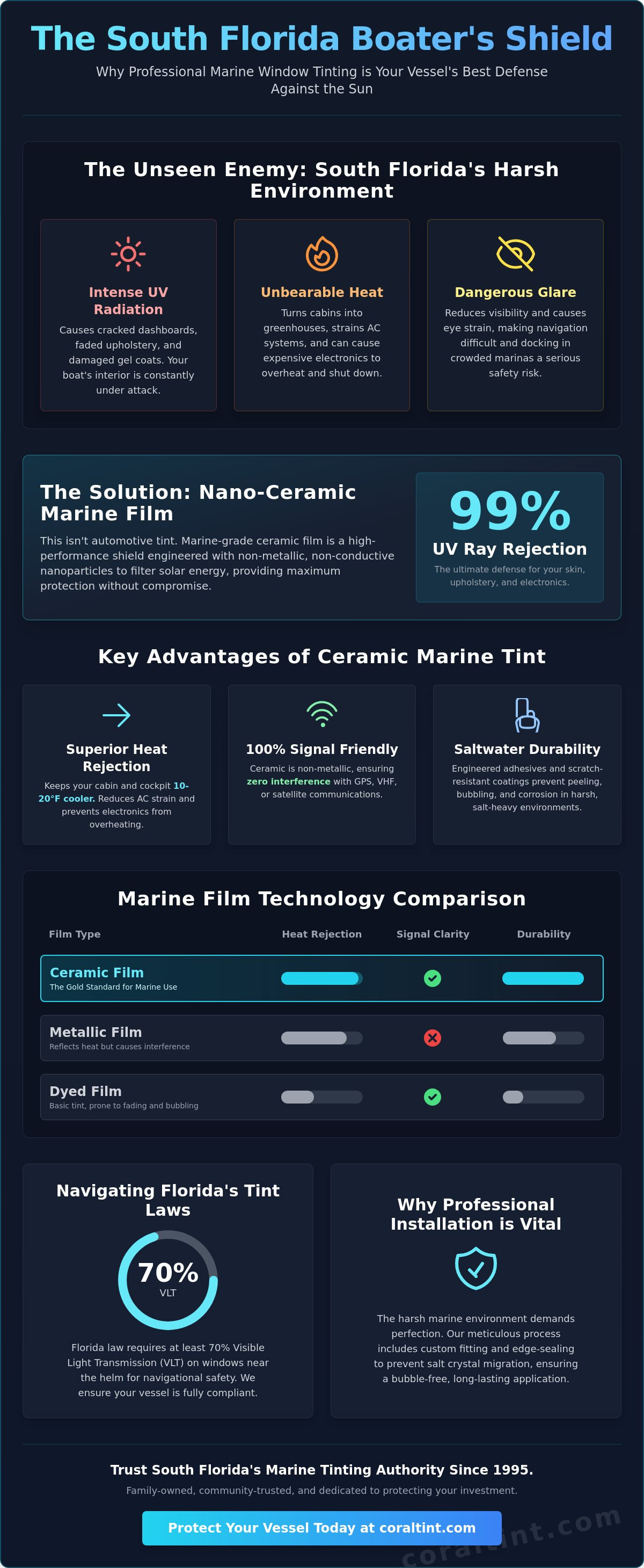
South Florida's boating culture is legendary, but the environment is brutal on your equipment. Marine window tinting isn't just a dark film for privacy; it's a high-performance shield engineered to resist saltwater corrosion while blocking destructive UV and infrared rays. At Coral Tint, we've spent decades helping boaters in Coral Springs and Fort Lauderdale protect their vessels from the unique challenges of the Atlantic. Standard films might look okay on a car, but they quickly fail on the water. True marine-grade films are designed to handle 90% humidity and constant salt spray without bubbling or turning purple.
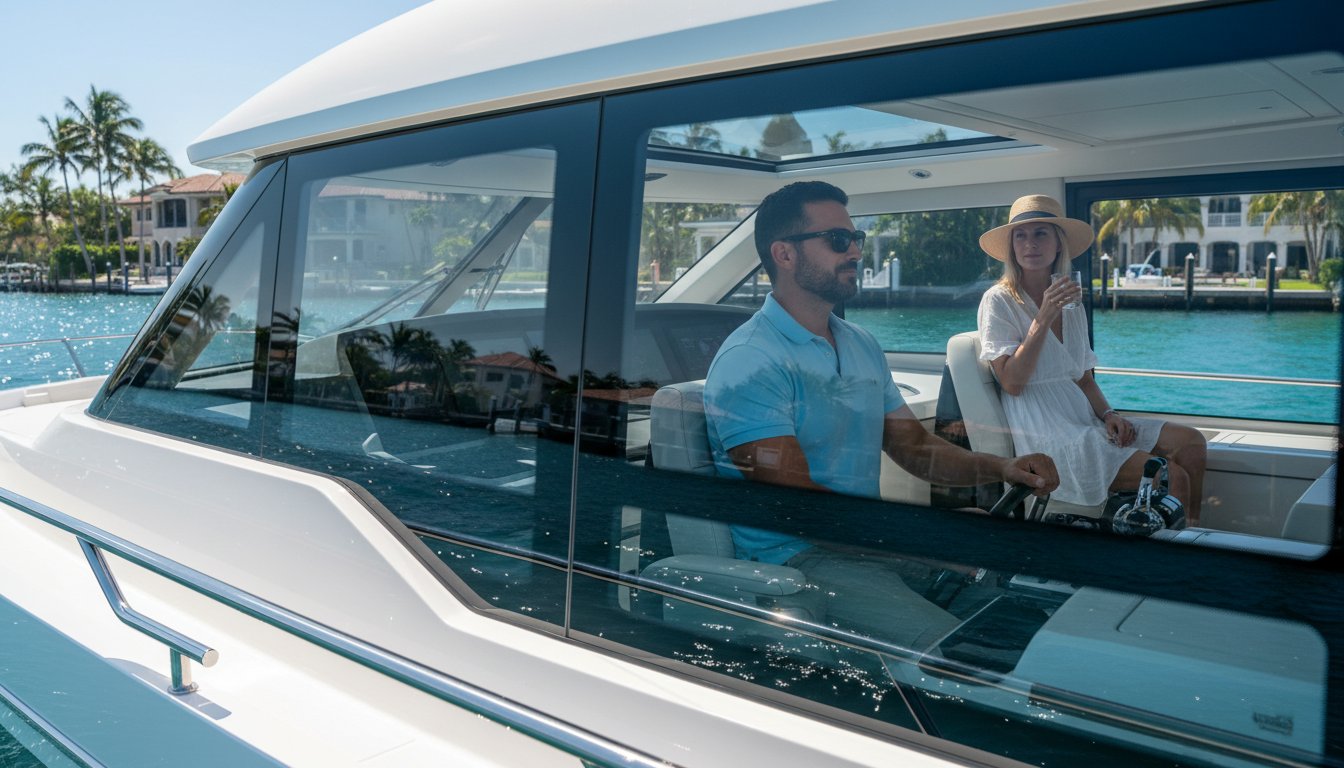
The primary purpose of this technology is three-fold: heat rejection, glare reduction, and interior preservation. When you're out past the Hillsboro Inlet, the sun hits your boat from every angle. Without protection, your cabin becomes a greenhouse. High-quality marine window tinting creates a more comfortable environment for your guests and a safer workspace for the captain. Since 1995, our family-owned business has focused on providing solutions that withstand these harsh conditions, ensuring your "peace of mind" while you're offshore.
The South Florida Sun vs. Your Boat's Interior
The relentless UV rays in the Sunshine State are the primary cause of fading for expensive marine-grade vinyl, teak decking, and delicate gel coats. Beyond aesthetics, the heat is a major factor. Specialized infrared (IR) rejection films can keep cockpits and cabins 10 to 20 degrees cooler than untreated glass. This temperature drop reduces the strain on your AC systems and prevents expensive dash electronics from overheating. Modern multi-function displays are prone to thermal shutdown in the midday sun; a ceramic barrier is their first line of defense.
Marine-Grade vs. Automotive Films
You might wonder why you can't just use automotive tint on a boat. The answer lies in the chemistry. The evolution of Window Film Technology has led to adhesive layers specifically designed for high-moisture environments. Automotive adhesives often break down when exposed to salt air, leading to premature peeling and "fingering" at the edges. Marine applications often require meticulous edge-sealing to prevent salt crystals from migrating behind the film. Additionally, these films feature enhanced scratch-resistant coatings. This is vital because marine windows are frequently cleaned with saltwater or abrasive microfiber cloths that would ruin a standard automotive film in weeks.
- Durability: Engineered for 24/7 exposure to salt and humidity.
- Clarity: Maintains optical precision for safe navigation at night.
- Protection: Blocks 99% of UV rays to prevent skin damage and interior rot.
The Science of Ceramic Marine Film: Heat Rejection Meets Durability
Ceramic nanotechnology has revolutionized how we protect vessels in the Atlantic. Unlike traditional films that rely on dyes or metals, ceramic window films use microscopic, non-conductive particles to filter the sun's energy. This is the gold standard for South Florida boaters because it offers high heat rejection without the "mirror" look of metallic tints. Because these films are non-metallic, they won't interfere with your GPS, VHF radio, or satellite systems. In an environment where communication and navigation are vital for safety, choosing a film that doesn't block your signals is a non-negotiable requirement for any serious captain.
Durability is where ceramic technology truly outshines the competition. Traditional dyed films often turn purple or bubble after just a few seasons of exposure to the intense UV levels in places like Pompano Beach. Ceramic particles are inorganic and stable, meaning they don't oxidize or fade when bombarded by saltwater and sun. This chemical stability ensures your boat looks as professional five years from now as it does the day it leaves our shop. The Energy Efficiency of Window Films also applies to your vessel; by blocking the heat at the glass, you significantly reduce the load on your onboard generators and air conditioning units.
The 'Ceramic Difference' on the Water
Old-school metallic films work by reflecting heat, which can cause blinding reflections for other boaters. Ceramic films work differently by absorbing and dispersing solar energy. IR rejection refers to the film's ability to block heat-carrying infrared light, which lowers cabin temperatures and reduces the fuel consumed by air conditioning systems and generators. This leads to a much more comfortable environment during long days on the water. If you're unsure which VLT is right for your flybridge, our team can help you request a personalized quote to find the perfect match.
UV Protection and Fading Prevention
The sun doesn't just make the cabin hot; it actively destroys your interior. High-quality marine window tinting blocks 99% of harmful UV rays. This acts as an invisible sunscreen for your crew's skin and your boat's custom upholstery. We've seen $20,000 custom interiors ruined by sun rot in less than three years. By installing a ceramic barrier, you preserve the color of your wood trim and the integrity of your marine-grade vinyl. It's a small investment that pays for itself by maintaining your boat's resale value over the long term.
- Navigation Safety: Zero interference with electronic signals or digital charts.
- Heat Control: Rejects up to 80% of infrared heat for a cooler cabin.
- VLT Versatility: Options ranging from clear 70% for helms to 5% for private staterooms.
- Color Stability: Guaranteed not to turn purple or lose its shade in salt air.
Improving Navigational Safety: Glare Reduction and Signal Clarity
Safety on the water starts with visibility. Navigating the busy stretches of the Intracoastal or heading out through the Hillsboro Inlet requires constant focus, yet the blinding glare reflecting off the water's surface can cause significant eye strain and dangerous "white-out" conditions. Professional marine window tinting is a critical safety upgrade that enhances visual contrast, allowing captains to spot markers, floating debris, and other vessels more clearly. Since 1995, our team at Coral Tint has helped South Florida boaters balance protection with performance, ensuring your view remains sharp even during the harshest midday sun.
The "Trusted Local Authority" approach we take means we don't just slap film on glass; we consider how you use your boat. We know that eye fatigue is a major factor in boating accidents, which average about 64 fatalities per year in Florida. By reducing the intensity of the light hitting your eyes, you stay more alert during long trips. This isn't just about comfort; it's about maintaining the split-second reaction times needed when navigating crowded South Florida waterways.
Glare Reduction for Safer Docking and Navigation
During sunrise or sunset cruises, the low angle of the sun creates a hazardous environment for docking and close-quarters maneuvering. High-performance marine films reduce this glare by up to 90%, making it far easier to read digital helm displays and radar screens that often wash out in direct light. For those who navigate at night, choosing a film with at least 70% Visible Light Transmission (VLT) is essential. This specific level of tint meets Florida's safety regulations for helm windows, ensuring you have clear visibility of navigation lights and channel markers after dark while still enjoying substantial heat rejection during the day.
Protecting Your Electronics and Communication
A primary concern for many captains is whether window film will interfere with their GPS, VHF, or AIS signals. Older metallic films can create a "Faraday cage" effect, trapping or bouncing signals and leading to dropped connections or inaccurate position data. Because we specialize in advanced ceramic technology, your communication systems remain 100% functional. These non-conductive nanoparticles allow radio frequencies and satellite signals to pass through the glass without any degradation or interference.
Signal-friendly ceramic film is a non-negotiable requirement for offshore boaters because reliable communication can be the difference between a successful voyage and a life-threatening emergency. By choosing a business voted best by "Our City News" for eight consecutive years, you can be sure your safety equipment will perform exactly as designed. Our precision installation ensures that your high-end electronics are protected from heat-related failure without compromising their ability to keep you connected to the shore.
- Enhanced Contrast: Better definition of waves and distant objects.
- Reduced Fatigue: Less squinting leads to longer, safer days on the water.
- Digital Clarity: Anti-glare properties make LCD screens easier to read.
- Zero Interference: Guaranteed signal transparency for all onboard electronics.
Choosing the Right Tint for Your Vessel: A Practical Guide
Selecting the perfect marine window tinting involves more than just picking a dark shade. You must consider your vessel's specific architecture and the material of the windows themselves. While large motor yachts typically use tempered glass, many center consoles and sportfishers feature acrylic or plexiglass. Standard films can cause "outgassing" on plastic surfaces, which leads to unsightly bubbles and permanent damage. At Coral Tint, we evaluate your glass type first to ensure the adhesive chemistry matches the substrate. Understanding how to film the windows correctly based on these materials is what separates a professional installation from a DIY failure.
Legal compliance is another critical factor for South Florida boaters. Florida maritime regulations require that the windshield and windows immediately next to the helm allow at least 70% of visible light to pass through. This 30% maximum tint limit ensures you maintain a clear view of channel markers and other vessels during night navigation. For staterooms, salons, and other non-navigational areas, you have the freedom to choose much darker shades. This allows you to balance safety at the helm with total privacy in the living quarters.
Tinting for Fishing Boats and Center Consoles
Fishing boats face the most aggressive conditions in the Atlantic. Constant salt spray and frequent high-pressure wash-downs require a film with a rugged, scratch-resistant coating. We focus heavily on the console glass to protect your expensive multi-function displays from thermal shutdown. Reducing the glare off the T-top and the surrounding water surface allows you to track your lines and spot birds more effectively. Our team ensures the film edges are sealed tight, preventing salt crystals from migrating behind the tint during a rough run back from the Bahamas.
Privacy and Luxury for Yachts and Cabin Cruisers
For larger vessels, the goal is often a mix of guest privacy and climate control. With the South Florida marine industry generating a $12.5 billion annual economic impact, these vessels are significant investments that deserve premium protection. High-performance ceramic films reduce the massive load on your marine AC units, allowing the cabin to stay cool even when the sun is directly overhead. We also offer decorative and frosted film options for interior cabin glass and heads, providing a sophisticated look without sacrificing natural light. If you're ready to upgrade your vessel's comfort, you can call or text us today for a professional consultation.
- Material Matching: Specialized films for both tempered glass and acrylic.
- Legal Compliance: Guaranteed 70% VLT for all navigational windows.
- Aesthetic Harmony: Matching film shades across different window sizes for a factory-finish look.
- Heat Management: Significant reduction in cabin temperatures for improved AC efficiency.
Professional Installation at Coral Tint: Your Trusted Local Authority
Experience matters when you're dealing with the corrosive South Florida elements. While some boaters consider DIY window tinting kits, these retail products often fail because they aren't designed for the complex curves of marine glass or the salt-heavy air that characterizes our coast. Since 1995, Coral Tint has been a reliable fixture in the Coral Springs and Boca communities, providing the technical precision required for a seamless experience. Our family-owned status means we take palpable pride in every vessel that enters our shop, ensuring your investment is handled by seasoned experts who understand the local environment.
We utilize state-of-the-art computer cutting systems to ensure a perfect fit for every pane of glass. This technology eliminates the need for hand-cutting on your vessel, protecting your gaskets and trim from accidental damage. It's this dedication to quality that has led us to be voted best by "Our City News" for eight consecutive years. Local boaters trust us for our car window tinting service just as much as our marine applications because they know our standards never waver. Whether it's a center console or a luxury yacht, the result is always a factory-finish look that stands up to the Atlantic spray.
The Coral Tint Installation Process
A flawless finish starts with a meticulous environment. Our installation process begins with a deep decontamination of the glass to remove every trace of salt, oils, and sea spray. We maintain a controlled, dust-free workspace to prevent contaminants from being trapped under the film. During your marine window tinting appointment, our technicians carefully apply the ceramic barrier, ensuring the edges are perfectly aligned for maximum durability. You can relax knowing that we treat your boat with the same care we would our own, prioritizing "peace of mind" and a clean workspace throughout the entire day.
Warranties and Peace of Mind
We believe in building long-term relationships rather than quick transactions. That's why we offer a national lifetime product warranty on our marine films. If you encounter an issue, you won't have to navigate the red tape of a big-box chain; you'll speak directly with our dedicated local team. A family-owned business provides a level of accountability and community gratitude that national franchises simply can't match. As the market shifts toward more used boat inventory in 2026, protecting your vessel's interior is more important than ever for maintaining value. Request a marine tint quote today and ensure your boat is ready for another season in the Florida sun.
- Expert Craftsmanship: Decades of experience with complex marine glass geometries.
- Advanced Technology: Precision computer-cut films for a perfect fit.
- Local Heritage: Proudly serving the South Florida community since 1995.
- Guaranteed Quality: National lifetime warranties for total security.
Secure Your Vessel for the 2026 Boating Season
Choosing the right protection for your boat impacts your comfort, safety, and the long-term value of your investment. Advanced ceramic technology ensures your cabin stays cool without blocking the vital GPS and VHF signals you need for offshore navigation. By reducing water-surface glare, you're not just making the ride more enjoyable. You're actively preventing eye fatigue and improving safety for everyone on board. Professional marine window tinting is the most reliable way to shield your custom upholstery and electronics from the harsh South Florida environment.
At Coral Tint, we've remained a dedicated, family-owned fixture in the community since 1995. Our commitment to excellence has earned us the "Voted Best" title from Our City News for eight consecutive years. We proudly serve boaters in Coral Springs, Parkland, and Boca with national lifetime product warranties that offer true peace of mind. Don't wait for the summer heat to take its toll on your interior. Request Your Free Marine Tint Quote at Coral Tint Today and experience the difference that decades of local expertise can make. We're ready to help you get the most out of your time on the water.
Frequently Asked Questions
Is marine window tinting different from car window tinting?
Yes, marine-grade films are specifically engineered with different adhesive chemistries to withstand constant 90% humidity and salt spray. While automotive film is designed for road conditions, professional marine window tinting uses a thicker scratch-resistant coating to handle the abrasive nature of salt crystals. These specialized films prevent the edge-peeling and bubbling that typically occurs when standard car tint is exposed to the Atlantic environment.
Will window film interfere with my boat's GPS or VHF radio?
Non-metallic ceramic films will not interfere with your electronic navigation or communication systems. Older metallic tints act like a shield that can block up to 95% of radio frequencies, leading to dangerous signal loss. By choosing ceramic technology, you ensure your GPS, AIS, and VHF radio signals remain 100% accurate and reliable while you're offshore.
Can you tint plexiglass or acrylic boat windows?
You can tint these surfaces, but you must use a specialized "blister-free" film designed for plastic substrates. Standard window films will bubble because acrylic and plexiglass outgas over time. We evaluate your window material before installation to ensure the correct adhesive is used, preventing the permanent damage often caused by DIY attempts or inexperienced shops.
How long does marine window film last in a saltwater environment?
A professional installation typically lasts between 5 and 10 years depending on the vessel's exposure and maintenance. Marine-grade films undergo rigorous salt spray testing, often resisting delamination for over 2,500 hours in laboratory conditions. Our national lifetime product warranties provide an extra layer of security, ensuring your investment stays protected against the Florida sun.
What is the best VLT percentage for a boat's windshield?
The legal minimum for a boat's helm or windshield in Florida is 70% Visible Light Transmission. This level of tint provides significant heat rejection while ensuring the captain has a clear view for safe navigation at night. For side windows or staterooms not used for navigation, you can choose darker options like 20% or 35% for increased privacy and comfort.
Does marine window tinting help with fuel efficiency?
It improves fuel efficiency by reducing the load on your marine air conditioning systems and generators. High-performance films can reject up to 60% of total solar energy, which lowers cabin temperatures significantly. This reduction in AC demand can decrease fuel consumption by approximately 3% to 5% during long-range cruising or extended idling at the sandbar.
Can I clean my tinted boat windows with regular glass cleaner?
You should avoid any cleaners containing ammonia, as they will degrade the film's scratch-resistant coating within 12 months. Ammonia causes the film to become brittle and lose its clarity. We recommend using a simple mixture of mild dish soap and fresh water with a clean microfiber cloth to maintain the optical precision of your tint.
How much does professional marine window tinting cost in South Florida?
Costs generally range from $300 to $1,500 based on the size of the vessel and the number of windows. According to 2022 industry data, large individual windshields or curved panes can range from $150 to $300 each. For major yachts with complex glass, the cost can exceed $400 per window due to the precision required for high-altitude or oversized glass panels.