Did you know that making your windows darker isn't actually the most effective way to keep your home cool? Many homeowners assume a deep, "limo-style" tint is the only solution for the South Florida sun, but the real secret to comfort lies in the science of infrared blocking. If you're tired of retreating from east-facing rooms by noon or watching your expensive hardwood floors fade under the relentless glare, you aren't alone. We understand the unique challenges of maintaining a comfortable sanctuary in our community, especially as energy costs and temperatures continue to climb.
By choosing the right heat rejection window film Coral Springs residents can block up to 99% of harmful UV rays and significantly slash monthly cooling expenses without losing their view. It's a professional, long-term way to secure your investment while keeping your interiors bright and welcoming. This 2026 guide explores how modern ceramic technology meets the newest Florida Building Code standards. You'll learn how to maximize your home's energy efficiency, take advantage of federal tax credits, and finally enjoy every room in your house, regardless of which way the windows face.
Key Takeaways
- Understand how advanced multi-layered coatings target infrared radiation to keep your interiors cool without blocking your view.
- Compare ceramic and carbon technologies to see why modern, non-metalized films are the superior choice for South Florida's climate.
- Debunk the "darkness myth" by learning how high-clarity films can reject more heat than traditional dark tints.
- Discover how professional heat rejection window film Coral Springs installations eliminate "hot room" syndrome and lower your monthly energy costs.
- Learn what to look for in a local installation partner to ensure you receive full manufacturer warranty protection and precision results.
What is Heat Rejection Window Film and Why Does Coral Springs Need It?
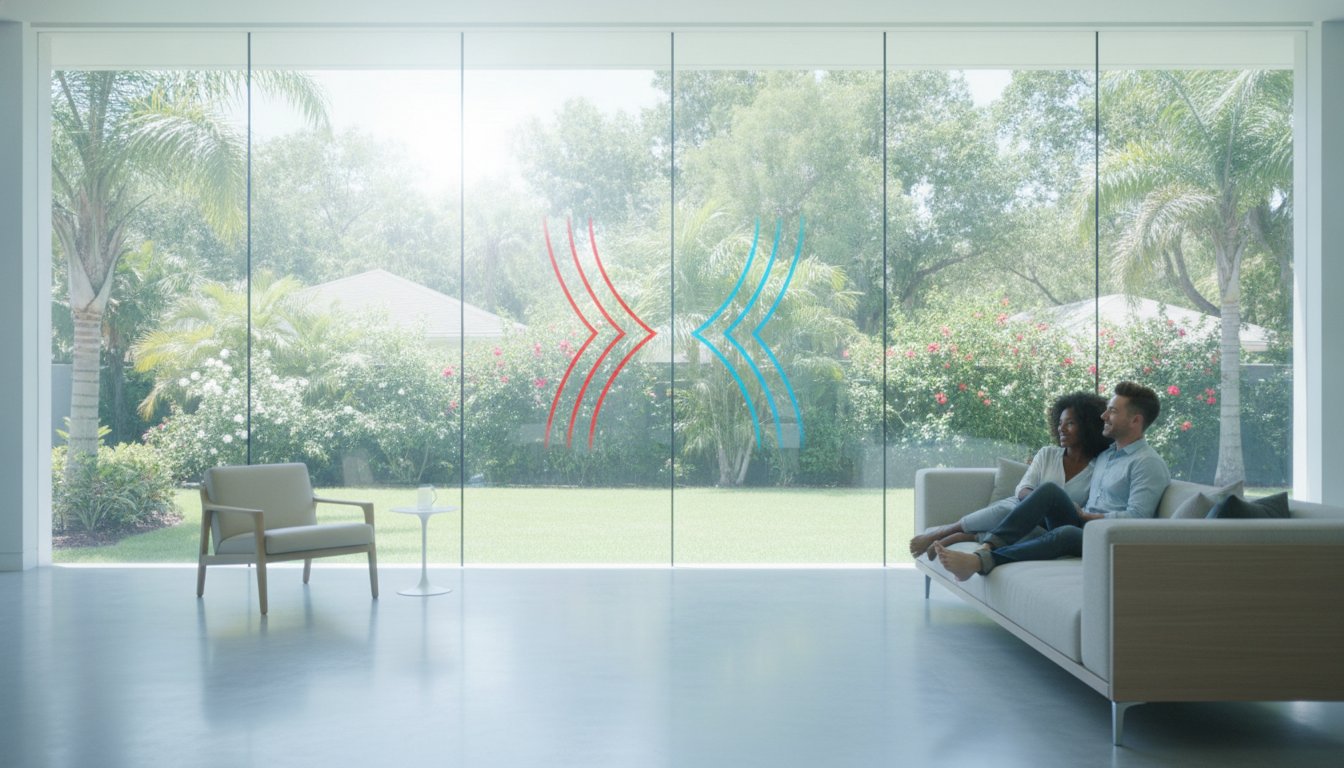
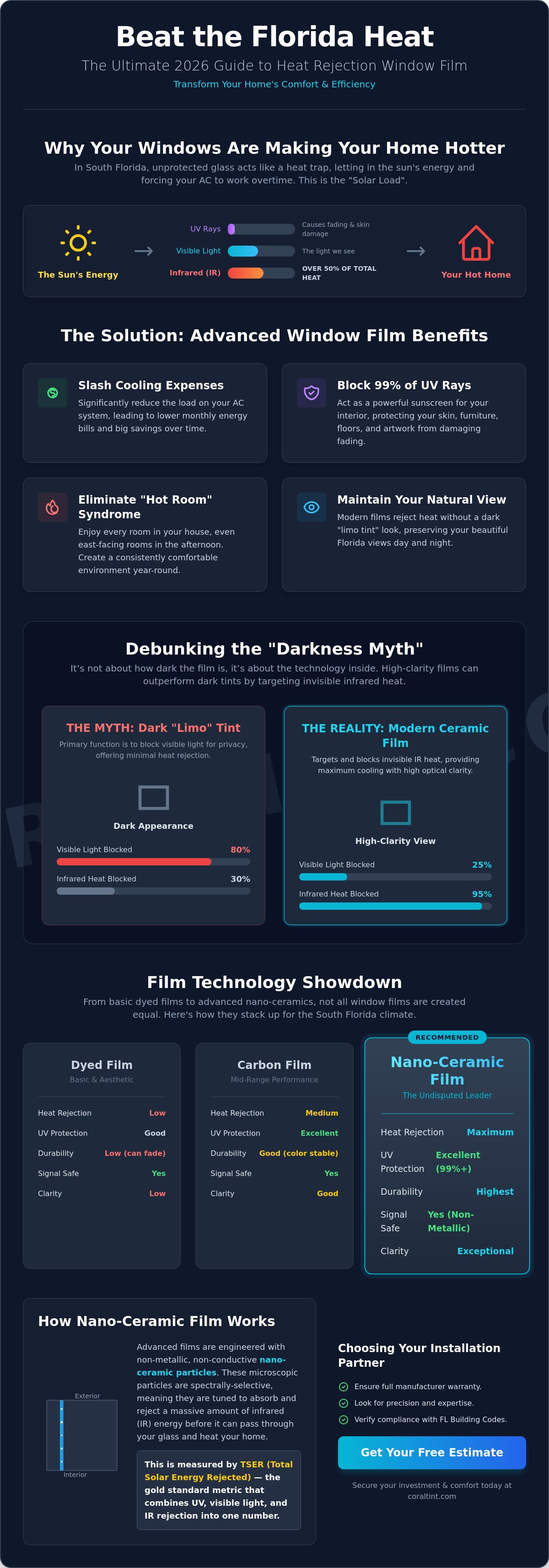
Think of your windows as more than just a way to see outside. In South Florida, they're the front line of your property's defense against the sun. A high-quality window film is a sophisticated, multi-layered polyester coating engineered to manage the solar spectrum. It doesn't just block light; it selectively filters the energy that enters your home or office. While standard glass provides a view, it also acts as a heat trap. It allows solar radiation to pass through freely, where it then becomes trapped as thermal energy, causing your indoor temperatures to spike.
In 2026, Broward County properties face an intense "Solar Load" that's higher than almost anywhere else in the country. This load is the total amount of heat energy your building absorbs from the sun throughout the day. When the sun hits your glass, it delivers three distinct types of energy: visible light, ultraviolet (UV) rays, and near-infrared (IR) radiation. Without specialized protection, your air conditioning system is forced into a constant battle against this incoming heat. Utilizing heat rejection window film Coral Springs residents can effectively "tune" their windows to keep the heat out while letting the beautiful Florida sunshine in.
The Science of Infrared (IR) Blocking
Infrared radiation is the invisible part of the solar spectrum that carries the most heat. In fact, IR represents over 50% of the sun’s total heat energy. Modern spectrally selective films are designed to identify and block these specific wavelengths. This technology allows you to keep your rooms cool without needing to install dark, "blacked-out" tints that ruin your evening views. Total Solar Energy Rejected (TSER) is the gold standard metric for 2026 that measures the combined percentage of UV, visible light, and infrared energy a film successfully blocks.
UV Protection Beyond the Heat
While staying cool is a priority, protecting your health and your property is just as vital. UV radiation is the primary culprit behind skin damage and the fading of your expensive furniture, artwork, and flooring. Our advanced films provide 99% UV rejection, acting as a permanent sunscreen for your home. This level of protection is why the Skin Cancer Foundation recommends window films as a critical tool in preventing sun-related health issues indoors. Choosing a professional residential window film installation means you're investing in long-term safety for your family and the preservation of your interior design.
Ceramic vs. Carbon vs. Dyed: Which Film Rejects the Most Heat?
Choosing the right film isn't just about picking a shade of gray. It's about selecting a technology that can withstand the punishing intensity of the South Florida sun. When looking for heat rejection window film Coral Springs residents often encounter three main categories: dyed, carbon, and ceramic. Each material interacts with solar energy differently, and the climate in Broward County makes some options much better than others.
Traditional dyed films are primarily aesthetic. They use a layer of dye to darken the glass, which can help with glare, but they provide very little actual heat protection. On the other end of the spectrum, older metalized or sputtered films were once the standard for heat rejection. However, these are becoming obsolete in 2026 because the metal layers interfere with modern technology. They can weaken 5G cellular signals and disrupt GPS or satellite radio. Plus, in our humid, salty air, metalized films are prone to corrosion and "edge whitening" over time.
The Rise of Nano-Ceramic Technology
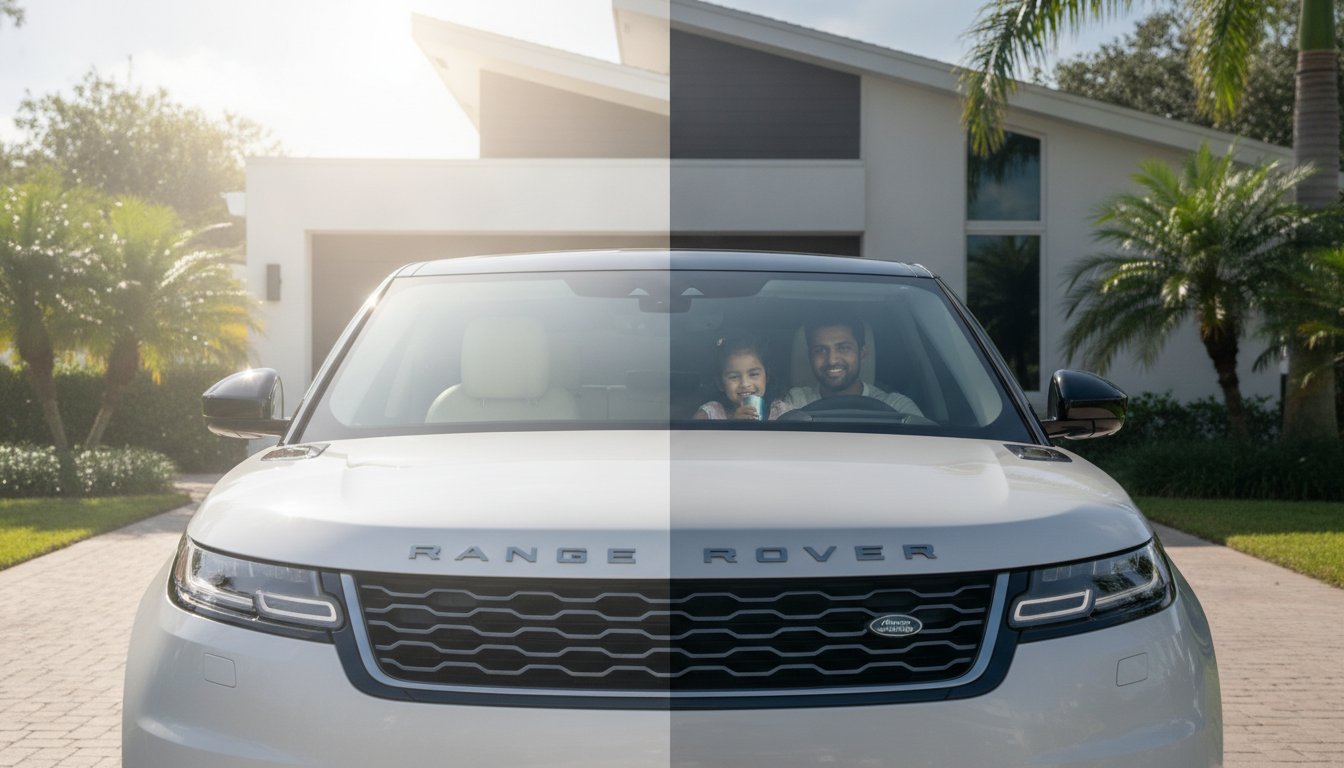
Ceramic film is the undisputed leader for high-performance heat rejection today. It uses advanced nano-particles that are both non-metallic and non-conductive. These particles are specifically engineered to absorb a massive amount of infrared energy before it ever enters your space. This technology is particularly vital for a car window tinting service, as it ensures your vehicle's electronics and safety sensors function perfectly. According to the U.S. Department of Energy, Energy Efficient Window Coverings like ceramic films are one of the smartest ways to reduce your carbon footprint while staying comfortable. Because ceramic is an inorganic material, it won't oxidize or change color, even after years of exposure to coastal Florida's elements.
Carbon Films: The Mid-Tier Alternative
Carbon films offer a reliable middle ground for those who want performance without the top-tier price tag. These films use carbon particles to block heat, resulting in a beautiful matte finish that's highly resistant to fading. While they don't quite match the extreme infrared rejection of ceramic, they're far superior to dyed options. Carbon is a great choice for budget-conscious property owners who still want a signal-friendly solution that keeps their rooms significantly cooler. If you're unsure which material fits your specific needs, talking to a trusted local tinting expert can help you find the right balance of performance and value.
The "Darkness Myth": Why Darker Tint Doesn’t Always Mean More Heat Rejection
One of the most frequent questions we hear from local property owners is how dark a window needs to be to actually stop the heat. It's a common belief that the darker the glass, the cooler the room. This "darkness myth" often leads people to choose films that are too dim for their needs or, in some cases, legally non-compliant. In reality, the shade of the film is largely an aesthetic choice. High-performance heat rejection window film Coral Springs residents rely on today uses advanced technology to block heat without needing to look like a limousine window.
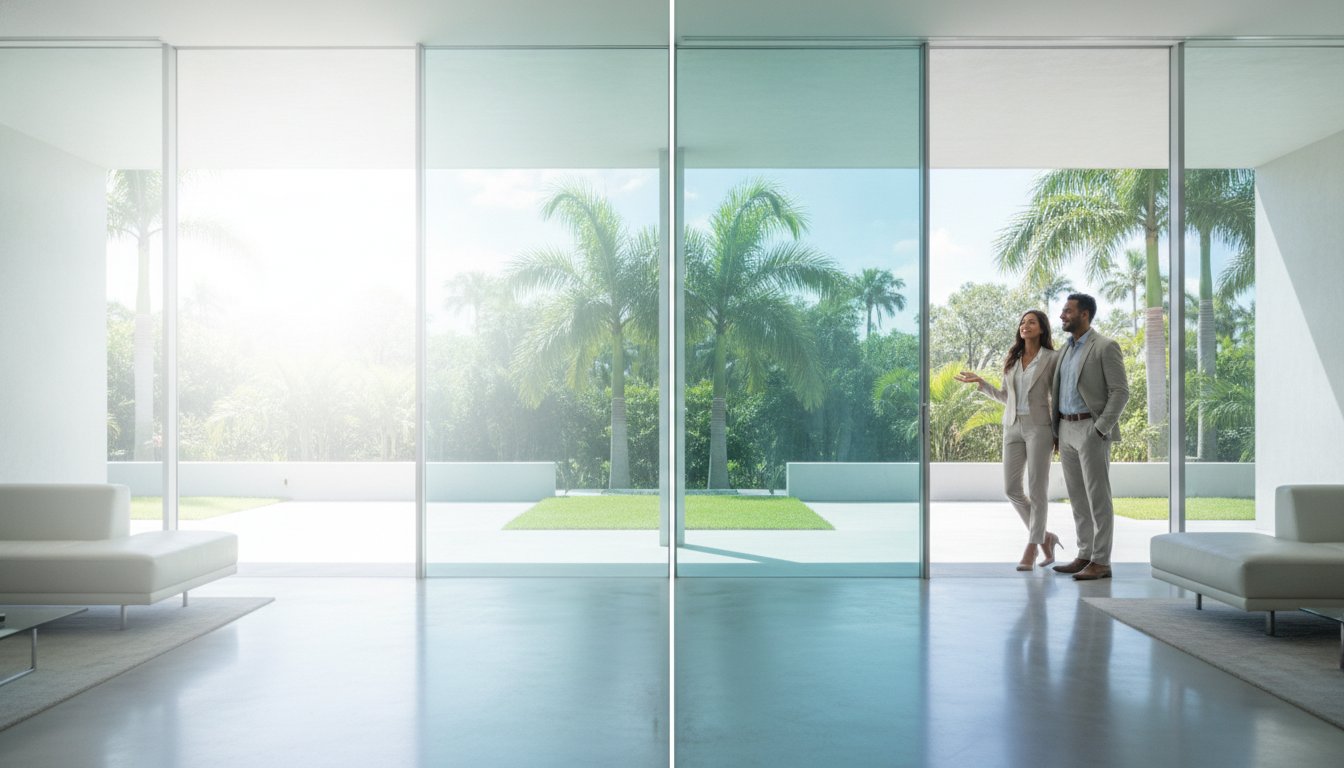
To truly understand how this works, you have to look at how the National Fenestration Rating Council evaluates window products. Two main metrics define a film's performance: Visible Light Transmission (VLT) and Total Solar Energy Rejected (TSER). VLT tells you how much light passes through the glass, which dictates the level of privacy and the "tinted" look. TSER is the actual measure of how much total solar energy is blocked. You can easily find nearly clear films that outperform cheap, dark films because they are engineered to target the invisible infrared spectrum rather than just blocking visible light.
VLT vs. TSER: Understanding the Specs
Think of VLT as a scale where 5% is almost completely black and 70% is nearly invisible. If you're using an entry-level dyed film, you might need that 5% darkness to feel any relief at all. However, a premium nano-ceramic film at 70% VLT can block significantly more heat than a 5% dyed film. This is because the ceramic particles are doing the heavy lifting by absorbing infrared energy. While VLT affects your privacy and glare control, TSER is the number that actually dictates your physical comfort and monthly energy savings.
Staying Legal in Coral Springs
Safety and compliance are just as important as comfort. Florida Statute 316.2953 is very specific about automotive standards to ensure drivers have adequate visibility for safe operation. For sedans, the front side windows must allow more than 28% of light to pass through. Rear windows on sedans are limited to 15% VLT, while SUVs and vans have more flexibility, allowing as little as 6% on the rear glass. Choosing a lighter, high-tech film often provides much better night-time visibility and safety without sacrificing any cooling power. If you're curious about how these different technology levels affect your investment, reviewing car tint prices near me can help you understand the relationship between material quality and long-term performance.
Practical Applications: Heat Rejection for Coral Springs Homes and Offices
Many families in our community live in beautiful ranch-style homes or multi-story properties where one specific room always feels like an oven. This is often called "Hot Room" syndrome. It happens when specific areas of your house receive more direct solar exposure than your HVAC system can handle. By installing heat rejection window film Coral Springs property owners can finally reclaim these spaces. These films act as a shield, evening out temperatures across the entire building so every room remains usable throughout the day.
Choosing the right film depends heavily on which way your windows face. The sun's path across Broward County creates different challenges for different rooms. Use this quick checklist to evaluate your needs:
- East-Facing Windows: These require high IR rejection to stop intense morning heat spikes that wake you up too early.
- West-Facing Windows: These need the maximum TSER rating to combat the brutal 3 PM to 6 PM solar gain that often makes living rooms unbearable.
- Large Picture Windows: Common in areas like Parkland, these should be treated with high-clarity ceramic films to protect expensive flooring without losing the view.
- Sliding Glass Doors: These are the biggest "heat leaks" in Florida homes and benefit most from spectrally selective technology.
Many of our clients choose to pair these thermal benefits with security & safety film. This combination provides both climate comfort and a robust layer of protection against impact or forced entry. It's a comprehensive way to secure your investment while making it more efficient.
Residential Energy Efficiency
The primary goal for most homeowners is "AC relief." In the peak of a Florida summer, your air conditioning unit often runs 24/7 just to keep up. Heat rejection technology reduces the workload on your compressor, which can extend the life of your expensive HVAC system. Beyond the savings, there is an aesthetic advantage. Modern films provide a uniform, polished look to your home's exterior, hiding the mismatched appearance of different blinds or curtains from the street. It’s a clean, professional upgrade that adds immediate curb value.
Commercial ROI and Productivity
For local businesses, the return on investment is often measured in months rather than years. In an office environment, heat rejection film eliminates the distracting glare on computer screens that causes eye strain and reduces employee productivity. Retail storefronts also see a rapid ROI through significantly lower cooling costs and the protection of window-displayed inventory from UV damage. A consistently tinted facade gives your business a modern, established appearance that signals quality to every passing customer. If you’re ready to see how these solutions fit your specific property, contact our local experts for a professional assessment.
Choosing the Best Heat Rejection Film Partner in Coral Springs
Selecting the right technology for your property is only half the battle. Even the most advanced heat rejection window film Coral Springs has to offer will fail to meet its potential if it isn't applied with technical precision. Professional installation is mandatory because the performance of ceramic and carbon films relies on a perfect, contaminant-free bond with the glass. DIY kits often lead to unsightly bubbling, peeling, and edge lifting within months due to the intense Florida humidity. When you work with a seasoned expert, you're not just buying film; you're securing a guarantee that the product will perform as advertised for years to come.
Manufacturer warranties are your ultimate safety net in our tropical climate. In South Florida, the combination of high UV indices and salt-rich air can be brutal on inferior window treatments. A professional partner provides access to robust residential warranties that cover bubbling, cracking, or color change. This level of security simply isn't available with off-the-shelf products. It's essential to partner with a company that has a proven track record of honoring these commitments. Getting an accurate tint quote is the first step toward ensuring your investment is protected by these long-term safeguards.
The Coral Tint Difference Since 1987
Our family-owned business has been a stable and reliable fixture in Broward County for 39 years. Since 1987, we've built a reputation based on expert craftsmanship and deep community roots. This multi-generational experience means we've seen every type of architectural challenge Coral Springs has to offer, from classic Florida ranches to modern commercial facades. We take immense pride in our long-standing history and the local awards that validate our commitment to excellence. While we utilize the latest industry technology, our heart remains in providing the personalized, humble service that only a local authority can offer. We believe in building long-term relationships over quick transactions, ensuring you feel confident and safe throughout the entire process.
Next Steps for a Cooler Interior
Ready to transform your living or working environment? The process is designed to be completely frictionless. We recommend a professional consultation where we can measure your glass and assess the specific solar load of your property. This ensures you get a solution tailored to your specific window orientation and energy goals. Whether you're looking to protect your home's interior or improve office productivity, our team is here to guide you through the selection process with transparency and care. Contact Coral Tint for your heat rejection assessment today and discover why your neighbors have trusted us for nearly four decades. We look forward to helping you stay cool, comfortable, and protected.
Secure Your Comfort and Protect Your Investment
Modern window technology has moved far beyond simple aesthetics. By choosing high-performance heat rejection window film Coral Springs property owners can finally solve the heat issues we've discussed while significantly reducing their monthly cooling costs. We've seen how ceramic and carbon films provide superior infrared blocking without the need for dark, obstructive tints. This allows you to enjoy the beautiful Florida sunlight without the damaging UV rays or the spike in temperatures that often follows.
Since 1987, our family has been proud to serve Broward County as a trusted local authority. We specialize in the precision installation of advanced ceramic and solar films, ensuring every project meets our rigorous standards for excellence. Every professional installation is backed by a comprehensive manufacturer warranty, giving you the peace of mind that your home or vehicle is protected for the long term. It's time to stop fighting your air conditioner and start enjoying a more efficient, comfortable interior.
Get Your Free Heat Rejection Assessment and Tint Quote Today
We look forward to helping you create a cooler, safer environment for your family or business. Let's make your space a sanctuary from the South Florida heat.
Frequently Asked Questions
Does heat rejection window film actually lower my electric bill?
Yes, it reduces the amount of solar heat entering your property, which directly lowers the load on your HVAC system. When your air conditioner doesn't have to work as hard to maintain a set temperature, you'll see a noticeable decrease in your monthly energy consumption. This is especially true for homes with large glass exposures that currently act as heat traps during the peak Florida summer.
Can I get heat rejection film that is completely clear?
Yes, modern technology allows for virtually clear films that offer significant protection. Spectrally selective ceramic films can block over 50% of total solar energy while remaining nearly invisible on the glass. This is an ideal solution for storefronts or homeowners who want to maintain their natural views and exterior aesthetics while utilizing heat rejection window film Coral Springs technology.
How long does heat rejection window film last in the Florida sun?
A professionally installed, high-quality film typically lasts between 10 and 15 years, even under the intense South Florida sun. Choosing a premium ceramic or carbon material ensures the film won't purple, bubble, or peel over time. Our manufacturer warranties provide long-term security, protecting your investment against the unique environmental challenges found in Broward County.
Will heat rejection film stop my wood floors from fading?
While no product can stop fading entirely, window film is the most effective defense available. Fading is caused by a combination of UV rays, solar heat, and visible light. By blocking 99% of UV radiation and a significant portion of infrared heat, you can drastically slow down the damage to your hardwood floors, rugs, and expensive furniture.
Is ceramic window film worth the extra cost over standard tint?
Yes, ceramic film is the superior choice for both performance and longevity. Unlike standard dyed tints, ceramic doesn't contain metals that interfere with cellular or GPS signals. It offers much higher heat rejection for the same level of darkness, meaning you get a cooler interior without needing to compromise on visibility or night-time safety.
Can heat rejection film be applied to dual-pane windows?
Yes, but it requires the correct type of film to ensure safety. Applying the wrong film to dual-pane glass can cause heat to become trapped between the panes, potentially leading to seal failure or glass breakage. We perform a detailed assessment of your glass type to recommend a safe film that provides maximum cooling without risking the integrity of your windows.
Does window film help with glare on computer and TV screens?
Yes, it significantly improves visibility by reducing the amount of harsh visible light that bounces off your screens. This helps eliminate eye strain in office environments and makes your living room more comfortable for afternoon movie sessions. You can choose a film that balances glare reduction with your desired level of natural brightness.
What is the best time of year to install window film in Coral Springs?
You can install window film at any time, but many residents prefer to schedule their installation in the early spring. By completing the project before the most intense summer heat arrives, you'll maximize your energy savings from day one. Because our climate is warm year-round, the benefits of reduced solar load are immediate regardless of the month you choose.