blog
Best Window Film for Glare Reduction: 2026 Guide
Last Updated: October 23, 2026
Quick Summary
The best window film for glare reduction absorbs or reflects excess light while letting natural light through, with visible light transmission (VLT) ratings between 50% and 70% working well for most residential spaces. Match the film type and VLT to your window direction and sun exposure: north-facing windows need minimal coverage, while south- and west-facing windows benefit from more aggressive films.
- Tinted films cut screen glare by up to 80% but darken interiors, while transparent films preserve views with modest glare reduction.
- A 70% VLT film provides subtle glare reduction for north-facing rooms, while 50% VLT offers moderate darkness with noticeable glare control.
- Double-pane and low-E glass require films rated for those substrates to avoid thermal stress and seal failure.
- Quality adhesive films last 10-15 years with professional installation, while static-cling films typically last only a few years.
- Start with windows causing the most glare rather than covering all windows, which can unintentionally dim your workspace.
Table of Contents
- How Window Film Reduces Glare While Preserving Natural Light
- Types of Glare-Control Film: Tinted, Frosted, and Transparent Options
- Window Film Visible Light Transmission: Finding the Right Balance
- Window Film for Computer Screen Glare in Home Offices
- Reflective vs. Neutral Window Film for Storefronts
- Commercial Window Film for Glare Reduction and Energy Efficiency
- Installation, Durability, and Removal Considerations
- Choosing the Right Film for Your Space
- Frequently Asked Questions
How Window Film Reduces Glare While Preserving Natural Light
The best window film for glare reduction absorbs or reflects excess light while letting natural light through, avoiding the cave-like feeling many homeowners fear.

When sunlight hits untreated glass, harsh glare bounces into your space. Glare reduction film intercepts that light, absorbing or reflecting excess energy before it becomes a problem.
Research on window films reducing cooling loads and glare from Lawrence Berkeley National Laboratory has examined how different films perform at managing daylight glare while maintaining the benefits of natural light.
The key is the right visible light transmission (VLT) rating: 70% VLT lets most light through with subtle glare reduction, while 50% VLT provides moderate darkness with noticeable glare control.
Types of Glare-Control Film: Tinted, Frosted, and Transparent Options
Tinted, frosted, and transparent films handle glare differently, so understanding the trade-offs matters.
Tinted Film for Glare and Heat Rejection
Tinted film absorbs visible light and infrared energy, reducing glare and solar heat at once. It darkens windows and interior, working well where you prioritize comfort over maximum daylight.
Tinted films cut screen glare on televisions and monitors by reducing overall light intensity, and they add daytime privacy. The trade-off is reduced outdoor visibility and a darker interior.
According to American Window Film's 2026 guide on heat-blocking films, dual-reflective films can cut visual glare by up to 80%, making them highly effective for spaces with severe sun exposure.
Frosted and Opaque Films for Maximum Privacy
Frosted films create a sandblasted look that blocks visibility while letting diffused light through, eliminating glare by scattering light. They suit bathrooms, bedrooms, or offices where privacy matters more than views.
Opaque films block nearly all light transmission. They're rarely used for glare control alone but work well for security or complete light blocking in media rooms.
Transparent and Low-Reflective Options
Transparent glare-control films maintain your outdoor view while reducing glare, using advanced coatings that absorb excess light without darkening the glass. Low-reflective films minimize indoor reflection at night so windows don't become mirrors.
Transparent options are best for living rooms, kitchens, and spaces where maintaining a connection to the outdoors matters. They provide modest glare reduction compared to tinted films but preserve the natural, open feeling of your space.
Window Film Visible Light Transmission: Finding the Right Balance
Visible light transmission (VLT) is the percentage of visible light that passes through the film: a 70% VLT film lets roughly 70% through, a 30% VLT film about 30%. VLT is the most useful number for predicting how a film will feel, but pair it with the glare-reduction rating and solar heat rejection to compare measurable performance.
Reading the Three Numbers Together
Spec sheets typically list visible light transmission (VLT), visible light reflection (VLR), and solar heat gain coefficient (SHGC) or total solar energy rejected (TSER).
A practical rule: perceived glare is driven less by raw VLT than by the contrast between the bright window and darker surfaces. Dropping VLT from 70% to 50% removes a noticeable share of that contrast without dimming the room; below 35% starts to change how the room reads on an overcast day.
| VLT Range | Light Transmission | Typical Glare Reduction | Best For |
|---|---|---|---|
| 70%+ | Very light, subtle | Minimal | North-facing rooms, overcast climates |
| 50-70% | Moderate | Moderate | Mixed sun exposure, living rooms |
| 35-50% | Noticeably darker | Strong | South- and west-facing rooms, home offices |
| Below 35% | Very dark | Maximum | Media rooms, privacy-focused spaces |
Match VLT to Room Orientation and Sun Angle
The same VLT performs differently depending on window direction and sun angle.
- North-facing windows receive indirect, diffuse light most of the day. A 70% VLT film is usually enough to take the edge off without darkening the room.
- East-facing windows catch intense, low-angle morning sun. Because the sun is low, it reaches deep into the room and can hit screens directly. A 50-60% VLT film with moderate VLR handles morning glare without over-darkening the space for the rest of the day.
- South-facing windows get high, consistent sun through midday. The angle is steep, so glare is strong but concentrated near the window. A 50% VLT film is a common starting point; add a lower-VLT film only on the windows that actually produce screen glare.
Time of day matters as much as direction: a room comfortable at noon can be unusable at 4 p.m. Note when glare actually bothers you, morning coffee, afternoon work, evening television, and pick VLT for that window of time.
The Real Trade-Off
Lower VLT means more glare control but a darker interior and reduced visibility; higher VLT preserves daylight and views but reduces less glare. Most residential spaces land between 50% and 70% VLT, while rooms with severe afternoon sun often land between 35% and 50%. Compare VLT, VLR, and TSER side by side on the spec sheet to compare brands reliably.
Window Film for Computer Screen Glare in Home Offices
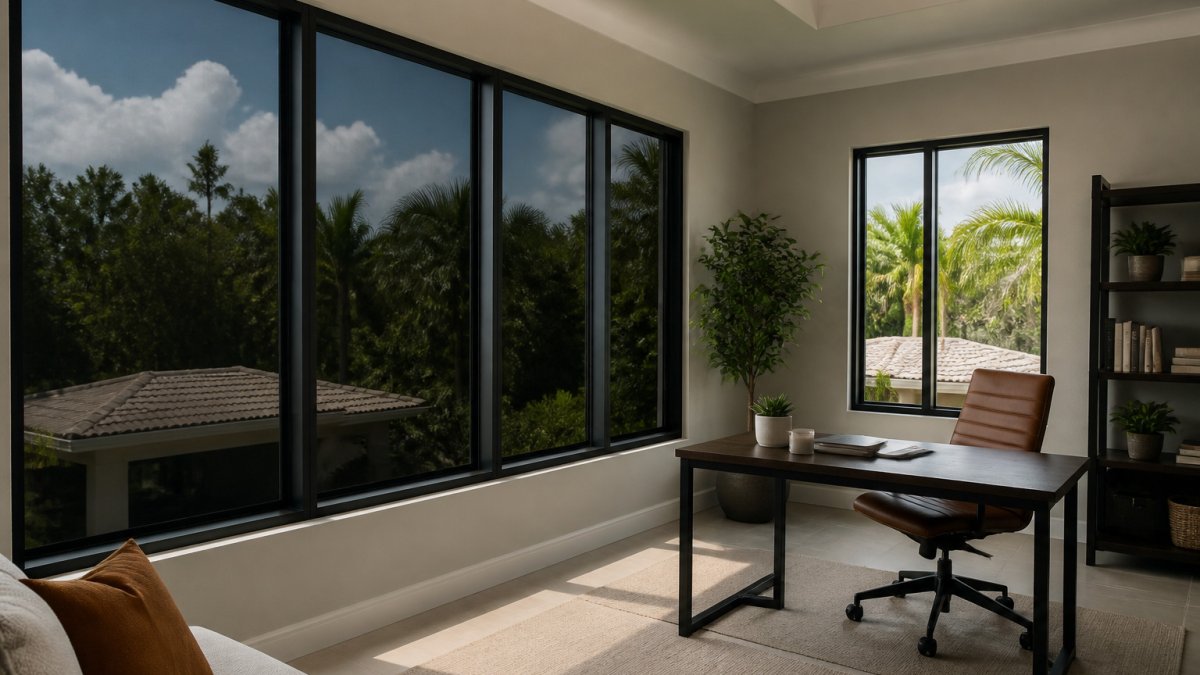
Screen glare in home offices is a specific problem: when sunlight reflects off monitors or creates a bright background, productivity drops and eye strain increases.
Transparent or lightly tinted films work best for offices, reducing glare without making the room too dark. A 60-70% VLT film typically minimizes screen reflection while maintaining adequate workspace lighting.
Position matters: windows directly behind or beside your monitor cause the most glare.
Reflective vs. Neutral Window Film for Storefronts
Commercial storefronts face a different glare challenge. Reflective films are highly visible from outside and create a mirror-like appearance that affects storefront aesthetics; neutral films reduce glare while keeping a traditional look.
Reflective films excel at heat rejection and glare control but may clash with your brand image or local aesthetics.
For retail, the choice often depends on whether you want merchandise visible from the street: reflective films darken windows and reduce visibility into the store, while neutral films maintain better visibility while managing glare and heat.
Commercial Window Film for Glare Reduction and Energy Efficiency
Commercial buildings benefit from window film's dual impact on glare and cooling costs, and offices with extensive south- and west-facing windows often see significant savings when film is applied strategically.
The best window film for glare reduction in commercial settings balances three priorities: reducing glare for occupant comfort, lowering cooling costs through solar heat rejection, and maintaining an appropriate appearance for the building's purpose. Gila film, for example, blocks up to 93% of glare and 99% of UV rays, making it effective for commercial applications where both comfort and UV protection matter.
Lower cooling loads mean lower utility bills, especially in climates with intense summer sun. While professional installation costs vary, long-term energy savings often justify the investment.
Coral Tint brings over 30 years of experience installing commercial window film across South Florida.
Installation, Durability, and Removal Considerations
Most product listings stop at performance numbers, rarely explaining whether the film is safe for your glass, how long it lasts, and what happens when you want it gone. Those practical details decide whether a film performs as advertised or fails early.
Check Glazing Compatibility Before You Buy
Not every film belongs on every window. Glass type and mounting determine which films are safe.
- Single-pane glass is the most forgiving. Most films, including darker and more reflective options, can be applied without much risk because the glass expands and contracts freely.
- Double-pane and insulated glass units (IGUs) trap heat between the panes. A film that absorbs a lot of solar energy can raise the temperature of the inner pane and stress the seal, leading to seal failure or fogging between the panes. For these windows, choose a film with lower absorption and higher reflectivity, and confirm the film is rated for IGU use.
- Low-E glass already reflects a portion of solar energy. Adding a film changes the thermal profile of the pane and can, in some cases, cause thermal stress. Ask the manufacturer whether the film is approved for low-E substrates.
Thermal stress is the failure mode to watch for: absorbed solar energy heats the filmed glass, and if heat cannot dissipate evenly, the pane can crack. Risk rises with darker, more absorptive films on south- and west-facing windows in hot climates. A film with higher reflectivity and lower absorption shifts energy away from the glass rather than into it.
Installation: DIY vs. Professional
Static-cling and some low-tack films are genuinely DIY-friendly for a single window or a renter who needs a removable option. They go on with water and a squeegee and come off without adhesive residue.
Adhesive films are where professional installation pays off. Bad DIY jobs fail predictably: trapped air and bubbles, wrinkles from stretching, edge lift from insufficient squeegee work, and contamination that shows as specks.
How Long Film Lasts
Quality adhesive films typically last 10-15 years with proper installation and care; lower-quality films may peel, bubble, or degrade within 3-5 years. The difference comes down to adhesive quality, film material (ceramic and spectrally selective films hold up better than dyed films), and installation technique. Dyed films can fade; ceramic and metalized films resist fading better but may carry more reflectivity.
Removal
Removal is straightforward with professional help. Quality films come off cleanly without damaging the glass. Poorly installed or degraded films may leave adhesive residue, and old, brittle film can come off in small pieces. When choosing a provider, ask about their warranty and removal process, easy removal matters if you rent or plan to sell.
Choosing the Right Film for Your Space
Start by identifying your primary goal. Is glare your main concern, or are you also prioritizing heat reduction and UV protection?
Assess your room's sun exposure. North-facing windows need minimal glare control. South and west-facing windows benefit from more aggressive films.
Consider your secondary priorities. Do you need privacy? Are you trying to lower cooling costs?
Professional consultation helps. A qualified installer can evaluate your windows, sun angles, room usage, and budget to recommend the right film type and VLT.
| Decision Factor | Consideration | Recommended Action |
|---|---|---|
| Primary goal | Glare only vs. glare + heat + UV | Transparent film vs. tinted film |
| Sun exposure | Window direction and intensity | North: minimal coverage; South/West: aggressive coverage |
| Privacy needs | Visibility from outside | Frosted for complete privacy; transparent for views |
| Room darkness | Preference for brightness | Higher VLT for light; lower VLT for darkness |
| Budget | Installation and material costs | Professional installation worth the investment |
Frequently Asked Questions
What type of window film is best for reducing glare?
The best choice depends on your priorities. Tinted films reduce glare effectively while also cutting solar heat, making them ideal for vehicles and homes. Frosted films eliminate glare completely but reduce visibility. For spaces where you want glare reduction while maintaining outdoor views, low-reflective ceramic or spectrally selective films work well. They can block up to 80% of visual glare while preserving 60-80% visible light transmission, letting you enjoy daylight without harsh reflection.
Does window film reduce glare without making rooms too dark?
Yes, if you choose the right visible light transmission (VLT) level. Films with 70% VLT provide subtle glare reduction while keeping spaces bright and open. A 50% VLT film offers a middle ground with noticeable glare control and still-good daylight access. The key is matching the film's light-blocking properties to your room's orientation and how much afternoon sun exposure you receive. Professional installation helps ensure the film performs as intended.
Can window film reduce glare on computer screens?
Yes. Window film significantly reduces screen glare by minimizing harsh sunlight reflection on monitors and displays. This is especially effective in home offices with east or west-facing windows. Neutral or low-reflective films work best here because they cut glare without darkening the room excessively. Combining window film with proper monitor positioning and anti-glare screen protectors provides the most comprehensive solution for computer work spaces.
Is reflective or neutral window film better for commercial storefronts?
Neutral film is typically preferred for storefronts because it reduces glare and heat while maintaining the building's appearance and allowing customers to see inside. Reflective film can be more effective at heat rejection but may create a mirror-like exterior that deters foot traffic and obscures window displays. For commercial spaces, the choice depends on whether visibility and aesthetic appeal or maximum heat rejection takes priority. Ceramic films offer a balanced solution, providing strong glare control while preserving a professional look.
Choosing the best window film for glare reduction requires balancing your specific needs against available options. The right film reduces glare and protects your space from UV damage while preserving the natural light and views you value. Coral Tint has helped thousands of customers across South Florida find that balance through professional consultation and precision installation. Request a quote today to discover how the right window film can transform your comfort and energy efficiency.