 how-to
Will Window Tint Make a Room Dark? 6 Facts to Know
Last Updated: October 30, 2026
Quick Summary
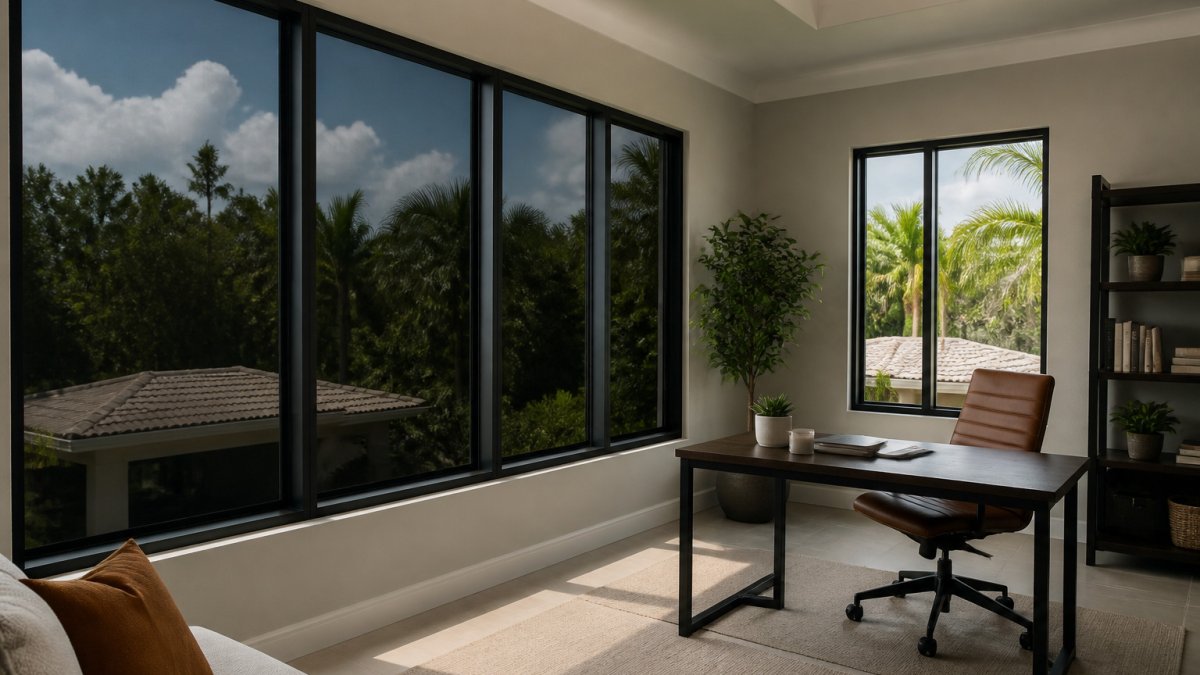
Window tint can make a room darker, but the effect depends on the film's visible light transmission (VLT), so a window tint room dark only as much as you choose. Lower VLT means a darker room, while a 50% VLT film keeps daylight strong. Check the VLT rating before buying, because a dark film is not always the best choice for heat control.
- VLT measures the percentage of visible light that passes through the window film.
- A 50% VLT film keeps daylight strong and suits living rooms that should not feel dim.
- A 20% VLT film gives a noticeably dimmer room, suited to bedrooms or media rooms.
- Small rooms with few windows feel darker faster than open rooms with several windows.
- Ceramic films can reject strong heat while keeping the room brighter than dark films.
Table of Contents
- Why Window Tint Makes Rooms Darker, and When It Doesn't
- Understanding Visible Light Transmission (VLT) With Practical Examples
- Film Types and Their Trade-Offs for Light, Heat and Glare
- Privacy Window Film Without Darkening a Room
- Residential Window Tint for Heat Reduction: Room-by-Room and Orientation Choices
- How to Test a Film Sample Before Committing
- Booking Your Coral Tint Consultation for a Brighter, Cooler Home
- Frequently Asked Questions
Why Window Tint Makes Rooms Darker, and When It Doesn't
Window tint can make a room darker, but not always by as much as people expect. Tint works by reducing how much visible light passes through the glass, so the darkness you see depends on the film you pick.
This is the part most homeowners miss. A room with dark tint on west-facing windows will feel dim in the afternoon. The same room with a lighter film may look almost unchanged.
Two things decide how dark a room gets:
- The film's darkness level. Darker films cut more light.
- The room's layout. Small rooms with few windows feel darker faster than open spaces.
Keep in mind that a tinted window still lets daylight in. It just softens and filters it. For many homes, that trade-off works well.
Understanding Visible Light Transmission (VLT) With Practical Examples
Visible light transmission (VLT) is the percentage of visible light in the 380-780 nanometer range that passes through a window film or glass assembly. A higher VLT means more light gets through. A lower VLT means the room is darker.
VLT is the number to check before you buy. Here is how it plays out in practice:
- 70% VLT: A light film. The room stays bright and the view stays clear. This is close to the light transmission of many clear double-pane windows, so the change is subtle.
- 50% VLT: A light-medium film. Daylight remains strong, glare softens, and the view is still crisp. A common choice for living rooms that get direct sun but should not feel dim.
- 35% VLT: A medium film. Daylight remains, but the room feels calmer and less glaring. Good for west-facing windows that overheat in the afternoon.
- 20% VLT: A dark film. Expect a noticeably dimmer room, especially on cloudy days. Works in bedrooms or media rooms where reduced brightness is the goal.
- 5% VLT: A limo-style film. The room will feel dark during the day and nearly black at night. Rarely appropriate for main living spaces.
Ask for the VLT rating on any film sample. Compare the number to how bright you want the room to feel. A rating printed on the box is more useful than a guess about how a film "looks."
How VLT Interacts With Window Size and Room Layout
A single VLT number does not tell the whole story. The same 35% VLT film will darken a small bedroom with one window far more than an open living room with four large windows. Two practical rules help:
- Small rooms with few windows feel darker faster. If the room already relies on one window for daylight, a 35% VLT film may push it into cave territory. Consider 50% or higher.
- Large rooms with multiple windows can absorb a darker film because light enters from several directions. A 20-35% VLT film may still leave the room comfortably bright.
Window orientation also changes perceived brightness. A west-facing window with 35% VLT film will feel dimmer in the late afternoon than an east-facing window with the same film feels in the morning, because the sun angle and intensity differ.
A Simple Way to Translate VLT Into a Room Decision
Before you commit, do a quick brightness audit of the room:
- Note how many windows the room has and which directions they face.
- Stand in the room at midday and at the time of day the room is most used.
- Decide whether the room is currently too bright, about right, or already dim.
- If it is already dim, choose a film with a VLT of 50% or higher. If it is too bright and glary, a 20-35% VLT film is a reasonable starting point.
This turns VLT from an abstract percentage into a decision you can make before installation.
Film Types and Their Trade-Offs for Light, Heat and Glare
Not all window films work the same way. Some block heat, some cut glare, and some do both. Before you choose, decide which problem matters most in your home: too much light, too much heat, too much glare, or a privacy concern. The film type should follow that answer.
Here is a comparison of the common film types and how each affects light, heat, glare, and view:
| Film Type | Light Impact | Heat Reduction | Glare Control | View | Best For |
|---|---|---|---|---|---|
| Dyed film | Darkens noticeably | Moderate | Good | Slightly hazy | Budget-friendly privacy |
| Metalized film | Can reduce light a lot | Strong | Strong | Reflective sheen | Heat control on west- and south-facing glass |
| Ceramic film | Light to medium | Strong | Good | Clear, low haze | Heat control without much darkening |
| Reflective film | Darkens and mirrors | Strong | Strong | Mirror-like from outside | Privacy and heat on street-facing windows |
| Neutral film | Minimal color shift | Moderate to strong | Good | Near-natural | Homes that want a consistent look |
| Frosted or decorative film | Softens light | Low to moderate | Good | Obscured | Privacy in bathrooms and entries |
| Blackout film | Blocks nearly all light | Moderate | Total | None | Media rooms and bedrooms |
A common mistake is choosing the darkest film for heat. Dark films do not always block more heat than ceramic films. If you require total darkness for sleeping or media viewing, you might consider how blackout blinds compare to tinted glass in their ability to eliminate light infiltration.
The Core Trade-Off: Dark Does Not Equal Cool
It helps to separate the two jobs a film can do. Light control is governed by VLT, how much visible light passes through. Heat control is governed by how much solar energy the film rejects, which includes visible light but also infrared and ultraviolet energy. A dark dyed film may cut light sharply while rejecting only a moderate share of heat. A clear ceramic film may keep the room bright while rejecting a large share of solar heat.
That is why the darkest film on the shelf is rarely the best heat-control choice. If your goal is a cooler room without a cave-like feel, ceramic or neutral films are usually the better fit. If your goal is privacy and you accept a dimmer room, dyed or reflective films make sense.
Matching Film Type to the Problem
- Too much heat, want to keep the light: ceramic or neutral film at a higher VLT.
- Too much glare on a TV or computer screen: ceramic or metalized film at a medium VLT.
- Street-facing window with a privacy concern: reflective or frosted film, depending on whether you want to see out.
- Bedroom or media room that should be dark: blackout or low-VLT film.
- Bathroom or entry that needs privacy but not darkness: frosted or decorative film at a higher VLT.
Ask your installer for the VLT and heat-rejection ratings side by side for each film you are considering. Comparing those two numbers, rather than the shade of the sample, is the fastest way to pick a film that matches your actual goal.
Privacy Window Film Without Darkening a Room
Many people want privacy during the day and a clear view outside. Frosted or decorative films can do this without making the room feel dark.
These films block the view into a room while letting natural light through. They work well for bathrooms, front entries, and ground-floor windows facing a street.
Note that most window films hide the view from outside, but they do not give full privacy at night. When the lights are on inside, people outside can often see in. Plan for this if nighttime privacy matters to you.
Residential Window Tint for Heat Reduction: Room-by-Room and Orientation Choices
The right film depends on which room you are tinting and which way its windows face. Heat and light hit each side of a house differently.
- South- and west-facing windows get the most direct afternoon sun. Heat-control films work best here.
- East-facing windows get morning sun. A lighter film often works well.
- North-facing windows get the least direct sun. These may not need tint at all.
Focus on rooms where heat builds up, such as living rooms and bedrooms with large windows. Lower-cost bedrooms on shaded sides may not need film. Matching the film to the room and the sun exposure gives better results than using one film everywhere.
How to Test a Film Sample Before Committing
Before you commit to a whole house, test a sample. Ask your installer for a small piece of each film you are considering.

- Tape the sample to the inside of a window.
- Check it at different times of day, since sun angle changes how bright the room looks.
- Look at the room on a cloudy day as well as a sunny one.
- Check how clear the view is from the inside.
- Compare the samples side by side and note the VLT.
Testing takes a few days but prevents expensive mistakes. A film that looks perfect in the store may feel too dark once it is on your window.
Booking Your Coral Tint Consultation for a Brighter, Cooler Home
Once you know the film you want, the next step is a professional opinion. At Coral Tint, we walk through each room, check window orientation, and recommend a film that balances light, heat, and privacy. Our team serves homeowners across South Florida and can show you film samples on your own windows.
To get started, book a consultation with Coral Tint and we will help you find the right balance of light and cooling for your home.
Frequently Asked Questions
Does window tint appear darker as it cures?
Some films look slightly hazy or darker for a few days after installation while moisture escapes from under the film. This is normal. The haze clears as the adhesive cures, usually within a few days to a few weeks depending on weather and film type. If the film still looks cloudy after several weeks, contact the installer rather than assuming the film is defective. A sample test before installation also helps you judge how the final shade will look in your own room.
Can you get privacy window film without making a room dark?
Yes, but it depends on the film. Frosted or patterned films block views while allowing a high share of visible light through, while very dark films reduce brightness substantially. Look at the visible light transmission (VLT) rating on the product specification and choose a film with a higher VLT if you want to keep the room bright. Frosted films often let more light in than dark tints, though they change the look of the glass.
Does tinting home windows reduce heat?
Yes. Residential window film can reduce solar heat gain, which helps keep rooms cooler and lowers the load on air conditioning. The amount of reduction depends on the film's heat rejection properties, the window's orientation, and how much direct sun it receives. Heat-rejecting films often perform well on west- and south-facing windows. Visible darkness and heat rejection are separate properties, so a lighter film can still reject meaningful heat, and a darker film does not always reject more.
How does window film affect natural light?
Window film reduces the amount of visible light that passes through the glass, and darker films reduce it more. The effect is measured as visible light transmission, expressed as a percentage. A film with a higher VLT lets more daylight into the room. Natural light still comes in, so rooms usually stay usable for daytime activities, but the change is noticeable. Testing a sample at the window lets you see the actual effect before installation.