Imagine opening your car door on a July afternoon in Coral Springs and feeling a wall of heat so intense it actually takes your breath away. You reach for the steering wheel, but it's too hot to touch; you notice a new hairline crack starting to spider across your dashboard. We've all been there. Living in South Florida means your vehicle is under constant siege by relentless UV rays that punish your skin and your interior every single day. It's frustrating to feel like you're driving a mobile oven, but selecting the right car tint options can change everything.
As a local team that's seen every type of sun damage over the years, we want to help you make an informed decision for your vehicle. This 2026 guide breaks down the technical differences and performance benefits of modern films to help you reclaim your commute and protect your investment. We'll examine Florida's specific legal limits for 2026, compare the durability of carbon versus nano-ceramic technology, and show you how the right professional installation can reduce cabin temperatures by up to 30 degrees while blocking 99% of harmful UV rays.
Key Takeaways
- Compare the technical differences between budget-friendly dyed films and premium ceramic films to identify which car tint options best suit your driving habits and budget.
- Learn why Total Solar Energy Rejection (TSER) is the most important metric for maintaining a cool cabin during intense South Florida heat waves.
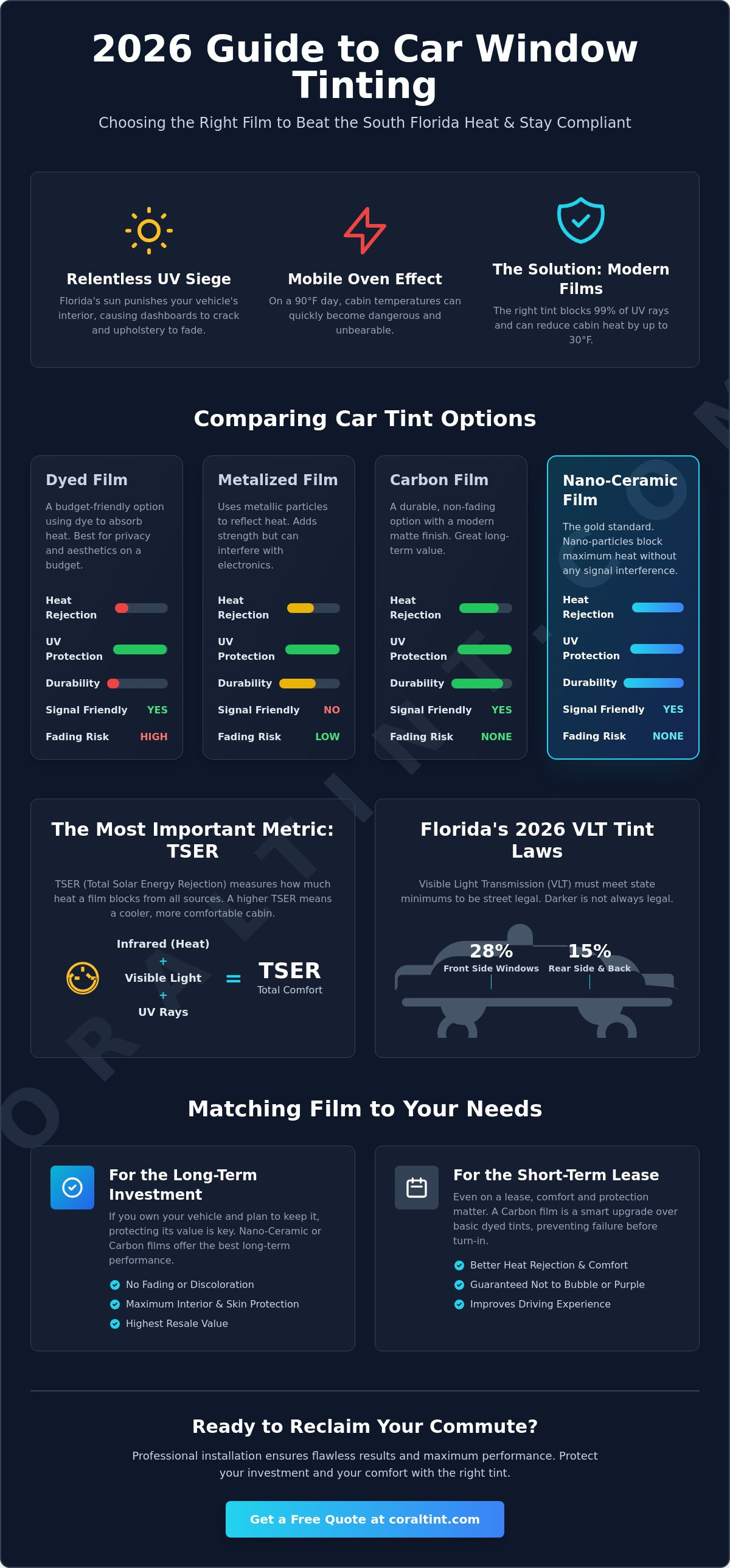
- Review Florida’s 2026 VLT regulations to ensure your vehicle remains compliant with the 28% front side window and 15% rear window light transmission limits.
- Understand the long-term benefits of ceramic technology, including its ability to protect your upholstery from fading without interfering with 5G or GPS signals.
- Discover how to match your film selection to your vehicle ownership timeline, whether you are managing a short-term lease or protecting a lifelong investment.
Understanding the Primary Car Tint Material Options
Choosing the right film for your vehicle starts with understanding the science behind the materials. In our decades of serving the local community, we've seen how different car tint options react to the intense humidity and salt air of the Atlantic coast. Not all films are created equal. Some are designed for simple privacy, while others act as a sophisticated thermal barrier. If you're looking for a comprehensive guide to window film technology, you'll find that the industry has evolved significantly over the last few years. Today, drivers typically choose from four primary categories: dyed, metalized, carbon, and ceramic.
- Dyed window film is the most affordable entry point. It uses a layer of dye to absorb solar heat, making it great for achieving a dark, sleek look on a budget.
- Metalized film incorporates tiny metallic particles. These particles reflect heat away from the glass rather than absorbing it, which adds structural strength to the window.
- Carbon film contains carbon particles that create a distinct matte finish. It's much more durable than dyed options and provides excellent heat rejection.
- Ceramic film uses non-conductive, nano-ceramic particles to block the highest percentage of infrared light and UV rays, representing the industry gold standard.
Dyed vs. Carbon: The Mid-Range Choice
In the Florida heat, cheap dyed films often fail within two or three years. The sun breaks down the chemical bonds in the dye, leading to that unsightly purple bubbling you see on older cars. Carbon film solves this problem. It's a preferred car window tinting south florida solution because it won't fade or discolor over time. While dyed films have a glossy shine, carbon offers a modern matte aesthetic that complements the lines of contemporary vehicles. It's a reliable investment for drivers who want longevity without the premium price of ceramic.
The Rise of Nano-Ceramic Technology
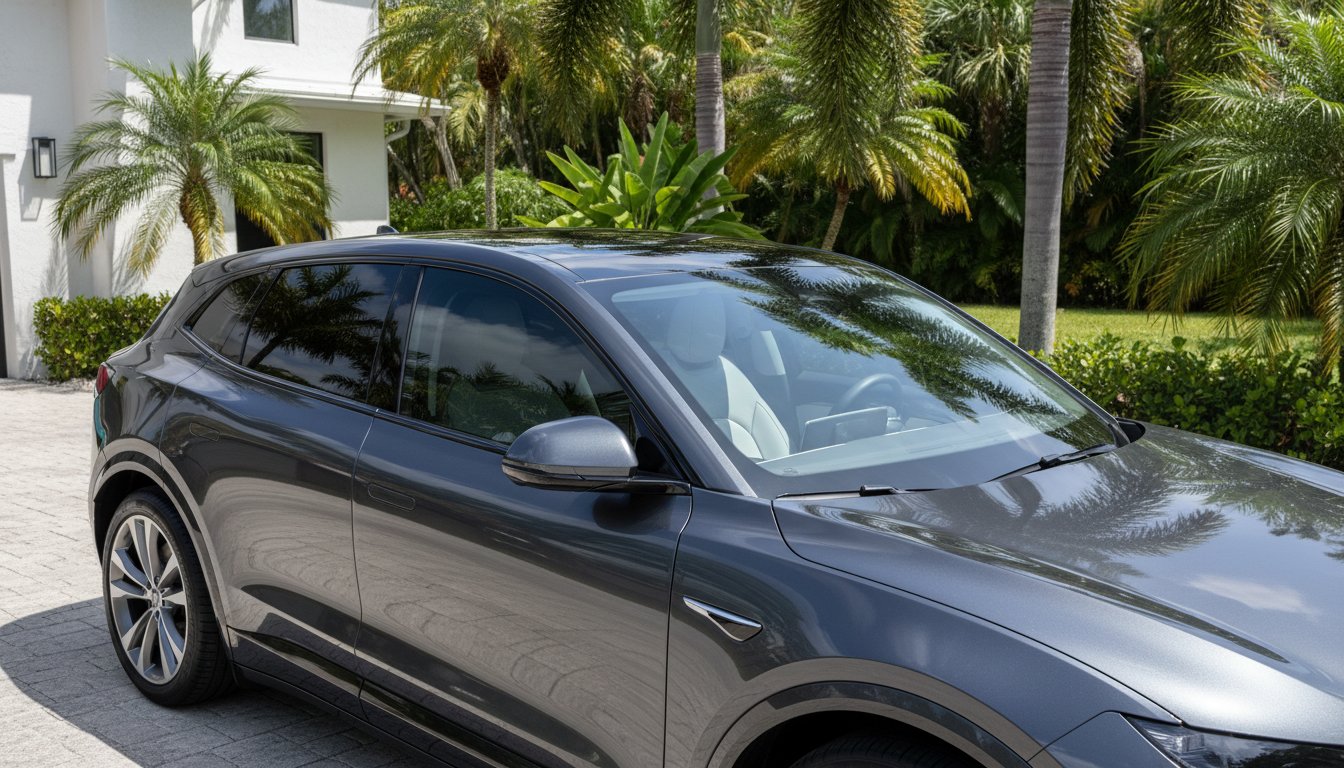
If you want the absolute best protection available in 2026, ceramic is the answer. These films utilize nano-ceramic particles that are specifically engineered to block up to 99% of UV rays and a massive portion of infrared heat. This technology is practically essential for high-end mercedes tinting because it protects expensive leather interiors and sensitive electronic dashboards from thermal damage. Unlike metalized films, ceramic is completely non-conductive. It won't interfere with your 5G signal, GPS navigation, or advanced driver-assistance systems. It provides a crystal-clear view at night while keeping your cabin significantly cooler during the day.
Comparing Thermal Performance and Heat Rejection
Living in South Florida means your vehicle is essentially a greenhouse on wheels. While many drivers choose car tint options based on how dark they look, the real value lies in how well the film manages solar energy. On a typical 90-degree afternoon, the temperature inside a parked car can climb to dangerous levels within minutes. High-quality films act as a thermal shield, keeping your cabin comfortable and reducing the strain on your air conditioning system. This is especially noticeable during those long commutes on the Sawgrass Expressway, where the blinding glare of the setting sun can make driving hazardous without proper protection.
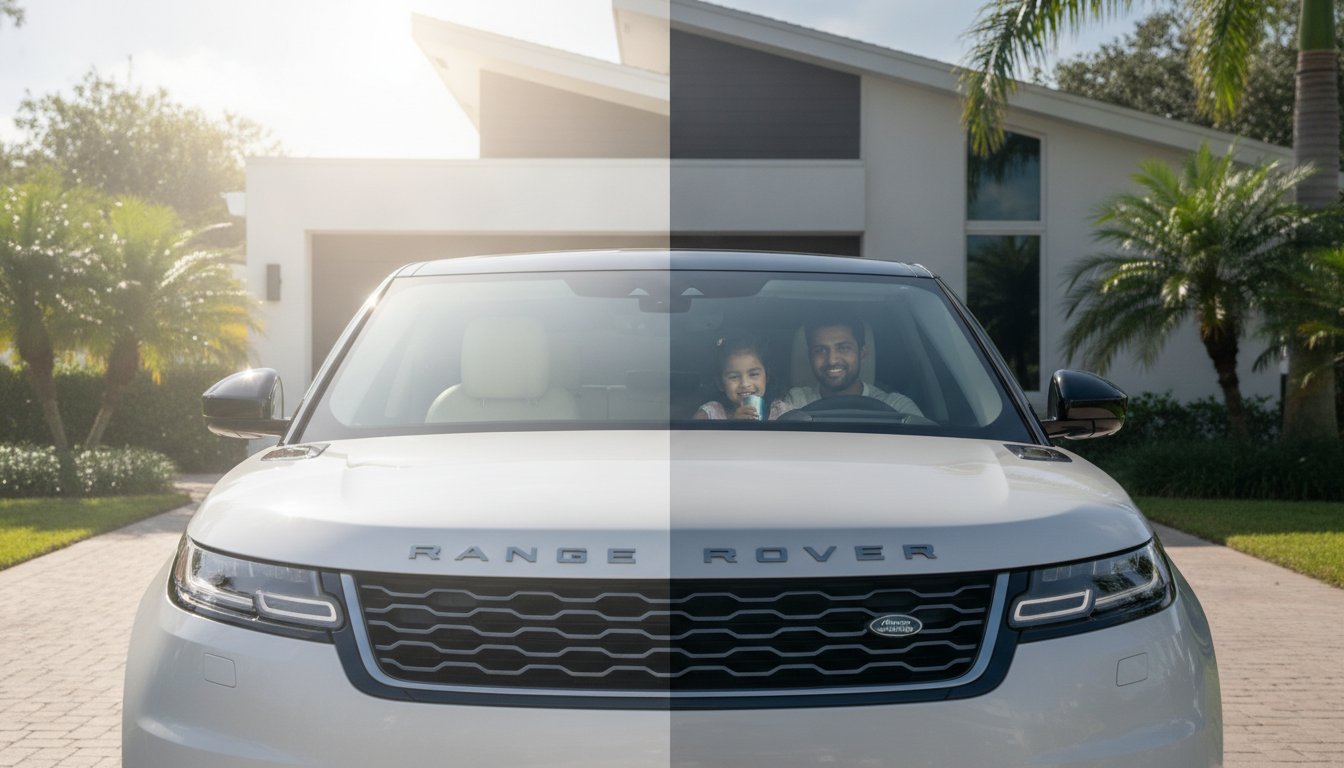
Total Solar Energy Rejection (TSER) is the most accurate metric for measuring this performance. Unlike basic ratings that only look at one factor, TSER accounts for all three components of solar energy: visible light, infrared radiation, and ultraviolet rays. When you evaluate different car tint options, a higher TSER percentage indicates a more comfortable interior. For example, premium ceramic films can reduce a vehicle's interior temperature by 25 to 30 degrees Fahrenheit. This isn't just about comfort; it's about safety and preserving your vehicle's value. Constant heat exposure leads to dashboard cracking and leather shrinkage, but blocking up to 99% of UV rays keeps your upholstery looking like it just left the showroom.
TSER vs. IR Rejection: What to Look For
It's easy to get confused by technical jargon, but there's a simple rule to follow. TSER measures the total heat blocked, including visible and infrared energy. Infrared (IR) rejection is the primary factor in how quickly your cabin cools down after being parked in the sun. For the best results in our tropical climate, we recommend looking for films that offer at least 80% IR rejection. While you want to stay within the legal light limits defined in the Florida window tinting statutes, you don't need a "blackout" look to get high IR rejection. Modern clear ceramic films can block more heat than the darkest cheap dyed films.
Longevity in the Florida Sun
Our proximity to the ocean brings unique challenges. The salt air and high humidity can aggressively attack the adhesives used in lower-grade films, causing them to peel or bubble. This is why we prioritize "color-stable" technology. It ensures your tint remains the same shade for years instead of turning purple or blue. The durability of your investment also relies heavily on the application process. Choosing a specialized automotive window tinting service ensures the film is bonded correctly to withstand our harsh environment. If you want to see how these high-performance films look in person, you can explore our full range of ceramic solutions at our local shop.
Aesthetic and Privacy Options: From Light to Blackout
Visual appeal is often the first thing drivers think about when browsing car tint options. In South Florida, we see everything from high-performance sports cars with a "smoke" finish to family vans seeking total privacy. The technical term you'll encounter most is Visible Light Transmission (VLT). This percentage tells you how much light passes through the film. A 5% VLT is the darkest option, often called "limo tint," while a 70% VLT is almost invisible to the naked eye. Selecting the right shade involves balancing your desire for a specific aesthetic with the practicalities of daily driving.
Choosing a color tone is just as important as the darkness level. Most modern films come in charcoal or smoke tones to match the black trim found on many new vehicles. Some luxury owners prefer a subtle blue-hued film that mimics the glass found on premium European imports. According to Kelley Blue Book's tinting guide, the right aesthetic choice can actually help maintain your vehicle's resale value by preventing interior wear while looking professionally integrated. We offer several tones to ensure your film complements your paint color perfectly.
Navigating the Popular Blackout Tint
Many of our customers ask for a blackout tint to achieve maximum privacy. This look is iconic in South Florida, but it's vital to remember that darkness doesn't automatically mean better heat rejection. As we discussed earlier, a light ceramic film can actually keep you cooler than a dark dyed film. Safety is also a major factor. During our sudden afternoon thunderstorms, a 5% tint on front windows can make it incredibly difficult to see pedestrians or other vehicles. We always recommend a shade that offers privacy without compromising your ability to react to changing road conditions.
Matching Tint to Vehicle Type
Your vehicle's body style should influence your film choice. For sports cars, a uniform charcoal shade across all windows creates a seamless, aggressive profile. SUVs and trucks present a different challenge because they often come with "privacy glass" on the rear windows. This factory glass is darkened for privacy but offers almost zero heat or UV protection. We often apply a clear or light ceramic film over this factory glass to add the thermal benefits without making the windows too dark to see through at night. A clear ceramic film on the windshield is a "hidden" performance upgrade that blocks massive amounts of heat without changing the look of your car at all.
Florida Window Tint Laws and Compliance
Staying legal in South Florida is about more than just avoiding a fine. It's about ensuring your vehicle is safe for everyone on the road. When you're exploring car tint options, the first thing you must consider is how your choice aligns with current state regulations. If you're driving through areas like Coral Springs or Parkland, you don't want a simple aesthetic upgrade to result in an expensive "fix-it" ticket. Florida's statutes are very specific about light transmission and reflectivity to ensure drivers maintain clear visibility, especially during our frequent heavy downpours.
Visible Light Transmission (VLT) is the legal yardstick here. For most passenger vehicles, Florida law requires that the front side windows allow more than 28% of light to pass through. The rules for the back of the car are slightly different. For sedans, the rear side windows and the back windshield must allow more than 15% of light. We also have to be careful with reflectivity. Your film shouldn't be more than 25% reflective on the front windows or 35% on the back. These limits prevent your car from becoming a rolling mirror that blinds other drivers during the intense midday sun.
Windshield protection is another area where precision matters. You can apply a non-reflective tint to your windshield, but it must stay above the manufacturer’s AS-1 line. This provides a helpful sun strip to reduce glare without obstructing your primary field of view. For neighbors with specific health concerns, medical exemptions are available. If you have a documented sensitivity to sunlight, you can apply for a certificate that allows you to use darker car tint options than the standard legal limits provide.
Sedan vs. SUV/Van Regulations
It's a common point of confusion, but SUVs, trucks, and vans follow a different set of rules for their rear windows. These multi-purpose vehicles are allowed to go much darker than sedans. While a sedan is capped at 15% VLT, an SUV can legally use a 6% VLT film on all windows behind the driver. This is why "limo tint" looks perfectly fine on the back of a Suburban but could get you pulled over in a Honda Civic. We always help our customers identify exactly which category their vehicle falls into before we start the application.
The Importance of Professional Compliance
Getting the job done right means more than just sticking film to glass. Our team uses professional light meters to verify the exact VLT of your windows before you leave the shop. This is a critical step because your factory glass often has a slight tint already; adding a 28% film to glass that is already at 70% will actually put you below the legal limit. Choosing a seasoned car window tinting service protects you from these technical errors. If you're worried about your current setup, bring your vehicle by for a quick compliance check and we'll make sure you're driving legally.
Choosing the Right Option for Your Needs and Budget
Selecting from various car tint options shouldn't feel like a guessing game. The right choice usually comes down to how long you plan to keep your vehicle. If you're driving a short-term lease, a mid-range carbon film provides reliable performance and a great look without over-investing in the most expensive technology. However, for those who view their vehicle as a long-term asset, ceramic film is the undisputed South Florida standard. In Broward County, where the UV index frequently hits extreme levels, settling for anything less than high-performance ceramic often leads to regret within just a few seasons as the heat continues to punish your interior.
While the temptation to use a DIY kit might be strong, those products rarely survive our environment. Professional installation is essential because the high-heat and 90% humidity levels in our region will quickly expose any flaws in the application. DIY films often use inferior adhesives that fail under intense thermal stress, leading to peeling and unsightly bubbling. A professional application ensures a seamless bond that can withstand the rigors of our tropical climate for a decade or more.
Investment vs. Expense
Think of high-quality film as an insurance policy for your car's interior. Replacing a sun-damaged dashboard or reupholstering faded leather seats can cost thousands of dollars. In comparison, professional window film is a small upfront investment that pays dividends through improved fuel efficiency. When your cabin stays cooler, your air conditioning system doesn't have to work as hard. This reduces your fuel consumption and extends the life of your vehicle's cooling components. To get a better sense of how these choices fit your specific vehicle and goals, you should request a tint quote to receive personalized advice tailored to your budget.
Why Local Expertise Matters
Our team has been a proud fixture in the Coral Springs community for over 35 years. This multi-generational history means we've seen every type of film failure and success imaginable in the Florida sun. We understand the local nuances that national chains might overlook, and we stand behind our work with the reliability that only a long-standing local business can provide. A local warranty isn't just a piece of paper; it's our commitment to you that your investment is protected by neighbors you can actually reach. We invite you to visit our shop to see physical samples of our car tint options in person. Seeing the different shades and feeling the heat rejection for yourself is the best way to feel confident in your decision. Let's work together to keep your car cool, safe, and looking its best for years to come.
Drive Cooler and Protected with Expert Window Film
Navigating the various car tint options doesn't have to be overwhelming when you prioritize heat rejection and legal compliance. You've learned that while dyed and carbon films have their place, nano-ceramic technology remains the superior choice for our intense tropical climate. By staying within Florida's VLT limits and choosing a film with high TSER ratings, you're doing more than just styling your ride. You're protecting your skin, your interior, and your peace of mind during every commute.
We've been a family-owned fixture in the community since 1987, serving neighbors in Coral Springs, Parkland, and Boca Raton for over 35 years. As an authorized dealer for high-performance ceramic films, we've mastered the precision required to handle South Florida's unique environmental challenges. We're here to help you turn your vehicle into a sanctuary from the sun with a professional application that stands the test of time.
Get Your Custom Tint Quote from Coral Tint Today and let our seasoned experts provide the lasting protection and sleek aesthetic your investment deserves. We look forward to helping you stay comfortable on the road for years to come.
Frequently Asked Questions
What is the best car tint option for blocking heat in Florida?
Ceramic window film is the most effective choice for managing the intense South Florida heat. These advanced car tint options utilize nano-ceramic particles to block up to 99% of ultraviolet rays and a significant portion of infrared heat. This technology keeps your cabin much cooler than traditional dyed or metalized films without requiring an extremely dark shade to be effective.
Can I tint my windshield legally in Coral Springs?
You can legally apply a non-reflective tint to your windshield only above the manufacturer's AS-1 line. This strip helps reduce midday glare while ensuring your primary field of vision remains clear. While some drivers use clear ceramic films for total windshield coverage to block heat, you should always ensure your specific application meets the safety standards enforced in Broward County.
Does ceramic tint interfere with my car’s GPS or cell phone signal?
Ceramic film does not interfere with electronic signals because it is completely metal-free. Unlike older metalized films that can block GPS, 5G, or radio waves, ceramic particles are non-conductive. This makes it the ideal choice for modern vehicles equipped with advanced navigation systems and driver-assistance technology. You'll enjoy maximum heat protection without losing connectivity on the road.
What is the difference between factory privacy glass and aftermarket tint?
Factory privacy glass is simply a pigment inside the glass that provides darkness for privacy but offers very little protection against UV rays or heat. In contrast, aftermarket professional film is a multi-layered product designed specifically for thermal management. Many SUV owners choose to apply a clear or light ceramic film over their factory glass to gain the heat rejection benefits that the original glass lacks.
How long do professional car tint options typically last?
The lifespan of your film depends heavily on the material you choose and the quality of the installation. High-quality ceramic car tint options often last ten years or longer without bubbling or peeling. While budget-friendly dyed films might only last two to four years in the Florida humidity, investing in premium materials ensures your vehicle stays protected for the entire time you own it.
Is it worth getting 5% tint (limo tint) on my car?
While 5% VLT film offers the ultimate in privacy, it significantly reduces your visibility during nighttime driving and heavy rainstorms. It's also important to remember that 5% tint is illegal on the front side windows of passenger cars in Florida. Most drivers find that a legal 15% or 28% ceramic film provides a better balance of privacy, safety, and superior heat rejection.
Will window tinting prevent my car’s dashboard from cracking?
Professional window film is one of the best ways to prevent your dashboard from cracking and your upholstery from fading. UV rays are the primary cause of interior degradation because they break down the chemical bonds in plastic, vinyl, and leather. By blocking 99% of these harmful rays, a quality film acts as a permanent sunscreen for your vehicle's interior components.
How much does the average car tint service cost in South Florida?
The total cost of a professional tint service varies based on the size of your vehicle and the type of film technology you select. Premium options like ceramic films involve a higher initial investment than basic dyed films but provide significantly better durability and heat rejection. You should always look for a quote that includes professional preparation and a local warranty to ensure you're getting the best long-term value for your investment.