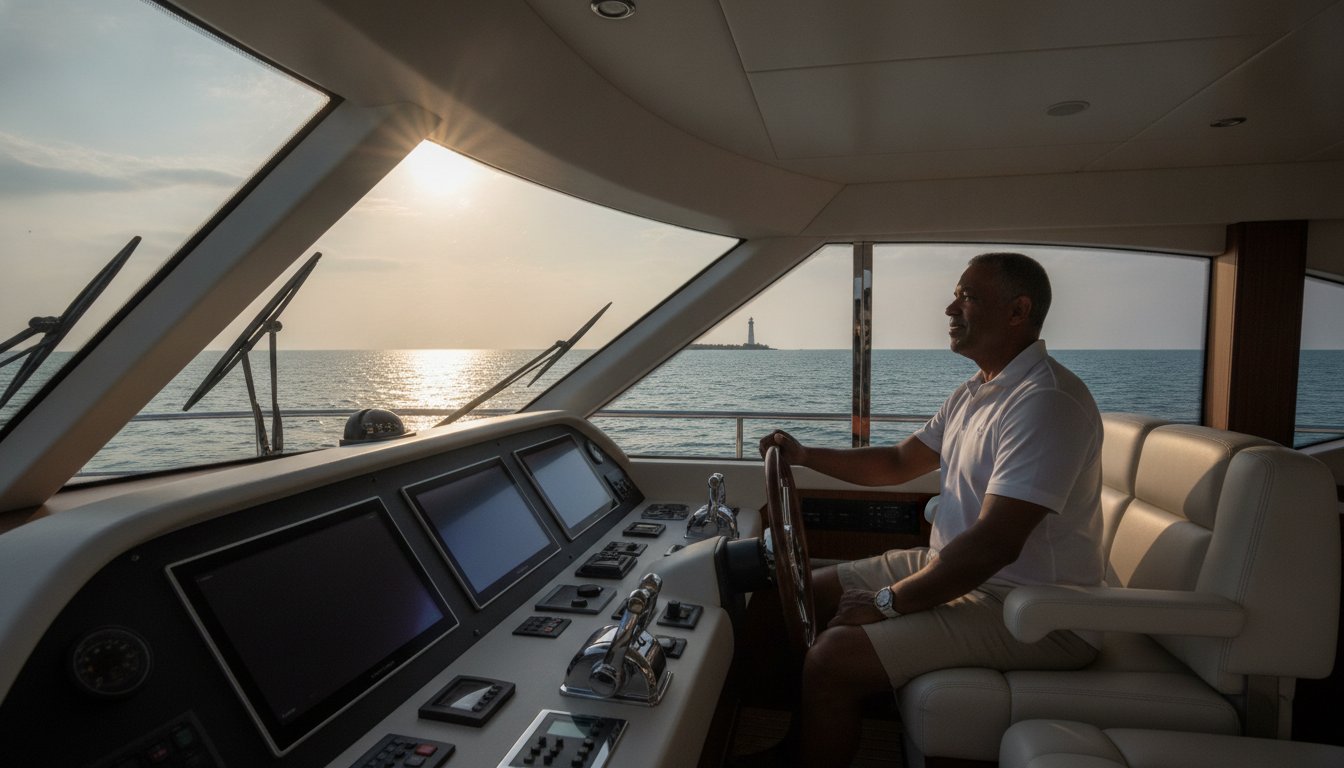
Imagine you're navigating back through the Hillsboro Inlet after a successful day on the water, but instead of enjoying the view, you're squinting through a blinding glare that makes every wave a guessing game. It's a common struggle for South Florida boaters who deal with extreme cockpit heat and the constant worry of UV damage fading their expensive upholstery. Choosing the right marine window film Pompano Beach isn't just about style. It's a critical step in preserving your vessel and ensuring your time on the Atlantic remains comfortable and safe.
We understand that your boat is a significant investment and a source of pride for your family. You deserve a solution that eliminates the fear of bubbling DIY kits and replaces it with professional, crystal-clear results. This 2026 guide will show you how high-performance ceramic films can reject up to 98% of infrared heat without interfering with your GPS or radio signals. You'll discover the best ways to protect your interior from the sun's harsh rays, enhance your privacy at the marina, and maintain a cool, inviting cabin even during the peak of July. We'll explore how specialized installation transforms your boating experience into the smooth, protected journey you've always wanted.
Key Takeaways
- Understand why professional marine window film Pompano Beach is a safety necessity for reducing blinding glare while navigating the Hillsboro Inlet.
- Learn the technical differences between standard dyed films and nano-ceramic technology to ensure maximum heat rejection for your cabin.
- Discover why non-metallic films are essential for offshore vessels to maintain uninterrupted GPS and VHF radio signals.
- Explore the specialized installation steps required to ensure a bubble-free finish that withstands the harsh Atlantic saltwater environment.
- Gain insight into how nearly 40 years of local expertise translates into long-term protection for everything from center consoles to luxury yachts.
The Essential Role of Marine Window Film in Pompano Beach
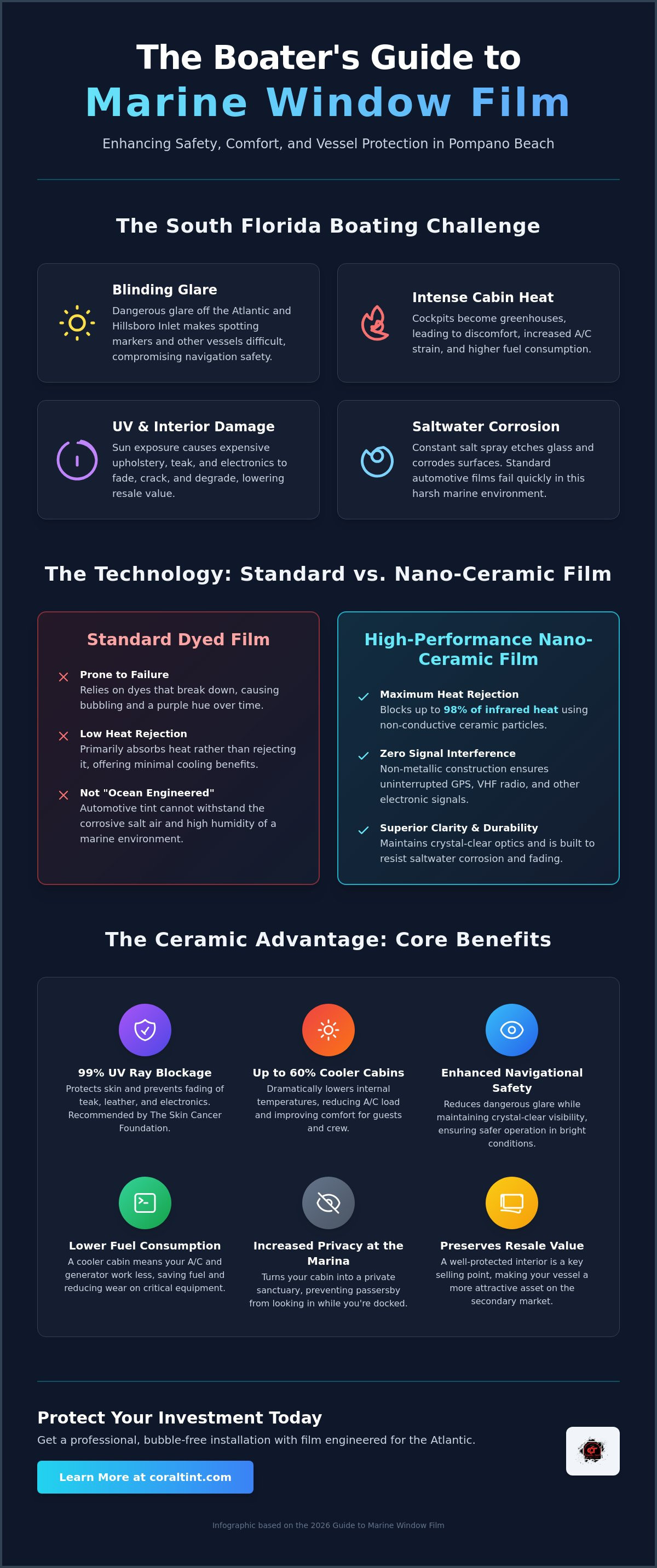
Boating in Pompano Beach is more than a weekend hobby; it's a lifestyle that defines our local community. However, the same sun that makes our waters so inviting can be a vessel's worst enemy. The intensity of South Florida’s UV radiation is relentless, especially when it reflects off the Atlantic. Without high-quality marine window film Pompano Beach, your boat’s interior is essentially sitting in a greenhouse. This constant exposure leads to more than just physical discomfort for you and your guests. It causes rapid, expensive degradation of your vessel's most valuable components.
Safety remains the most immediate concern for local captains. Navigating the Hillsboro Inlet requires total focus, yet the blinding glare off the water often makes it difficult to spot markers or other vessels. Modern Window film technology solves this by filtering out the harshest light while maintaining crystal-clear visibility for the pilot. Beyond safety, there is the matter of personal privacy. When you are docked at a busy Pompano Beach marina, you want your cabin to be a private sanctuary rather than a display case for every passerby on the dock.
Combatting the South Florida Heat Index
The heat index in Broward County frequently reaches triple digits during the summer months. Marine-grade films are specifically engineered to lower internal cabin temperatures by up to 60%. This reduction does more than keep you cool. It significantly lowers the load on your boat’s air conditioning system and generator. By working less, your equipment lasts longer and consumes less fuel. The Solar Heat Gain Coefficient (SHGC) measures the fraction of solar radiation admitted through a window, and in marine settings, a lower number signifies better protection against the sun's penetrating heat.
Preserving Your Vessel's Resale Value
Replacing sun-bleached teak or cracked leather upholstery can cost thousands of dollars. It’s a preventable expense. Professional film acts as a permanent barrier, blocking up to 99% of UV rays that would otherwise destroy your interior finishes and sensitive electronics. Additionally, these films help protect expensive glass from saltwater etching and mineral deposits that are notoriously difficult to remove once they set. In 2026, savvy boat buyers prioritize vessels that show a history of professional maintenance. Documented installation of high-end marine window film Pompano Beach serves as proof that you’ve protected the boat’s integrity, making it a much more attractive asset on the secondary market.
Technical Excellence: Ceramic vs. Standard Marine Films
Not all window films are created equal. If you've ever seen a boat with purple, bubbling windows at the marina, you've seen the inevitable failure of standard dyed films. These budget options rely on layers of dye that eventually break down under the relentless South Florida sun. In our local saltwater environment, standard automotive tint simply can't survive. It isn't "ocean engineered" to handle the constant moisture, salt spray, and intense solar load we experience every day. Choosing a high-quality marine window film Pompano Beach means investing in a product designed for the Atlantic, not just the asphalt.
The difference lies in the construction of the material. Marine-grade films are built to resist the corrosive nature of salt air while maintaining their structural integrity against high humidity. While a car sits in a driveway, your vessel is exposed to reflected light from the water, which effectively doubles the UV impact on the glass. This is why specialized films are a non-negotiable requirement for anyone serious about long-term vessel protection.
The Nano-Ceramic Advantage
Nano-ceramic technology represents the current peak of maritime protection. Unlike older films that use metal or dark dyes to block heat, ceramic films utilize microscopic, non-conductive particles. These particles are incredibly effective at rejecting up to 98% of infrared heat. This technology is recommended by The Skin Cancer Foundation because it blocks 99% of harmful UV rays without sacrificing visibility. For Pompano's sportfishing fleet, this is a game-changer. Captains can maintain "crystal-clear" optics for spotting weed lines or birds while the cabin stays significantly cooler. It's the gold standard for those who spend long days offshore and need maximum performance from their gear.
VLT and Shade Selection for Boaters
Visual Light Transmission, or VLT, determines how much light passes through the glass. Finding the right balance is vital for safe navigation. We typically suggest a 70% VLT for windshields. This looks almost clear but provides massive heat rejection and UV protection. For side glass, a 20% VLT offers enhanced privacy at the dock and a sleeker aesthetic. Florida's maritime visibility recommendations for 2026 emphasize the importance of 360-degree awareness, especially during night docking or heavy rain. You don't want a tint so dark that it compromises your safety when the sun goes down. If you're unsure which shade fits your vessel, exploring professional marine tinting options can help you find the perfect match for your specific layout.
Solving the Signal Interference & Saltwater Corrosion Problem
Choosing the wrong material can turn your high-tech helm into a source of frustration. Many boaters don't realize that traditional metallized films contain microscopic layers of metal that act as a shield against radio frequencies. While this might be fine for a car, it's a critical safety hazard on the water. These films can block or severely degrade GPS signals and VHF radio transmissions, leaving you blind to your coordinates and unable to communicate during an emergency. For any vessel venturing offshore, non-metallic marine window film Pompano Beach is a non-negotiable requirement for operational safety.
Beyond electronics, the Atlantic environment puts every surface under constant attack from a variety of corrosive elements. When metal-layered films are exposed to salt spray and high humidity, the metal particles within the film begin to oxidize. This leads to delamination, where the layers peel apart, and unsightly bubbling at the edges. At Coral Tint, we prioritize the use of advanced, signal-transparent materials that are chemically engineered to resist the corrosive power of saltwater, ensuring your investment remains both functional and beautiful.
Signal-Sensitive Film Selection
Modern navigation depends on seamless data flow. Whether you're running Garmin, Simrad, or Raymarine electronics, your equipment needs an unobstructed path for satellite and radio signals. Our non-conductive ceramic films ensure that your cellular and satellite data connections remain strong, even when you're miles from the coast. This commitment to signal integrity means your safety equipment works exactly when you need it most, providing the peace of mind every captain deserves.
Edge Sealing and Saltwater Longevity
The installation process for a boat is vastly different from a vehicle. Saltwater intrusion is the primary cause of the 'milky' or hazy appearance that plagues low-quality tint jobs. We employ specialized techniques to ensure a perfect bond, preventing edge-lift in our humid South Florida air. Professional edge-sealing is the definitive factor that determines whether your vessel’s tint lasts for a single season or provides a decade of reliable protection. This meticulous attention to detail ensures that salt stays on the outside of the glass, preserving the clarity and aesthetics of your investment for the long haul.
The Marine Installation Process: What to Expect
Professional installation of marine window film Pompano Beach is a meticulous craft that requires a controlled environment. Unlike a car in a standard shop, a boat is often exposed to the constant wind and salt spray prevalent near Lighthouse Point or the Hillsboro Inlet. These elements are the enemies of a bubble-free finish. For a successful application, we prioritize a wind-shielded or climate-controlled setting to ensure that no microscopic salt crystals or dust particles get trapped behind the film. This level of environmental control is what separates a professional job from a failing DIY attempt.
Marine glass presents unique challenges that automotive glass simply doesn't. Windows on a luxury yacht or a modern center console often feature complex, compound curves that require precision heat-shrinking. Every window is unique, which is why we rely on custom templating. Whether we are using digital precision cutting or expert hand-cutting, the fit must be exact to the millimeter to prevent edge-lift in our humid South Florida climate. This intensive prep work ensures the film bonds perfectly to the glass, providing the long-term durability you expect from a premium service.
Step-by-Step Professional Application
The process begins with Phase 1: Deep decontamination. We use specialized cleaning agents to remove every trace of salt, oils, and mineral deposits that accumulate on the water. Phase 2 involves precision heat-shrinking. This is where our decades of experience shine, as we carefully mold the film to match the bridge's intricate curves without compromising the material's integrity. Finally, Phase 3 is the inspection and curing process. While the Florida sun eventually helps the film "set," our final walkthrough ensures that every edge is sealed and every surface is optically perfect before you head back out to sea.
Maintenance for Tinted Boat Windows
To ensure your film lasts through 2026 and beyond, proper care is essential. You don't need expensive chemicals to keep your windows clear, but you do need the right technique.
- Avoid ammonia: Never use blue glass cleaners containing ammonia, as they chemically break down the film's protective hard coat and cause yellowing.
- Gentle cleaning: Use only clean, high-pile microfiber cloths and a mild soap solution to prevent scratching.
- Regular inspection: Check your window edges every few months for signs of saltwater wear or physical damage from docking lines.
Maintaining the clarity of your marine window film Pompano Beach ensures your safety and preserves your vessel's aesthetic for years to come. If you're ready to upgrade your boat with the best protection available in Broward County, you can schedule your professional marine installation here.
Why Coral Tint is Pompano’s Trusted Marine Film Partner
Reliability on the water starts with choosing partners who understand the specific demands of the Atlantic. Since 1987, we've served the Broward County boating community as a stable, family-owned fixture. We aren't a new franchise or a seasonal operation; we are your neighbors, located just minutes away from the docks of Pompano Beach and Lighthouse Point. Our longevity in the industry is a testament to our commitment to excellence and the long-term relationships we've built with local captains. When you choose us for marine window film Pompano Beach, you're trusting a team that has seen every type of vessel and every kind of sun damage South Florida can deliver.
Our expertise spans the entire maritime spectrum. We've applied high-performance ceramic and safety films to everything from nimble center consoles used for weekend fishing to sprawling luxury yachts that require weeks of meticulous precision. This breadth of experience allows us to anticipate the unique challenges of your specific boat, whether that involves complex bridge glass or high-traffic cabin areas. We take immense pride in our multi-generational history, and that pride translates into a frictionless service process where your assets are treated with the respect they deserve.
A Heritage of Professional Authority
South Florida boaters have trusted our family-run business for decades because we prioritize craftsmanship over quick transactions. Large franchises often lack the specialized knowledge required to handle the intricate curves and saltwater exposure risks unique to marine glass. We focus on a disciplined, modern approach that utilizes the latest marine window tinting technology while maintaining the traditional heart of a local workshop. This blend of technical precision and personal service ensures that your film is applied correctly the first time, providing a secure, bubble-free finish that stands up to years of offshore use.
Get Your Pompano Beach Marine Tint Quote
Precision is the hallmark of our quoting process. We don't believe in generic estimates because every vessel has a unique glass count and architectural layout. Professional installation is a vital safeguard for your investment. While DIY kits might seem tempting, they often lead to peeling, bubbling, and permanent glass etching that can be incredibly costly to repair. We provide accurate, transparent quotes based on the specific needs of your vessel, ensuring you receive the best value and the highest level of protection available in 2026. Your boat represents a significant investment in your lifestyle, and we are here to help you preserve it. Request your professional marine tint quote from Coral Tint today and experience the difference that nearly 40 years of local expertise can make for your time on the water.
Secure Your Vessel's Future on the Water
Protecting your boat from the relentless South Florida sun is a matter of both safety and smart investment. We've discussed how specialized nano-ceramic technology ensures your cabin stays cool without blocking the vital GPS and VHF signals you need for safe navigation. By prioritizing non-metallic materials, you avoid the common pitfalls of saltwater corrosion and edge-lift that often ruin standard tint jobs. Choosing the right marine window film Pompano Beach ensures your upholstery, electronics, and teak finishes remain in showroom condition for years to come.
Since 1987, our family-owned team has operated as the region's specialist in high-performance ceramic films. We take immense pride in serving the boating communities of Pompano Beach, Coral Springs, and Boca Raton with a level of precision that only decades of local experience can provide. Your vessel deserves the security of professional craftsmanship and the peace of mind that comes with a protected interior. Protect your vessel with a custom Marine Window Tint Quote today. We look forward to helping you enjoy a clearer view and a much cooler cabin on your next trip offshore.
Frequently Asked Questions
Will marine window film make it harder to see at night?
High-quality film won't compromise your night vision as long as you select an appropriate Visual Light Transmission (VLT) percentage. We often recommend a 70% VLT for helm windshields because it remains virtually clear while rejecting significant heat and UV rays. This allows you to navigate the Hillsboro Inlet safely after sunset without the "tunnel vision" effect caused by the overly dark, low-quality tints often found in automotive applications.
Can window film be applied to plexiglass or Lexan boat windows?
Standard window films shouldn't be applied to plexiglass or Lexan because these porous materials "outgas" over time. This natural process causes traditional adhesives to bubble, blister, and peel almost immediately. While some specialized films exist for plastics, we typically focus our professional applications on tempered marine glass to ensure the long-term, bubble-free results our Pompano Beach customers expect from a seasoned expert.
How long does it take to tint a 30-foot center console in Pompano Beach?
Tinting a 30-foot center console typically takes between four and six hours depending on the specific window configuration and glass curvature. Complex bridge enclosures or integrated hardtops might require a full day to ensure the cleaning and heat-shrinking phases are handled with absolute precision. We prioritize a meticulous setup to ensure your vessel is back on the water as quickly as possible without sacrificing our high standards of quality.
Does marine window film interfere with my boat's GPS or VHF radio?
Modern ceramic marine window film Pompano Beach won't interfere with your boat's GPS, VHF radio, or satellite data connections. Because these advanced films are non-metallic and non-conductive, they allow radio frequencies to pass through the glass unobstructed. This is a critical safety feature that distinguishes our high-performance ceramic options from older, budget-friendly metallized tints that can block emergency communications when you're miles offshore.
How much does professional marine window tinting cost in 2026?
Professional marine tinting costs vary significantly based on the size of your vessel, the number of windows, and the complexity of the glass curvature. Since every boat has a unique layout and specific protection needs, we don't offer standardized or flat-rate pricing. Instead, we provide custom quotes that reflect the specific high-performance materials and specialized labor required to ensure the long-term preservation of your maritime investment.
What is the difference between automotive tint and marine window film?
The primary difference lies in the adhesive chemistry and the film's resistance to saltwater corrosion. Marine-grade films are specifically engineered to withstand the constant attack of salt spray and high humidity without delaminating or turning "milky" at the edges. Automotive tints aren't designed for the intense reflective glare of the Atlantic, making specialized marine window film Pompano Beach the only reliable choice for local boaters.
Can marine window film help prevent glass from shattering during a storm?
While no film makes glass completely "storm-proof," specialized safety and security films can help hold shattered glass together upon impact. This layer of protection is particularly valuable during South Florida's hurricane season or in the event of an accidental strike while docking in heavy winds. It provides an extra margin of safety for your cabin and helps prevent wind-driven rain from entering through a broken pane.
How long will ceramic marine film last in the South Florida saltwater environment?
Premium ceramic marine film can last between 8 and 10 years in the South Florida environment when professionally installed and properly maintained. We've seen our installations hold up beautifully against the Atlantic's salt and sun because we use materials specifically engineered for maritime durability. Regular rinsing with fresh water and avoiding ammonia-based cleaners are the keys to ensuring your film remains optically clear for a decade.