You step into your car after just twenty minutes in the Parkland sun and the steering wheel is too hot to touch. Your leather seats feel like a furnace, and you can almost see the dashboard taking a beating from the relentless UV rays. If you have spent any time driving through South Florida, you know that the heat isn't just an inconvenience; it's a constant threat to your vehicle's interior and your own comfort. For many local drivers seeking automotive window tinting Coral Springs residents can rely on, the goal isn't just a darker look. It's about finding a professional solution that actually blocks the heat without getting you pulled over.
We understand that you want a cool cabin and a bubble-free finish that lasts for years. This 2026 guide will help you navigate the latest ceramic film technology and Florida's specific VLT regulations. You'll discover how to achieve significant temperature reduction while staying compliant with the 28% front side window light transmission law. We will also preview the differences between sedan and SUV requirements so you can make an informed choice for your specific vehicle. By the end of this article, you'll know exactly how to protect your investment and finally enjoy a much cooler commute.
Key Takeaways
- Learn why ceramic films outperform carbon options for heat rejection without interfering with your vehicle's GPS or cell signals.
- Discover why a clean-room shop environment is the secret to the long-lasting automotive window tinting Coral Springs residents expect.
- Get a clear breakdown of Florida’s 2026 VLT laws to keep your vehicle compliant and avoid costly tint-related citations.
- Understand how professional UV protection films act as a barrier against the extreme Parkland sun to prevent interior fading and cracking.
- See how multi-generational expertise ensures your film is specifically chosen to withstand the unique humidity and heat of Broward County.
The Parkland Sun Challenge: Why Standard Glass Isn’t Enough
Living in Parkland means enjoying beautiful weather, but your vehicle pays a heavy price for that sunshine. Standard factory glass is designed for basic visibility and structural integrity, yet it offers very little protection against the intense solar radiation we experience in South Florida. When we talk about the professional automotive window tinting Coral Springs motorists need, we aren't just talking about a dark aesthetic. True performance comes from advanced Window Film Technology. This process involves applying a multi-layered polyester film to your glass that is specifically engineered to block harmful wavelengths of light while maintaining crystal clear visibility.
Parkland often sees a UV index that reaches extreme levels, frequently hitting 10 or higher during the summer months. This isn't just a statistic; it's a direct measurement of the radiation hitting your skin and your car's interior every time you drive down University Drive. Beyond the heat, there's a vital safety factor to consider. During our unpredictable storm seasons, professional film acts as a secondary layer of protection. If a stray piece of debris hits your window during a heavy squall, the film helps hold the shattered glass together. This prevents flying shards from injuring you or your passengers, providing peace of mind during the drive home.
Infrared Heat vs. UV Rays: What Actually Cools Your Car?
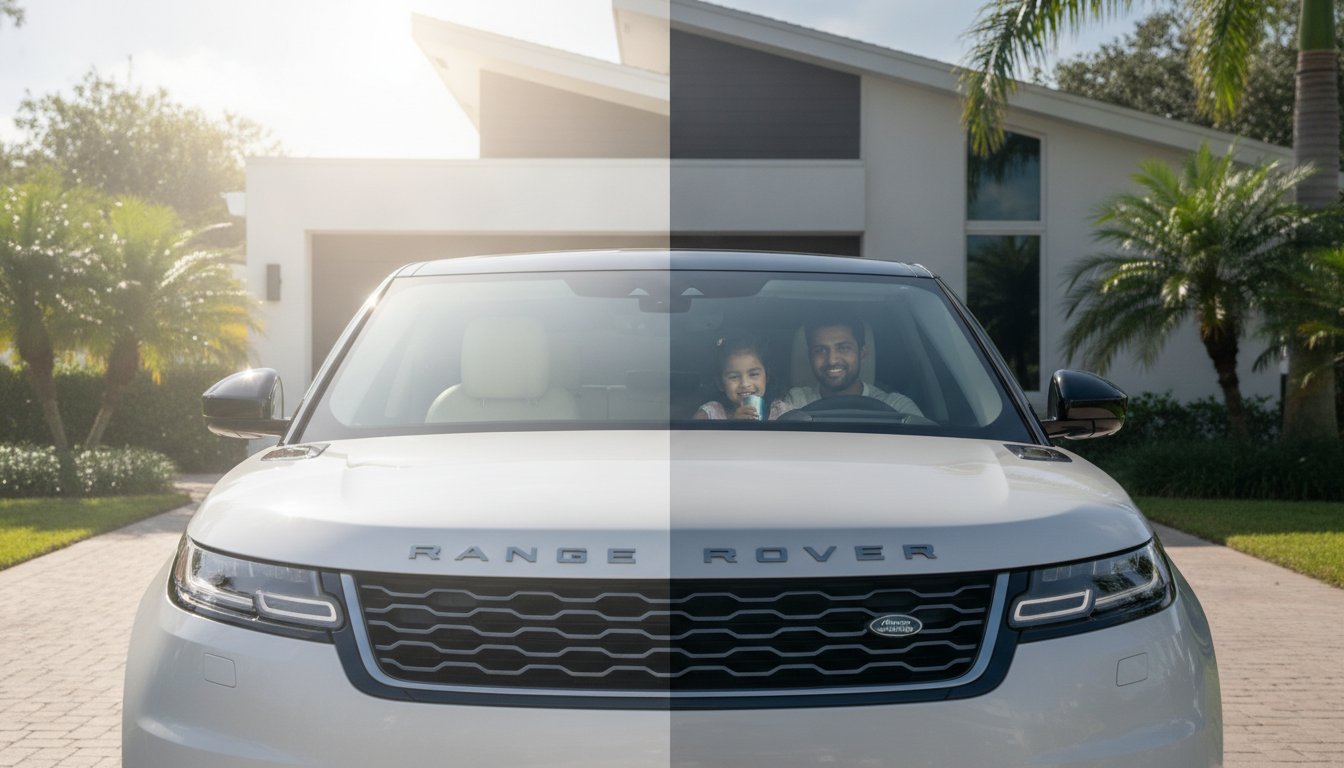
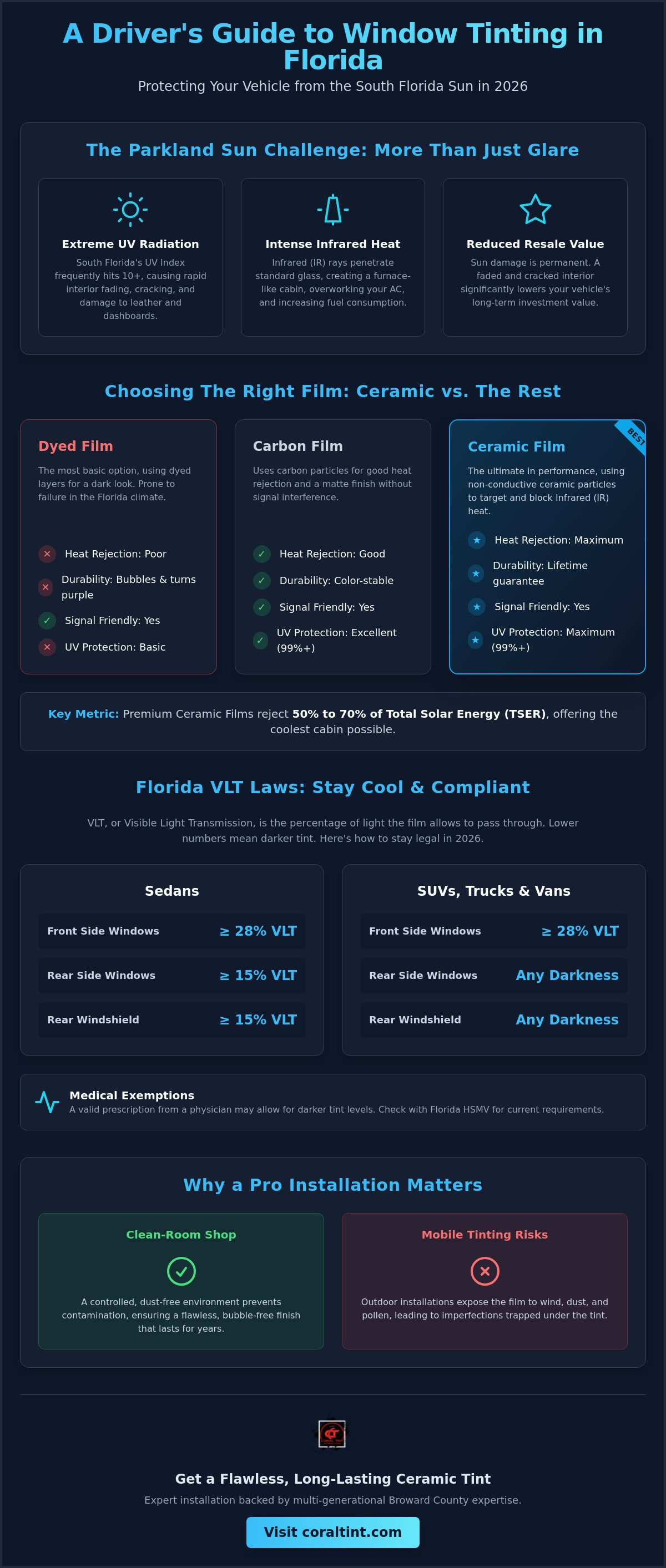
It's a common mistake to think that a darker tint always results in a cooler car. UV rays are the primary culprit behind skin damage and the fading of your upholstery, but they don't actually generate the heat you feel. That burning sensation on your skin comes from Infrared (IR) light. High-performance ceramic films are engineered to filter out these specific IR wavelengths, which significantly reduces the load on your air conditioning system. When your AC doesn't have to work as hard to combat the Florida humidity, you enjoy better fuel efficiency and a much more comfortable ride. Total Solar Energy Rejected (TSER) is the comprehensive metric that measures the combined amount of UV, visible light, and infrared heat blocked by a film, with premium ceramic options typically rejecting between 50% and 70% of total solar energy.
Protecting Your Investment in Broward County
Your vehicle is likely one of your largest investments, and the Florida sun is its greatest enemy. Without protection, dashboards can warp and leather seats can shrink or crack in just a few seasons. Professional tinting creates a barrier that preserves the resale value of your car by keeping the interior looking showroom new. Families in the Parkland area also value the added privacy that quality film provides, keeping your belongings out of sight and your loved ones comfortable. If you want this same level of security and climate control for your home, we also specialize in residential window film installation to ensure your entire property is protected from the heat.
Ceramic vs. Carbon Tint: Choosing the Best Film for Parkland
When you start researching the best options for automotive window tinting Coral Springs has to offer, you'll likely encounter three main categories of film: dyed, carbon, and ceramic. While dyed films are the most affordable, they rely on layers of ink that eventually turn purple and bubble under our intense sun. Carbon and ceramic films represent a significant leap in technology. Choosing the right automotive window tinting Coral Springs service means understanding how these materials react to our unique climate. Carbon films use carbon particles to block heat and provide a sleek matte finish. Ceramic films, however, utilize microscopic, non-conductive ceramic particles that are specifically engineered to manage solar energy without the use of metals.
One of the biggest misconceptions we hear is that high-performance tint will interfere with your car's electronics. Older "metallic" films were notorious for blocking cell signals and GPS. Because ceramic films are completely non-metallic, they offer total signal transparency. Your navigation and mobile devices will work perfectly, even with the highest levels of heat rejection applied to your glass. This reliability is why ceramic has become the gold standard for luxury vehicle owners in Parkland who refuse to compromise on tech performance or comfort. Unlike dyed films, these ceramic particles are color-stable; they come with a no-fade guarantee that ensures your windows stay the same shade as the day they were installed.
The Ceramic Advantage: Maximum Heat Rejection
Nano-ceramic technology is a game-changer for South Florida drivers. These films are capable of blocking up to 95% of Infrared heat, which is the specific part of the solar spectrum that makes your car feel like an oven. The real magic of ceramic is its clarity. You can achieve incredible heat rejection without needing to install "limo dark" shades that compromise your night vision. This is particularly beneficial for electric vehicle (EV) owners. By keeping the cabin naturally cooler, you reduce the constant draw on your battery from the air conditioning, which helps preserve your driving range. It's important to ensure your chosen shade stays within the legal limits defined by Florida Tint Laws to avoid any issues on the road.
Carbon Film: The Durable Mid-Range Option
If you prefer a deep matte finish and don't need the extreme IR rejection of ceramic, carbon film is an excellent alternative. It's much more durable than dyed film and won't fade over time. Carbon particles are incredibly stable, meaning your windows will stay a consistent shade of charcoal for years. While it's a step up in price from entry-level options, it remains more budget-friendly than premium ceramic. You can explore a full breakdown of what to expect for your specific vehicle by checking our guide on car tint prices near me. If you aren't sure which film fits your driving habits best, our team is always here to help you compare film samples in person at our shop.
Shop-Based vs. Mobile Tinting: Why Environment Matters for Longevity
When you're looking for automotive window tinting Coral Springs services, the convenience of a mobile installer coming to your driveway is a tempting offer. It's easy to see why busy Parkland residents might choose a service that works while they're at home or in the office. However, there is a fundamental trade-off between that immediate convenience and the long-term quality of the installation. For a film to bond perfectly to your glass, the environment must be almost surgically clean. A professional shop isn't just a garage; it's a controlled facility designed to eliminate the variables that cause peeling, bubbling, and premature failure.
Professional facilities utilize high-output LED lighting arrays that reveal microscopic imperfections the naked eye can't see in a driveway. These tools allow technicians to ensure the glass is chemically decontaminated before the first layer of film even touches the surface. Beyond the tools, there's the issue of accountability. A mobile operator might offer a great price today, but if they change their phone number next season, your "lifetime warranty" disappears with them. Choosing a shop that has been a Parkland-area staple since 1987 means you have a physical location to visit if you ever need support. This stability is the bedrock of the trust we've built across multiple generations of Broward County drivers.
The Hidden Risks of Outdoor Mobile Tinting
Florida's climate is notoriously difficult for outdoor adhesive work. Even on a seemingly calm day, the wind carries microscopic pollen, dust, and salt spray that can ruin a tint application in seconds. When you apply film in an open driveway, you're fighting against every breeze that carries debris into the adhesive layer. Once a speck of dust is trapped under the film, it creates a permanent bubble that only gets worse as the sun beats down on it. Achieving a true gapless edge-where the film looks like it's part of the glass-requires the absolute stillness only found in a dedicated shop. High humidity can also affect how quickly the mounting solution evaporates, potentially leading to hazy patches if not managed in a climate-controlled space.
What to Look for in a Professional Tint Shop
If you're evaluating a local facility, don't be afraid to ask for a tour of their work area. A reputable shop should be organized, well-lit, and free of floor debris that could be kicked up during an install. You should also look for a portfolio that includes high-end luxury vehicles and EVs, as these cars require specialized knowledge of sensitive electronics and complex glass curvatures. To help you make the right choice, we've put together a comprehensive window tint company near me checklist. Remember that a quality install also ensures your vehicle stays compliant with Florida Statute 316.2953, which governs the specific light transmission allowed for your side windows.
Understanding Florida Tint Laws and VLT Limits in 2026
VLT, or Visible Light Transmission, is the most important number you need to know before modifying your vehicle's glass. It represents the percentage of visible light that passes through both the film and the glass itself. In Broward County, law enforcement officers carry portable light meters that slide over the top of your window to provide an instant digital readout. If your windows are too dark, you risk receiving a non-moving traffic violation that is both expensive and frustrating to resolve. When you invest in automotive window tinting Coral Springs law enforcement expects your vehicle to meet specific safety standards that ensure you have enough visibility to drive safely at night.
The rules for windshields are particularly strict. You are only permitted to apply non-reflective tint above the manufacturer's AS-1 line. This is the small mark usually found near the top corners of your windshield glass. If you have a documented medical condition that requires extra protection from the sun, you can apply for a medical exemption through the Florida Department of Highway Safety and Motor Vehicles. This allows for darker shades than the standard limits, but you must keep the permit in your vehicle at all times. For most drivers, staying within the standard 2026 requirements is the best way to enjoy the heat rejection benefits without attracting unwanted attention.
Florida VLT Requirements for 2026
Florida law differentiates between the type of vehicle you drive. Sedans have stricter requirements for the rear of the car compared to multi-purpose vehicles like SUVs and vans. Here are the current legal minimums:
- Front Side Windows (All Vehicles): Must allow at least 28% of light in.
- Back Side Windows (Sedans): Must allow at least 15% of light in.
- Back Side Windows (SUVs/Vans): Must allow at least 6% of light in.
- Rear Window (Sedans): Must allow at least 15% of light in.
- Rear Window (SUVs/Vans): Must allow at least 6% of light in.
Avoiding Legal Pitfalls in Parkland
Blackout or "limo tint" on your front side windows is a magnet for traffic stops in Parkland. While it might look sleek, a VLT lower than 28% on the front windows significantly reduces your ability to see side mirrors or pedestrians in low-light conditions. Professional shops use high-precision light meters to verify your car's compliance before the job is finished. You can find a more exhaustive breakdown of these regulations and enforcement practices in our car window tinting service guide. To ensure your vehicle stays on the right side of the law while staying cool, book a professional installation with our expert team today.
The Coral Tint Difference: Decades of Broward County Expertise
Since 1987, Coral Tint has served as a reliable fixture in the Broward County community. This isn't just a business; it's a multi-generational legacy built on the foundation of expert craftsmanship and deep-rooted local trust. When you choose our team for automotive window tinting Coral Springs drivers have relied on for decades, you're benefiting from nearly forty years of hands-on experience with South Florida's unique environmental challenges. We don't just apply film. We provide a service that has been refined through thousands of successful installations on everything from daily commuters to high-end luxury vehicles and electric cars.
Our commitment to excellence means we only work with premium ceramic films that are specifically chosen to withstand the intense humidity and salt air present in Parkland. We understand that your time is valuable, so we have designed our facility and our booking process to be as frictionless as possible. From our responsive communication methods to our comfortable customer waiting area, we prioritize your security and peace of mind throughout the entire process. We've mastered the balance between traditional service values and modern industry technology, positioning us as the go-to authority for those who demand the best protection for their assets.
Ready for a Cooler Commute?
A professional, shop-based ceramic installation remains the best long-term value for any driver in the Parkland area. It's a performance upgrade that pays for itself through superior interior protection and reduced fuel consumption from lower AC usage. We invite you to visit our Coral Springs showroom to see our quality firsthand and compare film samples under professional lighting. If you're ready to see how we can transform your daily drive, take a moment to read our comprehensive guide on requesting a tint quote to understand our transparent pricing model and service tiers.
Beyond the Car: Total Glass Protection
Our expertise doesn't stop at your car's edge. We offer the same high-standard protection for every aspect of the Parkland lifestyle. Whether you are a boat owner looking for specialized marine window tinting to handle the glare on the water or a homeowner seeking to lower energy bills with residential film, we have the tools and the talent to help. We value long-term relationships over quick transactions, and we're proud to be the trusted choice for total glass protection in our community. Contact Coral Tint for your Parkland automotive tinting today and let our seasoned experts secure your vehicle for the road ahead.
Secure Your Vehicle for the Road Ahead
Protecting your car from the Parkland sun is about more than just looks; it's a vital step for your comfort and your vehicle's longevity. You've seen how ceramic technology offers superior heat rejection without signal interference and why a shop-based installation is the only way to ensure a flawless, bubble-free finish. By staying within Florida's 2026 VLT legal limits, you can enjoy a cooler cabin and total UV protection without the risk of unwanted traffic stops. These small details make a massive difference in how your car handles the South Florida climate over time.
Since 1987, our multi-generational, family-owned business has provided the professional automotive window tinting Coral Springs drivers trust. As an authorized installer of high-performance ceramic films, we combine decades of local expertise with the latest industry tools to deliver results that stand the test of time. Ready to experience the difference for yourself? Get Your Free Parkland Tint Quote Today and let our team help you beat the heat. We look forward to welcoming you into our shop and making your daily commute something you can truly enjoy again.
Frequently Asked Questions
Is automotive window tinting legal in Parkland, Florida?
Yes, window tinting is legal as long as it follows the specific Visible Light Transmission (VLT) limits set by Florida law. For 2026, front side windows must allow at least 28% of light to pass through, while rear side windows on sedans must allow at least 15%. Our team ensures every installation meets these legal standards so you can drive with confidence throughout Broward County.
How long does a professional window tinting service take?
A professional installation typically takes between two and four hours depending on the size of your vehicle and the number of windows being treated. While it's a relatively quick process, we take the necessary time in our controlled shop environment to ensure a debris-free application. We prioritize precision over speed to guarantee that your film bonds perfectly to the glass without any imperfections.
Can I roll my windows down immediately after getting them tinted?
No, you must wait at least three to five days before rolling your windows down after a new installation. This waiting period is critical because it allows the mounting solution to evaporate and the adhesive to cure fully. If you roll the windows down too early, the friction can cause the film to peel or shift, which would compromise the entire application and the final look.
Does ceramic tint really work better than standard carbon film?
Yes, ceramic film is the gold standard for automotive window tinting Coral Springs drivers choose when heat rejection is the top priority. While carbon films are durable and offer a great matte look, ceramic technology blocks up to 95% of infrared heat. This makes a massive difference in how quickly your car cools down after sitting in the Parkland sun for an afternoon.
Will window tint interfere with my car’s rear defroster or GPS?
Professional ceramic and carbon films will not interfere with your vehicle's electronics or rear defroster lines. These modern films are non-metallic and non-conductive, so they are completely signal-friendly for GPS, cellular, and radio waves. You'll enjoy all the benefits of heat rejection without losing any functionality in your navigation systems or mobile devices while you are on the road.
What is the best VLT percentage for heat rejection in South Florida?
The best VLT percentage for our climate is often the legal limit of 28% for front windows and 15% for rears on sedans. Because we use high-performance ceramic films, you don't need to go darker than the law allows to get incredible heat rejection. These films are engineered to block solar energy through material science rather than just dark pigment, keeping you cool and compliant.
Does Coral Tint offer a warranty on their automotive films?
Yes, we provide comprehensive manufacturer-backed warranties that cover bubbling, peeling, and fading for as long as you own the vehicle. Since we've been a stable fixture in the community since 1987, you can trust that we'll be here if you ever need support. This long-term commitment to our customers is why so many local families have trusted us across multiple generations.
How do I clean my tinted windows without scratching the film?
You should only use ammonia-free cleaners and a clean microfiber cloth to maintain your tinted windows. Ammonia is a harsh chemical that can degrade the film's protective top coat and cause it to turn purple or become brittle over time. Plain water or a dedicated tint-safe spray is all you need to keep your windows looking showroom-new without risking any surface scratches.