What if you could slash your monthly cooling costs by up to 30% without turning your living room into a dark, cave-like space? If you're a Florida homeowner, you likely feel the sting of rising energy bills and the frustration of watching your expensive hardwood floors fade under the relentless sun. It's easy to assume that residential window tinting means sacrificing your view for a dark sticker look, but that old-school thinking is costing you money and comfort.
We understand that your home is your most significant investment, and protecting it shouldn't feel like a guessing game. You deserve a cool, private sanctuary that doesn't break the bank or ruin your aesthetic. In this guide, we'll uncover the truth about modern film technology and show you how to guard your interior against 99% of UV damage while keeping your suburban privacy intact. We're going to break down the 10 most common myths versus the 2026 Florida reality, ensuring you have the facts to make an informed decision for your family's comfort and security.
Article at a Glance:
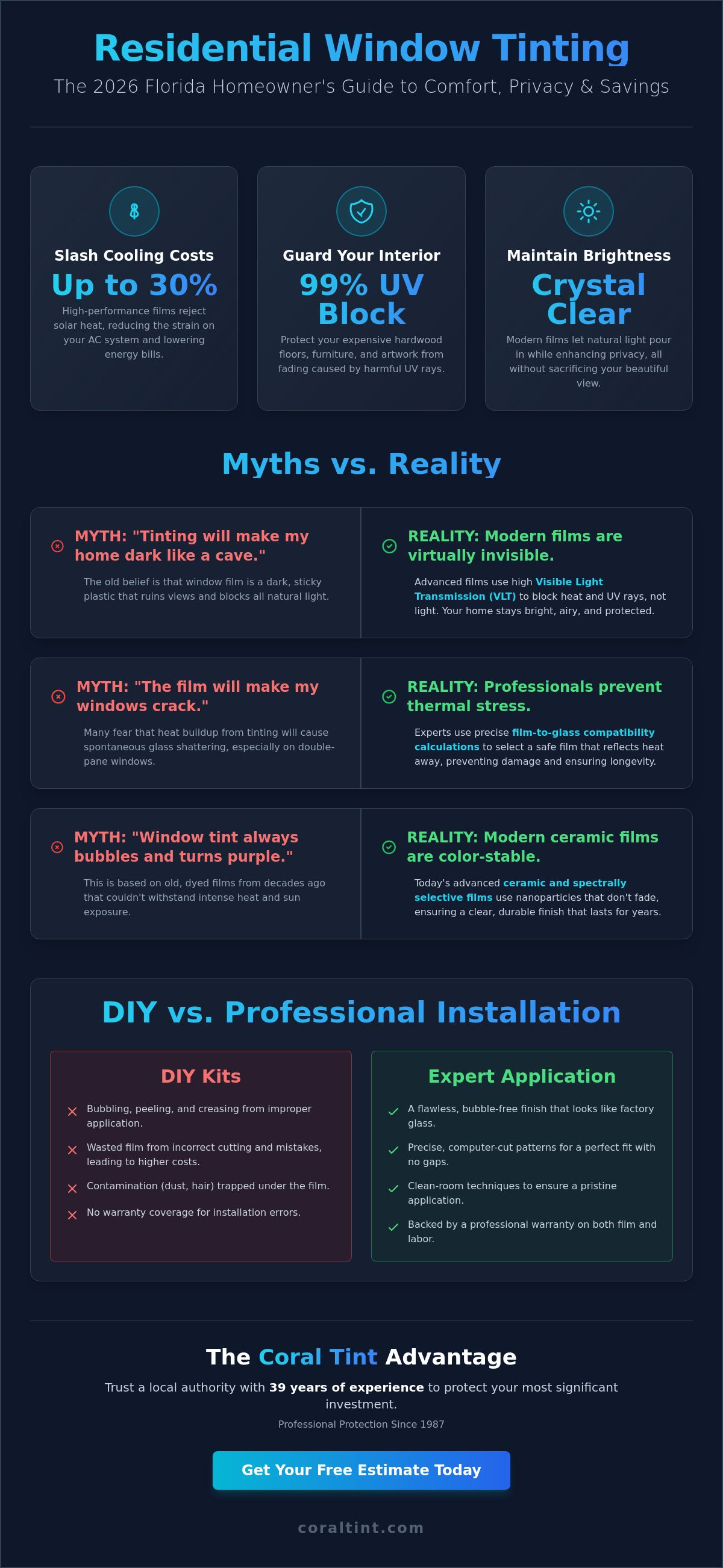
Modern residential window tinting isn't a dark sticker. It's a high-tech glass upgrade that blocks 99% of UV rays while keeping your home bright and welcoming.
Professional installers use precise thermal stress calculations to prevent glass damage. This debunks the myth that film causes home windows to crack.
Avoid the hidden costs of DIY kits, such as bubbling and wasted film, by choosing expert application that ensures a flawless finish and long-term value.
Forget the purple tint of the past. Modern ceramic films are engineered to stay clear and durable, even under the intense Florida sun.
Trust a local authority with 39 years of experience to help you navigate Florida's 2026 regulations and unique thermal challenges.
What is Residential Window Tinting? Debunking the 'Dark Room' Myth
Many homeowners imagine window film as a dark, sticky plastic that ruins their view. In reality, What is window film? At its core, residential window tinting is a sophisticated glass upgrade. It consists of multi-layered polyester or ceramic materials applied directly to your existing windows. This technology allows us to improve your home’s performance and energy efficiency without the mess and expense of a full glass replacement.
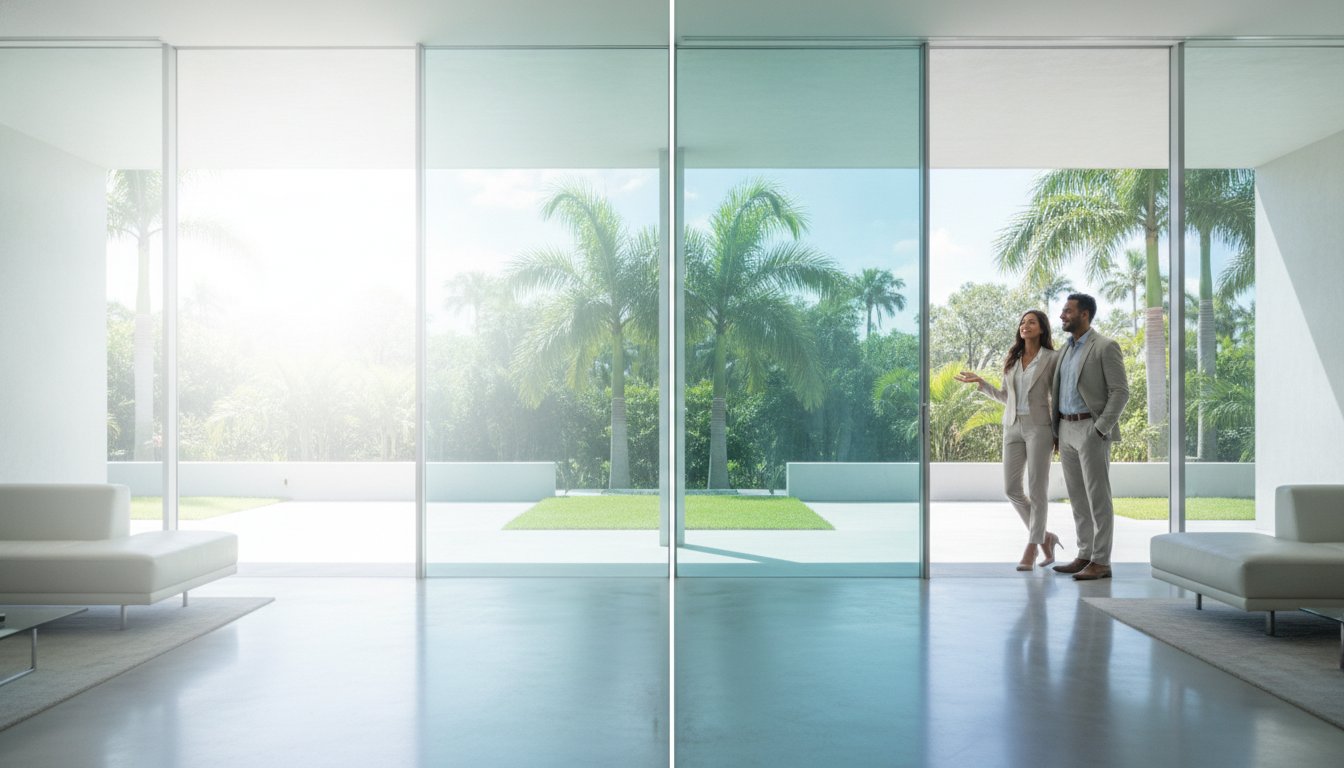
The "Dark Room" myth is a relic of the past. Modern films are designed to be incredibly efficient at blocking 99% of harmful UV rays while remaining virtually invisible to the eye. We measure this through Visible Light Transmission (VLT). This percentage represents how much light passes through the glass. A film with a high VLT provides all the protection you need while keeping your home bright and airy. You don't have to live in a cave to stay cool in the Florida sun.
The Evolution of Window Film Technology
The industry has shifted away from the basic dyed films that were common decades ago. Those older products often turned purple or bubbled because the dyes couldn't handle the intense South Florida heat. Today, residential window tinting utilizes advanced ceramic and spectrally selective coatings. These materials use nanoparticles to target specific parts of the solar spectrum, like infrared heat, while letting visible light pass through. By 2026, this technology has matured so much that we can provide a high-performance window film upgrade that looks completely natural on your glass.
Aesthetics: Will My Home Look Like a Commercial Building?
Your home is a reflection of your personal style, and the right film should complement its architecture. Whether you live in a modern estate in Parkland or a Mediterranean-style home in Boca Raton, there's a solution that fits. You aren't limited to the "mirror" look common in office buildings. While reflective films are excellent for maximum privacy, many homeowners now prefer non-reflective ceramic options. These films provide a sleek, factory-finish look that doesn't change the exterior appearance of your property. We also offer spectrally selective films that act as the gold standard for 2026; they block the heat you feel without altering the color of the light you see.
- Reflective Films: Best for high-sun areas where privacy is the main concern.
- Ceramic Films: Ideal for maintaining the natural aesthetic of your home while rejecting massive amounts of heat.
- Clear UV Protection: Perfect for preserving views while stopping furniture and flooring from fading.
The Science of Heat Rejection: Myth vs. Reality for Florida Homes
One of the biggest concerns we hear from South Florida homeowners is the fear of their windows cracking. There's a persistent myth that window tinting causes glass to break due to heat buildup. While it's true that film affects how glass handles solar energy, professional residential window tinting doesn't lead to spontaneous shattering. The real culprit is "Thermal Stress," which occurs when there's a significant temperature difference between different parts of the glass pane.
Our experts use precise calculations to ensure film-to-glass compatibility. We look at the glass type, the frame material, and even the external shading to select a product that manages heat safely. Instead of just absorbing heat, high-performance films are designed to reflect it away from your home. This technical precision is what separates a long-lasting installation from a costly mistake. If you're looking for a specific performance metric, look for Total Solar Energy Rejection (TSER). This number tells you exactly how much heat, light, and UV energy the film is blocking. Higher TSER ratings mean a cooler home and lower AC bills during those sweltering August afternoons.
Even during Florida's mild winters, window film remains a valuable asset. While we don't deal with snow, we do have nights where the temperature drops. Modern films offer low-emissivity (Low-E) properties that help retain your home's internal heat. This dual-action performance ensures your climate control system doesn't have to work overtime, regardless of the season.
Double-Pane Windows and Thermal Stress
Insulated Glass Units (IGUs), or double-pane windows, require a specialized approach. Using the wrong film on these units can trap excessive heat between the panes, potentially damaging the seals. This is why professional residential window film installation is so critical. We select films specifically rated for double-pane safety, which protects your window manufacturer’s warranty. Unlike DIY options that often rely on heavy heat absorption, our professional-grade films prioritize reflection to keep the glass temperature within safe limits.
UV Protection: It's Not Just About the Heat
Don't be fooled by the myth that your furniture is safe just because a room feels cool. Heat is only one factor in fading; UV rays and visible light play a massive role too. UVA and UVB rays can easily penetrate standard glass, causing expensive Parkland interiors and custom flooring to lose their luster. The U.S. Department of Energy highlights the Energy-saving benefits of window films as a primary reason for home upgrades, but the health benefits are just as vital. Many of our films carry the Skin Cancer Foundation seal, providing your family with a permanent layer of protection against sun-related health risks while they relax indoors. If you're curious about how these films perform on your specific glass type, our team at Coral Tint can provide the technical clarity you need.
DIY Kits vs. Professional Installation: The 'Easy and Cheap' Fallacy
It's tempting to grab a roll of film from a big-box retailer and think you've saved a fortune. The reality is often quite different. We've spent decades as a local authority in Coral Springs, and we frequently see the aftermath of the "easy and cheap" fallacy. While DIY kits might seem affordable upfront, the hidden costs quickly add up. You have to account for specialized tools, the high probability of wasting film through trial and error, and the very real risk of glass damage. If you use the wrong film on a double-pane window, you could cause a seal failure that costs thousands to fix.
Environment is your biggest enemy during a home project. South Florida humidity makes DIY residential window tinting nearly impossible for amateurs. High moisture levels and airborne particles mean that even a tiny mistake results in permanent bubbles or peeling. Professional installers work in controlled stages to ensure a flawless bond. Perhaps most importantly, DIY projects carry no protection. When you choose a professional, you're usually backed by a Lifetime Residential Warranty. This ensures your investment stays protected for as long as you own your home, a standard upheld by the International Window Film Association.
The 'Invisible' Dangers of Dust and Contamination
Achieving a "clean-room" finish in a standard Florida home requires more than just soapy water. Even microscopic dust specs can create visible bumps under the film. This challenge is magnified when dealing with the large sliding glass doors common in Coral Springs and Parkland. Our team uses specific multi-stage cleaning and filtration techniques to prevent contamination. We also utilize professional trimming methods. This eliminates the jagged edges and light gaps that typically scream "DIY" and eventually lead to edge-peeling.
Comparing Film Grades: Consumer vs. Professional
There's a massive gap in chemistry between what you find online and what a professional uses. Many consumer-grade "static cling" films are designed for temporary use and simply can't survive the 95-degree Broward heat. They often delaminate or lose their color within a single season. Professional residential window tinting relies on high-performance adhesives and ceramic layers that are chemically engineered to withstand decades of intense solar exposure. If you want to ensure you're getting the best value, check out our window tint company near me guide to learn how to vet local installers properly. Choosing professional expertise means you aren't just buying a sticker; you're investing in a long-term engineering solution for your home.
Maintenance and Longevity: Busting Myths About Bubbles and Peeling
Many homeowners hesitate to invest in residential window tinting because they've seen old, purple, bubbling film on cars or neighbors' windows. It's time to set the record straight. That unsightly purple hue was caused by cheap dyes in older products that simply couldn't withstand the intense Florida UV index. Modern high-performance films, especially ceramic options, contain no dyes at all. Instead, they use stable ceramic particles that maintain their color and clarity for decades. When you see a window that has turned purple, you're looking at a relic of the past, not the reality of 2026 technology.
Bubbling is almost always a sign of adhesive failure or poor installation rather than a flaw in the film itself. When you choose a professional-grade product, the adhesive is chemically engineered to bond permanently to the glass. In the South Florida climate, a quality installation should last between 15 and 20 years. We've seen local properties where our work from the early 2000s still looks pristine today. Longevity isn't just a hope; it's a result of combining superior materials with seasoned craftsmanship.
The Truth About Bubbles and Hazing
Don't panic if your windows look slightly blurry or "milky" immediately after the installation team leaves. This is a natural part of the curing process. Because we use a specialized mounting solution to position the film, a small amount of moisture remains trapped between the film and the glass. It typically takes about 48 to 72 hours for this moisture to evaporate in our humid climate. If you've opted for a thicker security & safety film, this drying time can extend slightly due to the material's density. True bubbles caused by dust or air won't disappear, but the temporary hazing from water will vanish completely, leaving a crystal-clear finish.
Cleaning and Care for 2026
You might've heard that you can't use Windex on tinted windows. This isn't just a myth; it's a vital rule for preserving your investment. Ammonia-based cleaners can eventually break down the scratch-resistant coating and the adhesive at the edges. For 2026, the gold standard for cleaning is simple: a soft microfiber cloth and a mild, ammonia-free solution. A few drops of baby shampoo in a spray bottle of water works perfectly. While modern films feature a robust scratch-resistant layer, they aren't "scratch-proof." Avoid abrasive scrubbers or paper towels, which can leave microscopic swirls over time. Simple, gentle care is all it takes to double the lifespan of your film.
Taking care of your investment is easy when you have the right facts. If you're ready to upgrade your home with a solution built to last, reach out to the experts at Coral Tint for a professional assessment of your windows.
The Coral Tint Advantage: Professional Protection Since 1987
Since 1987, we've been a stable and reliable fixture in the South Florida community. Our 39-year history isn't just a number; it represents thousands of homes protected and a deep, multi-generational understanding of the local climate. When you choose us for your residential window tinting, you're partnering with expert craftsmen who've mastered the trade over nearly four decades. We've seen every industry trend come and go, but our commitment to technical precision and personal service remains unchanged. We take immense pride in being a local business that treats every project as a long-term investment in our neighbors' comfort and security.
A professional consultation with our team is designed to be straightforward and transparent. We provide a "No-Hassle" quote process that focuses on answering your specific questions without any sales pressure. We don't just apply film; we provide a tailored strategy for your specific property. Whether you're in a modern Boca Raton estate or a traditional family home in Parkland, we select materials that match your architecture and your lifestyle goals. We know that a house in Coconut Creek has different thermal challenges than a beachfront property, and we adjust our technical recommendations to meet those specific needs.
Customized Solutions for Every Broward Neighborhood
We understand the unique layout and privacy needs of Broward County suburbs. In Pompano and Coconut Creek, where suburban developments often place homes in close proximity, privacy is a top priority for many homeowners. We use specialized films that provide enhanced daytime privacy without sacrificing your view of the outdoors. Our team also pays close attention to the unique sun angles of Florida's east-west facing homes. These properties often suffer from intense "hot spots" and glare in the late afternoon. By using only the highest-grade ceramic and safety films, we ensure your glass performs at its peak even during the most demanding hours of the day.
Ready to Shield Your Home?
Investing in residential window tinting offers a clear return on investment through reduced monthly energy expenses and the long-term preservation of your interior assets. You're shielding your hardwood floors, your custom furniture, and your family from the harsh realities of the Florida sun. If you're ready to experience the difference that 39 years of local expertise makes, we invite you to request a personalized tint quote. Our team is here to provide the expert craftsmanship and reliable service you deserve to keep your home cool, private, and protected for years to come.
Secure Your Home’s Future Against the Florida Sun
Choosing the right protection for your home shouldn't be a guessing game. We've explored how modern residential window tinting has transformed into a high-tech glass upgrade that rejects intense heat while keeping your rooms bright and beautiful. By moving past outdated myths and choosing professional installation, you ensure your windows handle thermal stress safely while providing the privacy your family deserves.
Our team has been serving Coral Springs since 1987, providing the community with reliable, long-term solutions. We specialize in high-heat ceramic films and back every home installation with a Lifetime Residential Warranty. This commitment to excellence ensures your furniture stays protected from UV fading and your cooling costs remain manageable throughout the sweltering Florida summers.
It's time to stop letting the sun dictate your home's comfort level. Request Your Free 2026 Residential Tint Quote Today and see why local homeowners trust our seasoned experts to shield their most valuable assets. We're ready to bring our decades of craftsmanship to your next project.
Frequently Asked Questions
Will residential window tinting void my window manufacturer's warranty?
Most window manufacturers will void the glass warranty if any film is applied. However, we provide a matching warranty that covers the glass and the film to ensure you remain fully protected. This industry-standard practice bridges the gap so you can enjoy the benefits of solar control without the fear of losing your original coverage or financial security.
Can I tint my windows if they are already double-paned or Low-E glass?
You can safely tint double-paned or Low-E glass as long as you select a film compatible with those specific units. Our team uses thermal stress calculations to choose films that reflect heat rather than absorbing it. This prevents the excessive heat buildup that can damage the seals on your insulated glass units, ensuring your windows stay functional and efficient for years.
How much can I realistically expect to save on my Florida AC bill?
Florida homeowners can typically expect to see a reduction in cooling costs by up to 30% after a professional installation. Since windows are responsible for about 25% to 30% of residential energy use, blocking solar heat gain significantly lowers the workload on your AC system. This leads to lower monthly expenses and a much more comfortable interior climate even during our hottest months.
To further enhance these savings, it is essential to ensure your cooling system is running at peak efficiency. For homeowners in Southwest Florida, Ultra Air Heating and Cooling offers expert HVAC services that complement your window film by optimizing your home's overall climate control performance.
Does 'One-Way' privacy film work at night when my lights are on?
No, 'One-Way' privacy film does not work at night when your interior lights are on and it is dark outside. Privacy film relies on a light imbalance where the side with more light becomes reflective. At night, the effect reverses. People outside can see in while you see a reflection of your own living room. We always recommend using blinds or curtains for evening privacy.
Is window film the same thing as hurricane glass or impact windows?
Window film is not the same as impact windows, but security & safety film provides a vital layer of protection for your glass. While it won't prevent glass from breaking under extreme pressure, it is designed to hold the shattered pieces together within the frame. This reduces the risk of flying shards and makes forced entry much more difficult for potential intruders.
How long does it take to tint a standard 3-bedroom home in Coral Springs?
A standard 3-bedroom home in Coral Springs typically takes one full business day to complete. Larger projects or homes with complex window designs may require additional time for precision trimming and cleaning. We focus on a frictionless service process to ensure your daily routine is minimally disrupted while we work to secure your property and enhance your comfort.
Can window tinting stop my hardwood floors from fading?
Residential window tinting can block up to 99% of the UV rays that cause hardwood floors and rugs to fade. While it won't stop fading entirely, because visible light and heat also play a role, it significantly extends the life of your interior assets. This proactive step protects your expensive flooring and furniture from the relentless South Florida sun.
What is the difference between automotive tint and residential window tint?
The primary difference between automotive tint and residential window tinting lies in the film's chemistry and how it handles heat. Automotive films are designed for curved glass and shorter exposure times. Residential films are engineered for flat glass and decades of stationary sun exposure. Using automotive film on a home window can lead to glass breakage because home windows don't expand like tempered car glass.