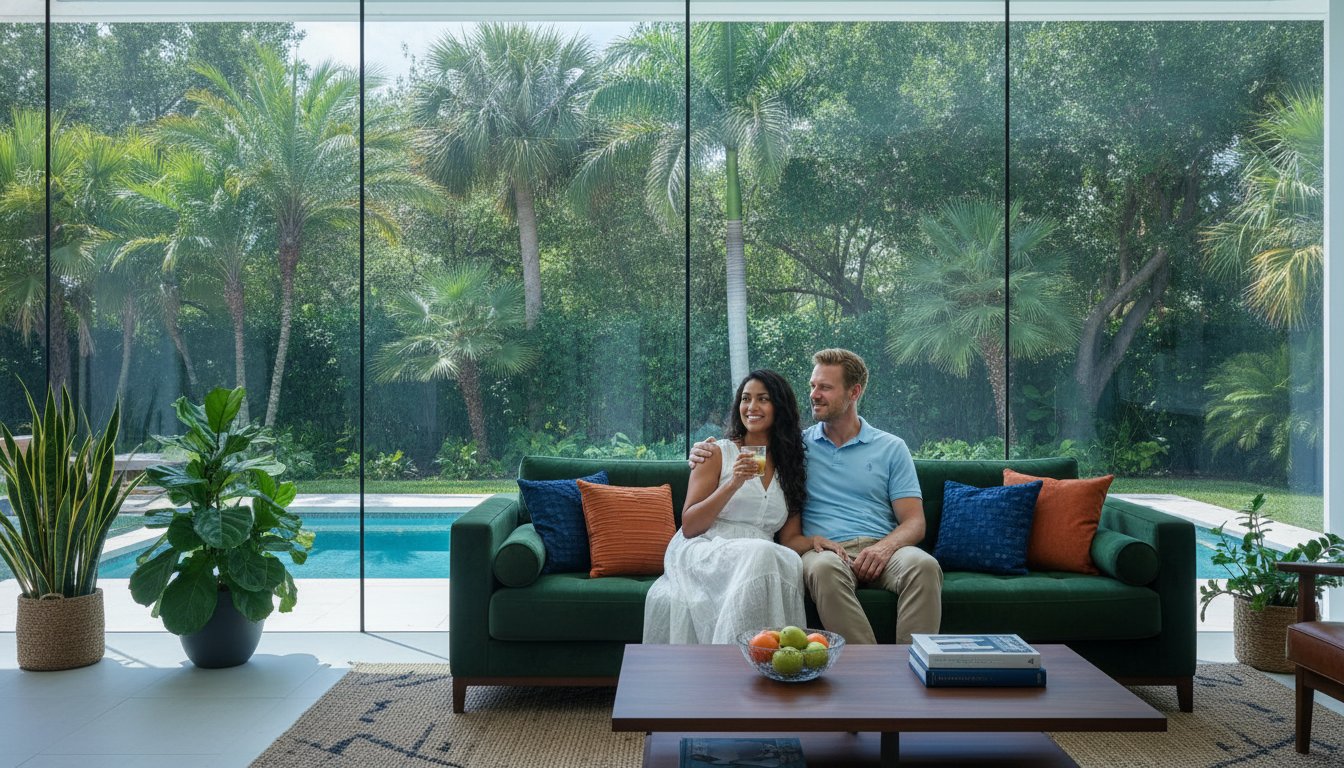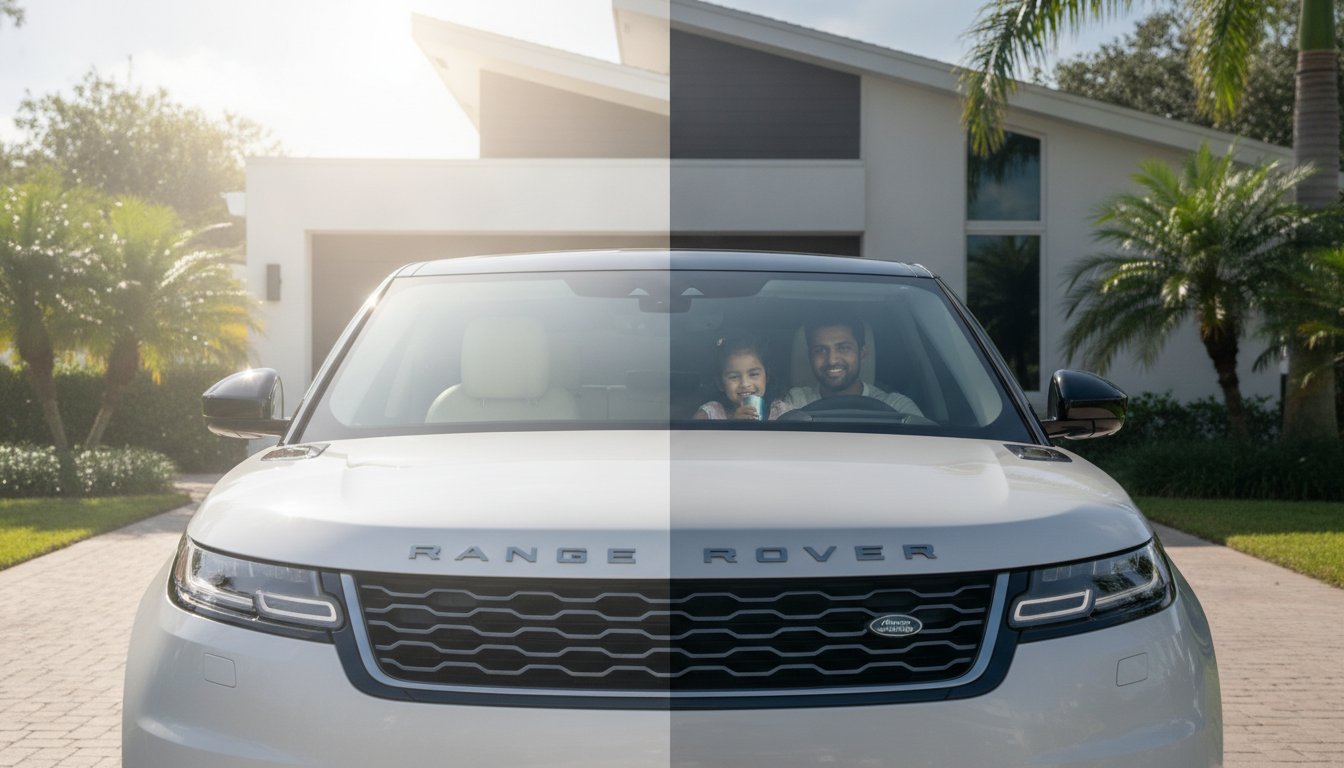
Did you know that when it's 95 degrees in Broward County, your parked car can reach a staggering 140 degrees in just sixty minutes? It's a common struggle for South Florida residents, where the relentless sun turns west-facing rooms into saunas and ruins expensive flooring. You might think that the only solution is to live in total darkness behind heavy curtains or "limo-style" windows. At Coral Tint, we've helped our neighbors since 1995 understand that modern sunlight tint is actually a high-tech radiation shield, not just a dark sticker.
We understand the frustration of watching your furniture fade while your energy bills climb every summer. This article will show you how the right film can block up to 99% of UV rays and over 90% of infrared heat without ruining your view. We'll bust the five biggest myths about solar protection so you can choose the best ceramic or nano-ceramic film for your needs. From Florida sales tax exemptions to the latest 2026 graphene-infused technologies, you'll get the facts you need for total peace of mind and a much cooler home.
Key Takeaways
- Understand why UV protection alone isn't enough and how to target the 53% of solar energy that arrives as infrared heat.
- Discover how modern sunlight tint can lower your cooling costs without making your home or vehicle look like a dark cave.
- Learn to identify the most vulnerable windows in your property based on solar orientation to prevent fading on expensive furniture and flooring.
- Find out how precision technology like computer-cut systems ensures a seamless fit and long-term durability for your professional installation.
- Explore 2026 financial incentives including Florida sales tax exemptions that make high-performance solar protection more affordable for Broward families.
What is Sunlight Tint? Understanding Solar Control in 2026
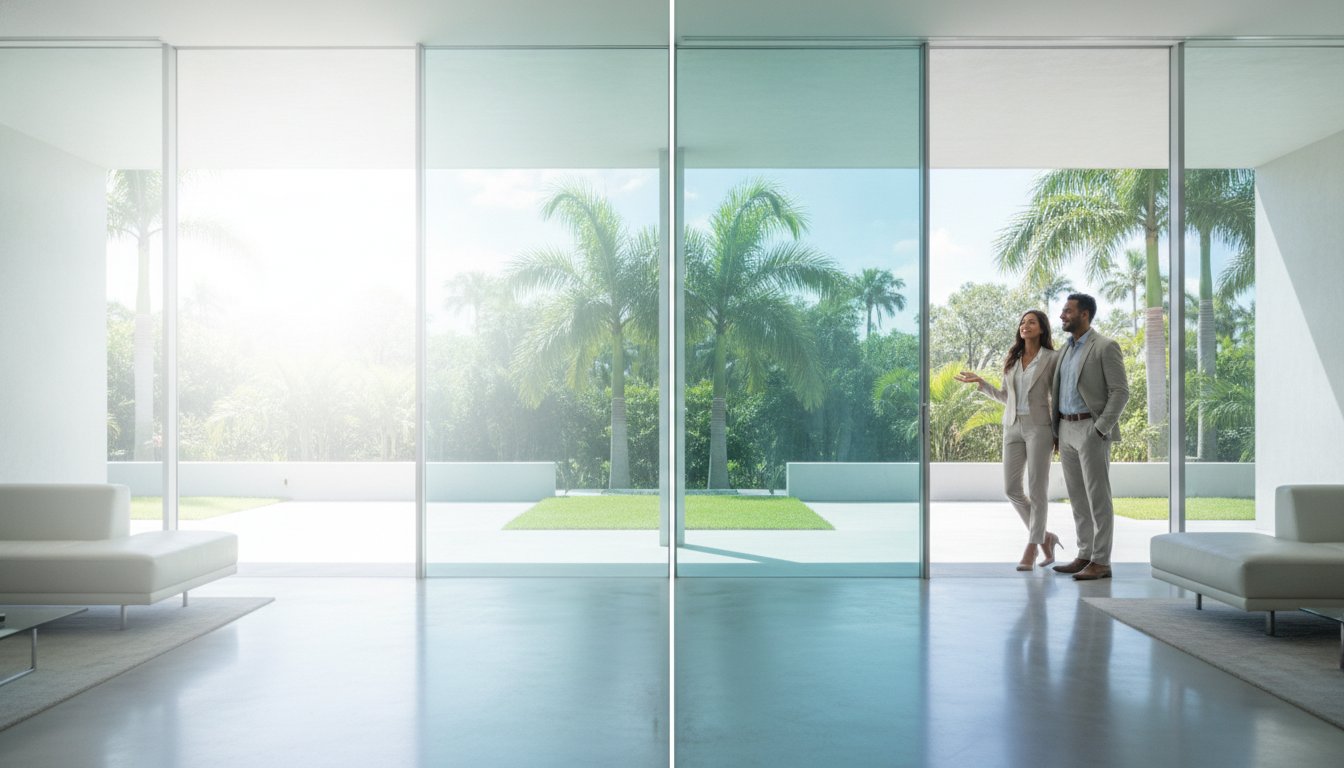
In 2026, the concept of a "tint" has moved far beyond just darkening a piece of glass. Sunlight tint is a sophisticated, multi-layered polyester or ceramic laminate engineered to manage solar energy with surgical precision. It doesn't just block light. It selectively filters out the invisible parts of the spectrum that cause the most harm. Its primary role is to reflect or absorb specific wavelengths of light before they ever enter your living room or car cabin. While traditional films relied on dark dyes, modern sunlight tint uses advanced materials to target infrared heat and ultraviolet radiation while maintaining crystal-clear visibility.
This technology is versatile. We provide specialized formulations designed specifically for automotive, residential, and marine environments. The 2026 industry standard has shifted away from simply looking at how dark a film is. Today, we focus on Total Solar Energy Rejection (TSER). This metric provides a comprehensive look at how well a film handles the entire solar spectrum, including visible light, infrared, and UV rays. By focusing on TSER, we ensure that your property stays cool without sacrificing the natural light you love.
The Evolution of Window Film Technology
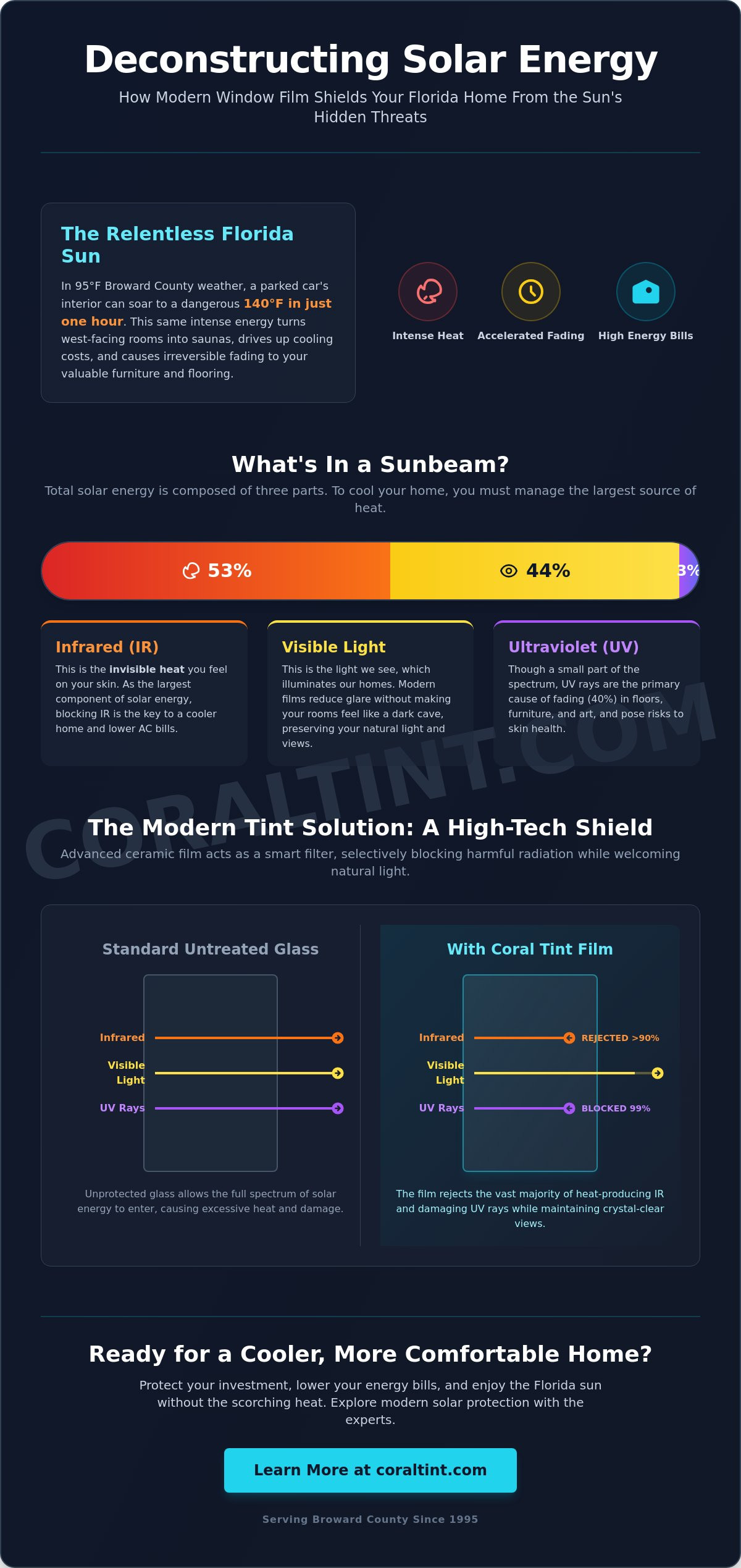
Early window films were often simple dyed products that eventually turned purple and bubbled under the Florida sun. Modern technology has replaced these with inorganic ceramic structures that never change color. Window film today even includes clear options that look like standard glass but offer massive heat rejection. Total Solar Energy Rejection (TSER) is the most critical metric for Florida residents because it measures the film's ability to block heat you can feel and the radiation you can't see.
Why South Florida Requires Specialized Solutions
The UV radiation levels in Coral Springs and Parkland are significantly higher than in northern states, which accelerates the fading of your interiors. In coastal areas like Pompano and Boca, salt air and high humidity can degrade inferior products within a few years. That's why we use professional-grade materials that resist corrosion and delamination. If you're looking for a deeper dive into how to protect your property, our residential window film installation guide offers a complete breakdown for local homeowners. We've spent over 30 years perfecting our selection to match the unique demands of the Broward County climate.
The Science of the Sun: UV vs. Infrared vs. Visible Light
To truly understand how sunlight tint protects your Broward County home, we have to look at what's actually hitting your glass. Solar energy isn't just one thing; it's a spectrum divided into three distinct parts. Only 3% of that energy is ultraviolet (UV) light, while 44% is visible light that allows us to see. The remaining 53% is infrared radiation. This is the "invisible heat" you feel on your skin when standing near a window in the middle of a July afternoon. If your film doesn't address that 53%, your rooms will stay hot regardless of how dark the windows look.
Many people believe that a film labeled with "99% UV protection" will automatically keep their house cool. While UV protection is vital for other reasons, it only addresses a tiny fraction of the sun's total energy. To actually reduce solar heat gain, you need a film that targets the infrared spectrum. Modern ceramic films use nano-particles to selectively block these heat-carrying wavelengths while allowing visible light to pass through. This means you can keep your view of the Coral Springs landscape without the sweltering temperatures that usually come with it. Some advanced films also include "Low-E" coatings, which help retain indoor heat during our few chilly winter nights, providing year-round efficiency.
The Invisible Threat: UV Radiation and Skin Health
While UV rays don't contribute much to the heat, they're the primary cause of damage to both your family and your belongings. Professional-grade sunlight tint blocks 99% of these rays, acting as a secondary shield that dermatologists often recommend for individuals with sun sensitivity. This protection is equally critical for your interior. UV radiation is responsible for roughly 40% of the fading seen on carpets, hardwood floors, and expensive artwork. By filtering these rays, you're not just protecting your skin; you're preserving the investment you've made in your home's interior design.
Infrared Rejection: The Key to Lower AC Bills
If you have west-facing rooms, you've likely noticed your air conditioner struggling to keep up as the sun goes down. This is caused by "solar gain," where infrared rays turn your windows into radiators. High-performance solar films can reduce the surface temperature of your glass by as much as 20 degrees compared to untreated glass. Unlike standard dark tints that simply absorb heat and stay hot to the touch, premium films reflect that energy away from the building. This shift from absorption to reflection is what allows your AC to cycle off more frequently, leading to lower monthly energy costs. If you're tired of "hot spots" in your home, you can request a free estimate to see which ceramic film fits your specific window orientation.
Myth-Busting: The 5 Biggest Misconceptions About Sunlight Tint
Many homeowners in Coral Springs hesitate to install sunlight tint because of outdated information from twenty years ago. The industry has changed dramatically, yet myths about "purple bubbles" and "dark caves" persist. We hear these concerns every day, so let's set the record straight with the facts about modern solar protection. The National Fenestration Rating Council confirms that solar control films are highly effective when rated correctly for Solar Heat Gain Coefficient (SHGC), proving that performance is based on science, not just shade.
One of the most persistent fears is that window film will cause double-pane windows to crack due to thermal stress. This only happens when the wrong film is applied to the wrong glass. Professional installers use sophisticated film-to-glass thermal stress charts to ensure the product is compatible with your specific window type. Another common myth is that window film is a permanent, damaging change to your property. In reality, while our high-quality sunlight tint is designed to last for decades, it can be professionally removed at any time without leaving a trace of residue or damaging the glass surface.
Darkness vs. Performance: Understanding VLT
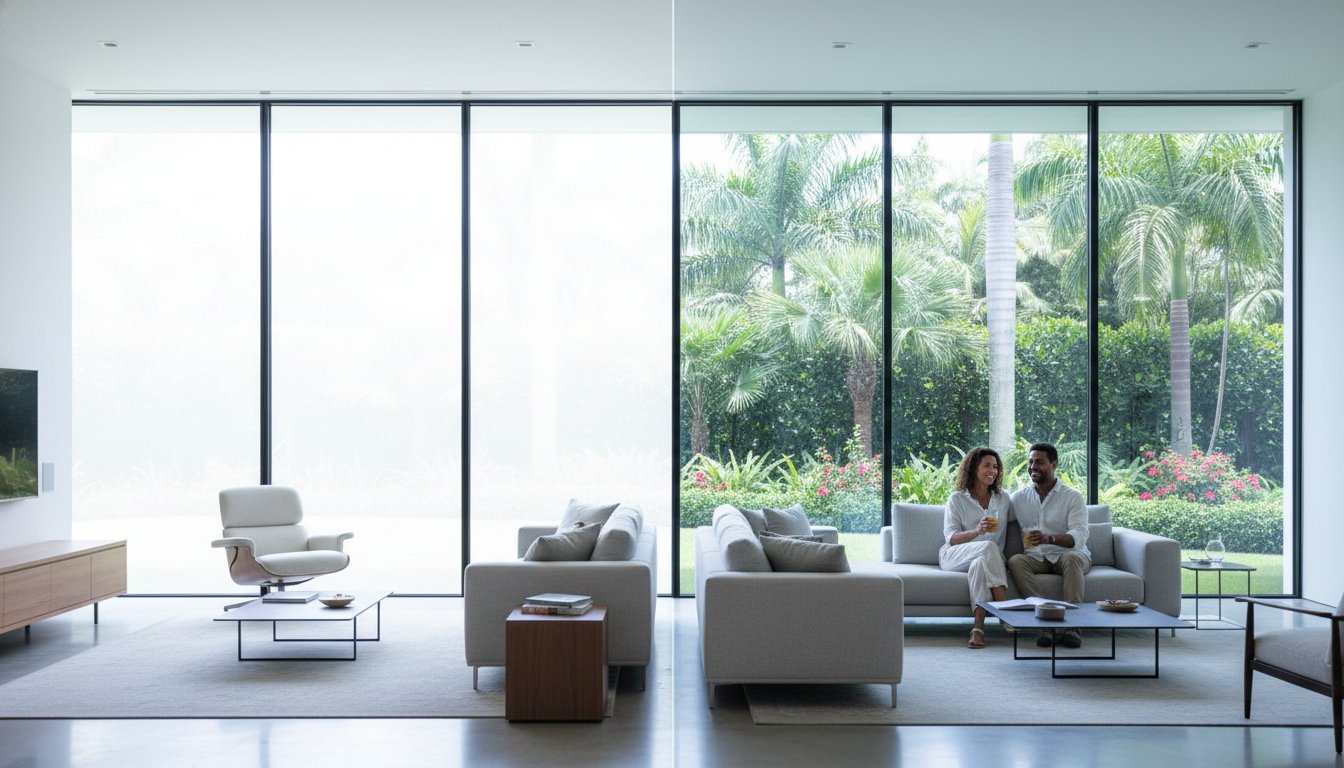
The "Ceramic Revolution" has completely debunked the idea that darker film equals more heat rejection. Visible Light Transmission (VLT) measures the percentage of light that passes through the glass. Today, a "spectrally selective" film with a 70% VLT (which is virtually clear) can actually block more heat than a 5% "limo tint" made from cheap dyed polyester. These advanced films allow you to maintain your home's aesthetic and natural light while still slashing your cooling costs. If you're curious about how these light levels translate to your vehicle, check out our car window tinting service guide for a breakdown of Florida's strict VLT regulations.
The DIY Trap: Why Cheap Film Fails in Florida
It's tempting to grab a DIY kit from a big-box store, but Florida's climate is notoriously unforgiving. Humidity levels in Coconut Creek often hit 90%, which is a death sentence for the low-grade adhesives found in retail kits. Within a single summer, these films often begin to haze, bubble, or develop a distorted "orange peel" texture. Professional installation isn't just about the clean look; it's about the chemistry. We use industrial-grade adhesives that are chemically bonded to the glass, which is why our products come with a national lifetime manufacturer warranty that DIY kits simply can't offer. You get peace of mind knowing your investment won't peel away when the next heatwave hits.
Choosing the Right Film for Your Florida Property
Selecting the perfect sunlight tint for your property isn't a one-size-fits-all process. You need a logical strategy to ensure your investment pays off in comfort and energy savings. First, identify your primary goal. While some families prioritize heat reduction, others want privacy or protection against fading for expensive interiors. Next, evaluate your window orientation. In Broward County, windows facing south and west receive the most intense solar radiation, making them the priority for high-performance ceramic films.
Once you've identified the "hot spots," compare the specific film types available. Ceramic films offer the highest heat rejection without a reflective look. Dual-reflective films are excellent for residential privacy; they block the view from the outside during the day but allow you to see out clearly at night. Neutral films are the choice for those who want the protection to be completely invisible. Before you commit, check with your local HOA in Parkland or Coral Springs. Many neighborhoods have specific codes regarding the exterior appearance of windows, and we can help you select a film that complies with these regulations while still delivering maximum protection.
Finally, always verify your installer's credentials. A lifetime warranty is only as good as the company backing it. We recommend looking for a provider with a long-standing local reputation, like our team that has served the community since 1995. If you're ready to see the difference for yourself, you can request a free quote today from our expert staff.
Residential vs. Commercial Needs
The priorities for a Pompano Beach storefront often differ from a home in Parkland. Businesses frequently focus on glare reduction to prevent eye strain for employees working on computer screens. For homeowners, the focus is usually on balancing natural light with curb appeal. We also suggest considering security and safety film as an add-on for commercial storefronts and residential sliding glass doors. These films hold glass together upon impact, providing a critical layer of protection against both storms and intruders.
Marine and Automotive Considerations
South Florida's environment is uniquely harsh on vehicles and vessels. Boats require specialized marine films designed to withstand constant saltwater exposure and high humidity without corroding. Similarly, sunlight tint on your car is about more than just looks. It protects your dashboard and leather seats from cracking under the 140-degree temperatures that build up in a parked vehicle. For boat owners looking for specific protection strategies, our marine window tinting guide provides a detailed look at navigating the challenges of the open water.
The Coral Tint Difference: Professional Installation in Broward
Choosing a high-performance sunlight tint is only half the battle. The final result depends entirely on the precision of the installation. At Coral Tint, we bring over 30 years of experience to every project, ensuring that your investment in solar protection is handled by seasoned experts. We don't believe in "good enough" when it comes to your home or vehicle. That's why we utilize state-of-the-art computer cutting systems for every job. This technology allows us to achieve a perfect edge-to-edge fit that manual cutting simply can't match, eliminating the light gaps and jagged edges often found with less experienced installers.
Our commitment to quality has earned us the title of "Voted Best" by Our City News for eight consecutive years. This local endorsement is a testament to our dedication to the Coral Springs and Parkland community. We understand that your time is valuable, which is why we focus on providing a "Seamless Experience" from the first phone call to the final inspection. Whether we are working on your family SUV or your sliding glass doors, our goal is to provide peace of mind through technical precision and professional courtesy.
A Family-Owned Legacy Since 1987
Our local roots run deep. Being family-owned since 1987 gives us a unique perspective on the specific challenges of Florida weather. We've seen how the relentless sun and high humidity can destroy inferior products, so we only select films that are proven to last in our tropical climate. Because we are a stable, locally operated business, our national lifetime warranty actually means something. You don't have to worry about a "here today, gone tomorrow" fly-by-night operation. We've built our reputation on being accessible, which is why we maintain a "Call or Text" culture that fits the busy schedules of South Florida families.
Your Next Steps to a Cooler Home
Protecting your interior shouldn't be a stressful process. We've refined our workflow to be as non-intrusive as possible. When you're ready to start, the first step is getting an accurate tint quote tailored to your specific needs. During a residential installation, our team works cleanly and efficiently. We use drop cloths to protect your flooring and ensure that we leave your home exactly as we found it, only much cooler. Don't let another summer of high energy bills and fading furniture pass you by. Reach out today to experience the professional sunlight tint difference that has kept Broward County comfortable for decades.
Take Control of the South Florida Sun
Living in Broward County shouldn't mean choosing between a beautiful view and a comfortable temperature. You now understand that modern sunlight tint is a sophisticated radiation shield designed to reject 99% of UV rays and over 90% of infrared heat. By moving past the old myths of "dark caves" and "cracked glass," you can protect your expensive flooring and furniture while slashing your monthly cooling costs. These high-tech films offer a clear path to a more energy-efficient and private home.
At Coral Tint, we've remained a family-owned fixture in the community since 1987. Our neighbors have voted us the "Best of Coral Springs" for eight consecutive years because we prioritize technical precision and a seamless customer experience. Every professional installation we perform comes with a lifetime national warranty to ensure your long-term peace of mind. It's time to stop the fading and start enjoying every room in your home, regardless of where the sun hits. We're ready to help you find the perfect solution for your specific needs.
Protect your home and family; get your free quote from Coral Tint today!
Frequently Asked Questions
Will sunlight tint actually stop my wood floors from fading?
Sunlight tint will significantly slow down the fading of your wood floors by blocking the three main causes of solar damage. UV radiation is responsible for roughly 40% of fading, while visible light and infrared heat account for about 25% each. By filtering out 99% of UV rays and a high percentage of heat, our professional films extend the life of your flooring for years. It's a vital investment for protecting expensive Brazilian cherry or oak finishes.
Can I see out of my windows at night if I have solar film installed?
You can absolutely see through your windows at night, though the view depends on the type of film you choose. Dual-reflective films are specifically engineered to have low internal reflectivity, which prevents the "mirror effect" when your indoor lights are on. This technology ensures you can still enjoy your evening landscape in Coral Springs. If you choose a neutral or ceramic film, the change in nighttime visibility is virtually unnoticeable to the naked eye.
How long does professional window film last in the Florida sun?
Professional window film typically lasts 15 to 20 years in the intense Florida sun when installed by experts. High-quality ceramic and polyester laminates are designed to withstand the 90% humidity levels common in Broward County without bubbling or peeling. Because we use industrial-grade adhesives, our installations are backed by a national lifetime warranty. This guarantee ensures that your solar protection remains clear and effective for as long as you own your home.
Is window film the same thing as the "sunlight tint" I see on cars?
While the term sunlight tint is used for both, automotive and residential films are chemically different. Car films are designed to shrink and conform to curved glass, while residential films are made for flat architectural glass. Architectural films also handle thermal expansion differently to prevent glass breakage on large panes. Using automotive film on a house window can lead to seal failure or cracks, so we always use specialized residential formulations.
Does solar window film help with glare on my TV or computer screen?
Solar window film is highly effective at reducing glare on digital screens by controlling visible light transmission. By filtering out the harsh "white light" that causes reflections, you can enjoy your TV or computer monitor without closing the curtains. Most homeowners find that a film with a medium tint level reduces glare by 50% to 80%. This makes your living room or home office much more functional during peak daylight hours.
Will installing tint on my house windows void my window manufacturer warranty?
Some window manufacturers do state that applying aftermarket film voids their specific glass warranty. However, we solve this issue by offering warranty matching through our film manufacturers. If your window manufacturer refuses a claim because of the tint, the film's warranty steps in to cover the glass and seal failure. This ensures you maintain total protection for your windows while still enjoying the massive energy savings that solar film provides.
How do I clean my windows after they have been tinted?
You should clean your tinted windows using a soft microfiber cloth and a mild, ammonia-free solution. Simple mixtures of water and a few drops of dish soap work best to preserve the film's scratch-resistant coating. Never use abrasive pads or window cleaners containing ammonia, as these chemicals can eventually break down the polyester layers. Wait at least 30 days after installation before the first cleaning to allow the adhesive to fully cure.
Is there a specific tint that is best for hurricane-prone areas like South Florida?
Security and safety film is the best choice for hurricane-prone areas because it's designed to hold shattered glass together. While it doesn't make glass "hurricane-proof," it prevents dangerous shards from flying into your home during high-wind events or attempted break-ins. These films are much thicker than standard solar tint and are often anchored to the window frame. They provide an essential layer of 24/7 protection that works even when you aren't home.