 how-to
How Long Does Window Tinting Last? Film Lifespan Guide
Table of Contents
- How Long Does Window Tinting Last? The Short Answer
- How Long Does Car Window Tint Last?
- How Long Does Home Window Tint Last?
- Film Type and Lifespan: Dyed, Metalized, and Ceramic
- What Affects How Long Window Tint Lasts
- Signs Window Tint Needs Replacing
- How to Care for Window Tint
- Warranty, Replacement, and When to Re-Tint
- Frequently Asked Questions
Last Updated: October 20, 2026
How Long Does Window Tinting Last? The Short Answer
Most quality window tint lasts 5 to 10 years on a car and 10 to 20 years on a home, though film type and installation decide where you land in that range. At Coral Tint, we've installed precision-cut film across South Florida since 1995, and we've seen what separates tint that holds up from tint that fails early. The honest answer to how long does window tinting last depends on three things: the film, the installer, and the sun it faces. Below, we break down realistic lifespans by film type and use case, plus the aftercare that protects your investment.
How Long Does Car Window Tint Last?
Car window tint typically lasts 5 to 10 years with proper care. The exact number depends on film quality, sun exposure, and how the film was applied.
Automotive tint faces a hard life. It sits in direct sunlight, bakes in parked heat, and gets rolled up and down constantly. Cheap dyed films often fade or turn purple within 3 years. Ceramic films in a garage-kept car can stretch well past a decade.
Here's the split we see in practice:
- Budget dyed film: 3 to 5 years before fading or bubbling
- Metalized film: 5 to 8 years with good care
- Ceramic film: 8 to 10+ years, often longer
How Long Does Home Window Tint Last?
Home window tint generally lasts 10 to 20 years, roughly double the lifespan of automotive film. Residential glass stays fixed, so the film never flexes, peels at the edges from rolling, or takes the same wear.
Homeowners in Coral Springs often ask whether tint will make rooms feel dark. It won't if the film is chosen well. Modern residential films cut heat and glare while keeping visible light high. The trade-off is that south- and west-facing windows still age faster than shaded ones.
Automotive vs. Residential: Why the Numbers Differ
The gap comes down to movement and exposure. Car windows flex every time they roll down. That stress works the adhesive at the edges, which is where peeling usually starts.
Home windows don't move. But residential glass can face decades of unbroken afternoon sun, so UV exposure still matters. A car window might see more direct sun per square foot, while a home window sees it for far longer.
| Feature | Automotive Tint | Residential Tint |
|---|---|---|
| Typical lifespan | 5-10 years | 10-20 years |
| Main stressor | Rolling, heat, sun | Long-term UV exposure |
| Common failure | Edge peeling, bubbling | Fading, adhesive breakdown |
| Best film choice | Ceramic | Ceramic or metalized |
Film Type and Lifespan: Dyed, Metalized, and Ceramic
Film type is the biggest single predictor of lifespan, and it is the one variable you choose before installation. Most guides list three film types and stop. The useful detail is why each one ages the way it does, because the failure mechanism tells you what to watch for.
Dyed film gets its color from a dye layer sandwiched in the film. The dye absorbs solar energy, which is why it fades and shifts purple first. Once the dye breaks down, heat rejection drops with it. Expect 3 to 5 years before visible fading, and less in a hot, sunny climate.
Metalized film adds a thin layer of reflective metal, usually aluminum or a similar alloy. The metal layer reflects heat instead of absorbing it, so the film holds color longer than dyed film. The trade-off is that metal layers can interfere with cell, GPS, and toll-transponder signals in some vehicles. Expect 5 to 8 years with good care.
Ceramic film uses nano-ceramic particles rather than metal or dye. Ceramic particles are non-conductive, so they block heat without the signal interference of metalized film, and they resist fading better than dye. Expect 8 to 10+ years, often longer in a garage-kept car.
Here is the side-by-side most guides skip:
| Film type | Realistic lifespan | Primary failure mode | Signal interference |
|---|---|---|---|
| Dyed | 3-5 years | Dye fade, purple shift | None |
| Metalized | 5-8 years | Adhesive breakdown, edge peel | Possible |
| Ceramic | 8-10+ years | Edge peel, physical damage | None |
| Crystalline/advanced ceramic | 10+ years | Physical damage | None |
What most guides miss: the film's adhesive matters as much as the film itself. A premium ceramic film with a weak adhesive still peels at the edges, and the adhesive is often the first thing to fail in a hot climate. When you compare films, ask what adhesive system the manufacturer uses and whether the warranty covers adhesive failure separately from color change.
What Affects How Long Window Tint Lasts
Four factors decide whether your tint hits the low or high end of its range: sun exposure, climate, film quality, and installation quality. You control two of them directly.
Sun Exposure, Climate, and Installation Quality
Direct sunlight is the slow killer. UV rays break down the film's dyes and adhesive over time. In a hot, sunny climate like South Florida, film ages faster than in a mild one.
Installation quality is where buyers get burned. A common mistake is choosing a shop on price alone. Poor prep traps dust under the film, and sloppy edges peel within a year or two. Proper installation means clean glass, precise cuts, and a full cure.
Signs Window Tint Needs Replacing
Watch for bubbling, peeling edges, purple or faded color, and a hazy look. Any of these means the film is breaking down and losing performance.
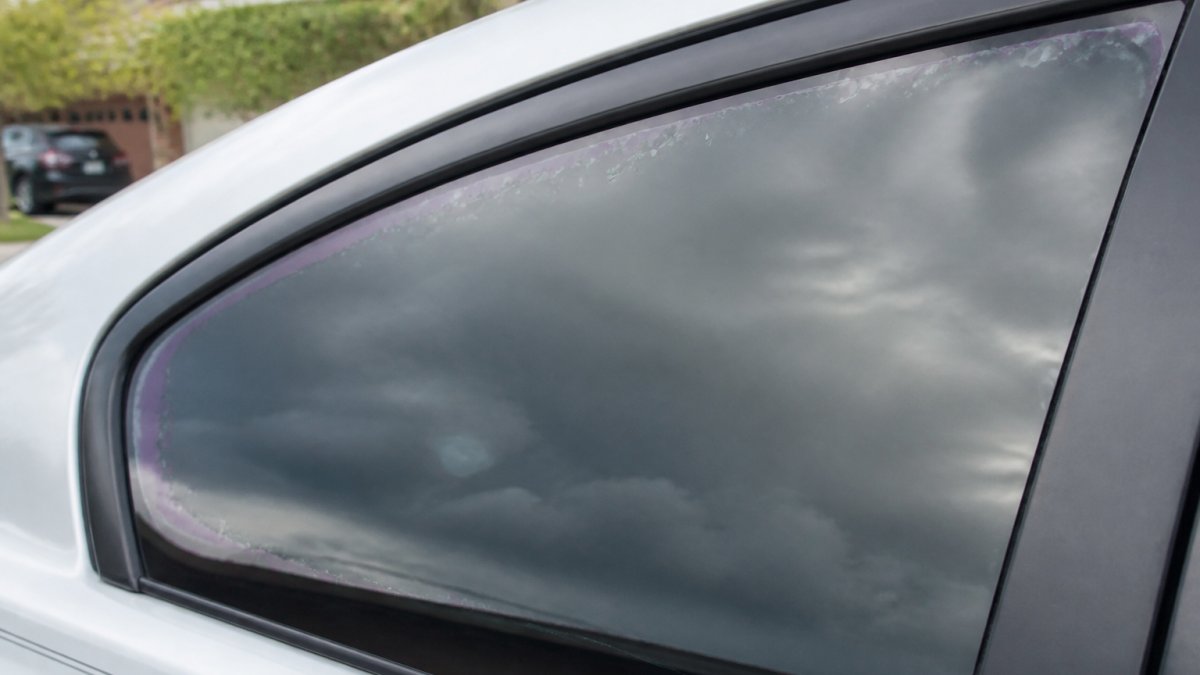
Here's how to tell normal aging from an installation defect:
- Bubbles across the whole pane: usually film failure, not install
- Peeling at one edge: often an installation or cure issue
- Purple tint: dye breakdown from UV exposure
- Fine scratches in a pattern: cleaning damage or install debris
How to Care for Window Tint
Good aftercare adds years to any film. Wait about a week before cleaning new tint, then use mild soap and water with a soft cloth. Skip ammonia-based cleaners, which degrade film over time.
A simple routine keeps tint healthy:
- Wait 3 to 7 days before the first cleaning
- Use a soft microfiber cloth, never paper towels
- Clean with mild soap and water, no ammonia
- Avoid scraping or abrasive pads
- Park in shade when you can
Warranty, Replacement, and When to Re-Tint
Re-tint when film bubbles, peels, or fades enough to lose heat rejection. The harder question is whether the failure is covered by warranty or comes out of your pocket, and that depends on what failed and why.
What Warranties Usually Cover
Most manufacturer warranties on quality film run from 5 years to lifetime, and the terms vary more than the headline number suggests. A common pattern is coverage for bubbling, peeling, and color change caused by film defects. What warranties typically exclude:
- Damage from ammonia-based or abrasive cleaners
- Scratches from scraping, ice removal, or debris
- Accidents, vandalism, or glass breakage
- Improper installation by a non-authorized shop
- Normal wear that does not meet the defect threshold
Ask three questions before you buy: How long is the warranty, is it prorated, and is it transferable if you sell the car or home? A transferable lifetime warranty adds resale value; a non-transferable one does not. Also ask whether the warranty covers removal and reinstallation labor or only the film itself, because labor is often the larger cost.
What Replacement Involves
Removal and replacement is a job for a pro. Old adhesive has to be softened and scraped off without scratching the glass, and rear windows with defroster lines are the riskiest because a careless scrape can damage the grid. A shop typically removes the old film, cleans the glass, and installs new film in a single visit for side and rear windows; residential glass may take longer per pane because of size and access.
Cost depends on film type, the number and size of windows, and whether old film must be removed first. Removal adds labor, and heavily degraded film that comes off in fragments takes longer than film that peels in sheets. Get a quote that separates removal from installation so you can compare shops fairly.
If your tint is aging, the cheapest path is usually to catch edge peeling early, before moisture works under the film and the failure spreads. A small edge lift is a quick fix; a fully bubbled pane is a full replacement.
Frequently Asked Questions
How long does window tinting last on a car?
Most professionally installed automotive tint lasts 5 to 10 years, and ceramic films can reach 10 to 15 years with good care. How long car window tint lasts depends on film type, sun exposure, and installation quality. Cars parked outside in strong sun all day age faster than garaged vehicles. Cheap dyed film may start fading or turning purple within 3 years, while quality ceramic film holds its color and heat rejection far longer.
Does ceramic window tint last longer than dyed tint?
Yes. Ceramic film typically outlasts dyed film by several years. Dyed film relies on a color layer that breaks down under UV exposure, which is why it fades, discolors, and turns purple first. Ceramic film uses non-conductive ceramic particles that resist UV degradation, so it keeps its performance and appearance longer. Expect roughly 3 to 5 years from basic dyed film and 10 years or more from quality ceramic film with professional installation.
What are the signs that window tint needs replacing?
Watch for bubbling, peeling at the edges, purple or hazy discoloration, cracks, and a noticeable drop in heat rejection. Small bubbles that appear within days of installation are usually installation defects and should be fixed under warranty. Bubbles, peeling, or color shift that develop years later point to normal film degradation. Once tint bubbles or peels, it cannot be repaired, only removed and replaced.
How can you make window tint last longer?
Wait about a week after installation before cleaning, then use a soft microfiber cloth and an ammonia-free glass cleaner. Avoid abrasive pads, scrapers, and harsh chemicals that attack the adhesive. Park in shade or a garage when possible to reduce UV exposure. On home windows, keep blinds and furniture from pressing against the film. Prompt care and quality installation are the two biggest factors in how long window tinting lasts.
Window tint only performs as long as it's installed and cared for properly. Whether you're protecting a car interior from fading or cutting heat and glare at home, the film and the installer decide the outcome. Coral Tint offers same-day auto tinting, precision-cut film, and a nationwide lifetime warranty, all from a family-owned shop trusted since 1995. Get started with Coral Tint and protect your glass for the long haul.