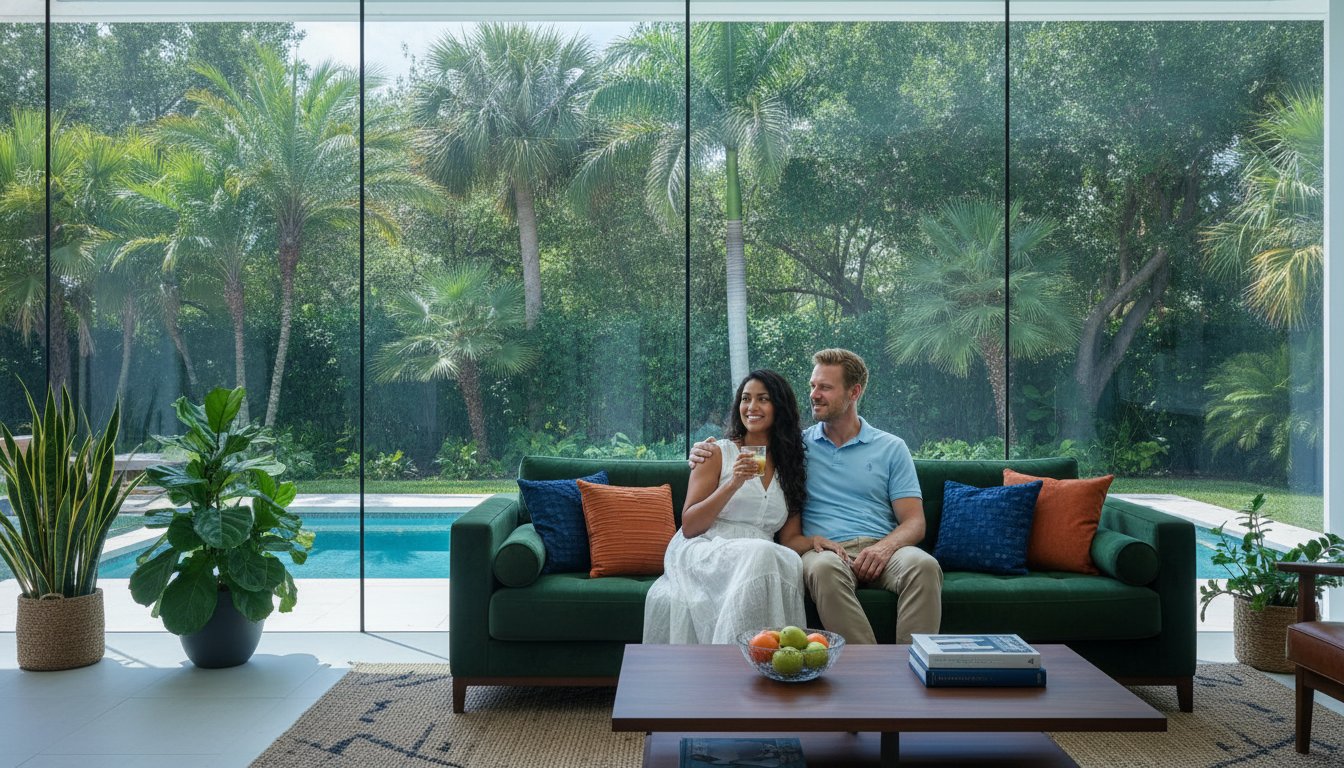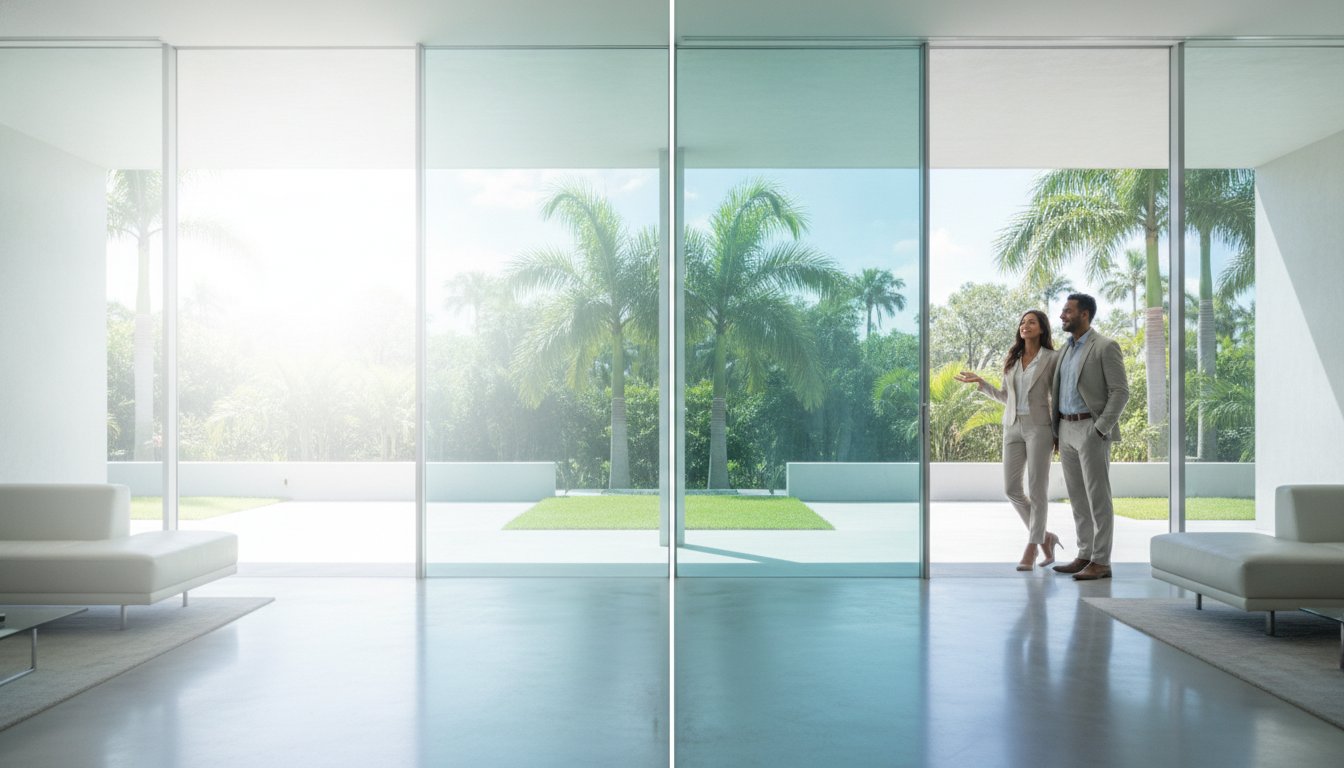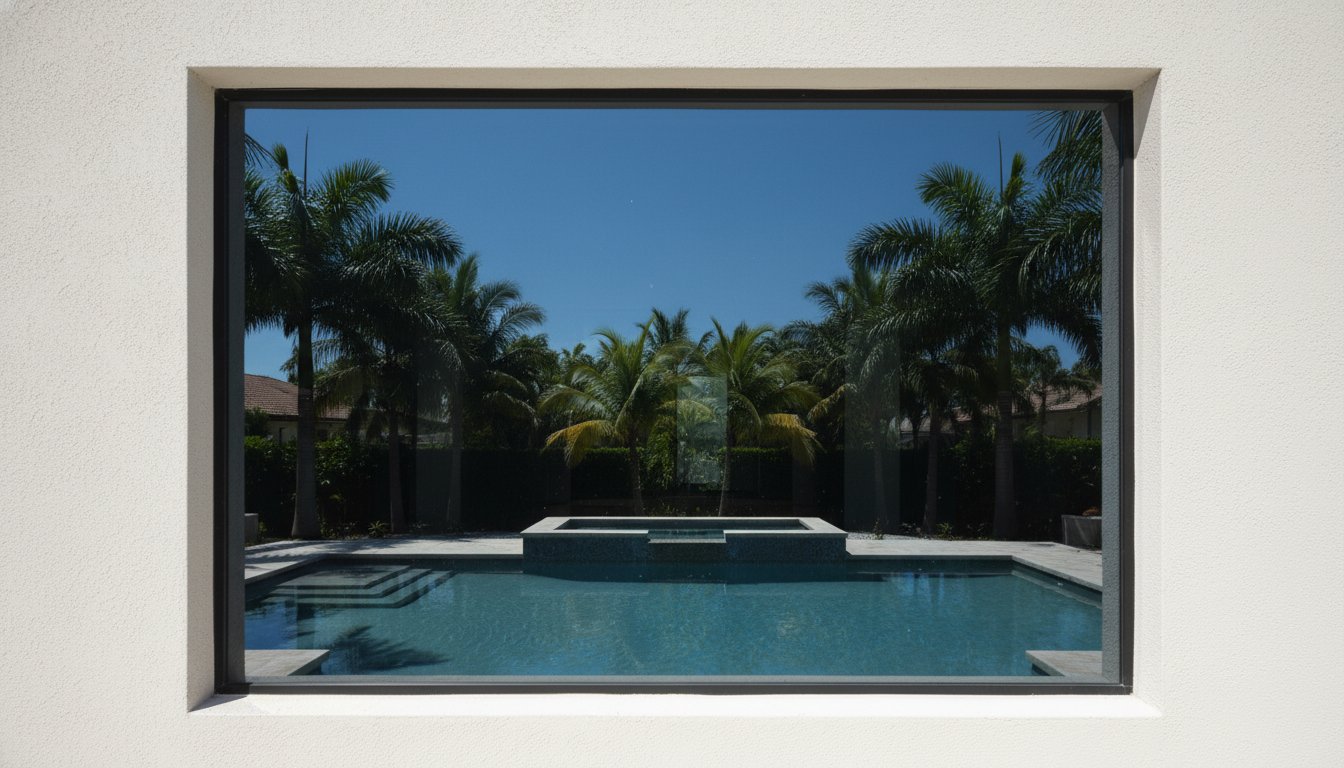
What if your windows could act as a one-way shield that lets you watch the kids in the pool while keeping the neighbors from seeing into your living room? It is a common frustration for South Florida homeowners who love their natural light but hate feeling like they are on display. You want to keep those high AC bills down and protect your expensive flooring from fading without living behind closed curtains all day. We understand that your home is your sanctuary, and maintaining that sense of security is a top priority.
Discover how one way tint for house windows provides the daytime seclusion you need and the massive energy savings your home deserves. This 2026 guide explains the science of light differentials and how the 9th Edition of the Florida Building Code impacts your installation. We will explore how modern residential window tinting achieves a maximum Solar Heat Gain Coefficient of 0.25 to meet new standards; ensuring your interior stays cool while your view remains perfectly clear. From navigating HOA regulations to managing nighttime lighting, you will learn exactly how to transform your glass into a high-performance barrier that protects your investment and your privacy.
Key Takeaways
- Master the "Lighting Ratio" rule to ensure your home remains a private sanctuary during the brightest Florida days.
- Prepare for the nighttime transition by learning how to manage interior lighting and avoid the common "goldfish bowl" effect.
- Identify the specific film technologies that meet the 2026 Florida Building Code requirements for maximum heat rejection and energy efficiency.
- Protect your investment by understanding why professional application is essential to prevent glass breakage and adhesive failure in our local climate.
- Compare different styles of one way tint for house windows to find the perfect balance between external reflection and internal clarity.
What is One Way Tint for House Windows and How Does it Work?
One-way mirror film is not a magical piece of glass; it is a high-performance reflective polyester layer that we apply directly to your existing windows. To truly grasp the technology, it helps to understand What is Window Film? at its core. These films are engineered with micro-thin metallic or ceramic layers that act as a filter for light and heat. When you install one way tint for house windows, you are essentially turning your glass into a high-tech barrier that prioritizes your privacy without sacrificing your view of the outdoors.
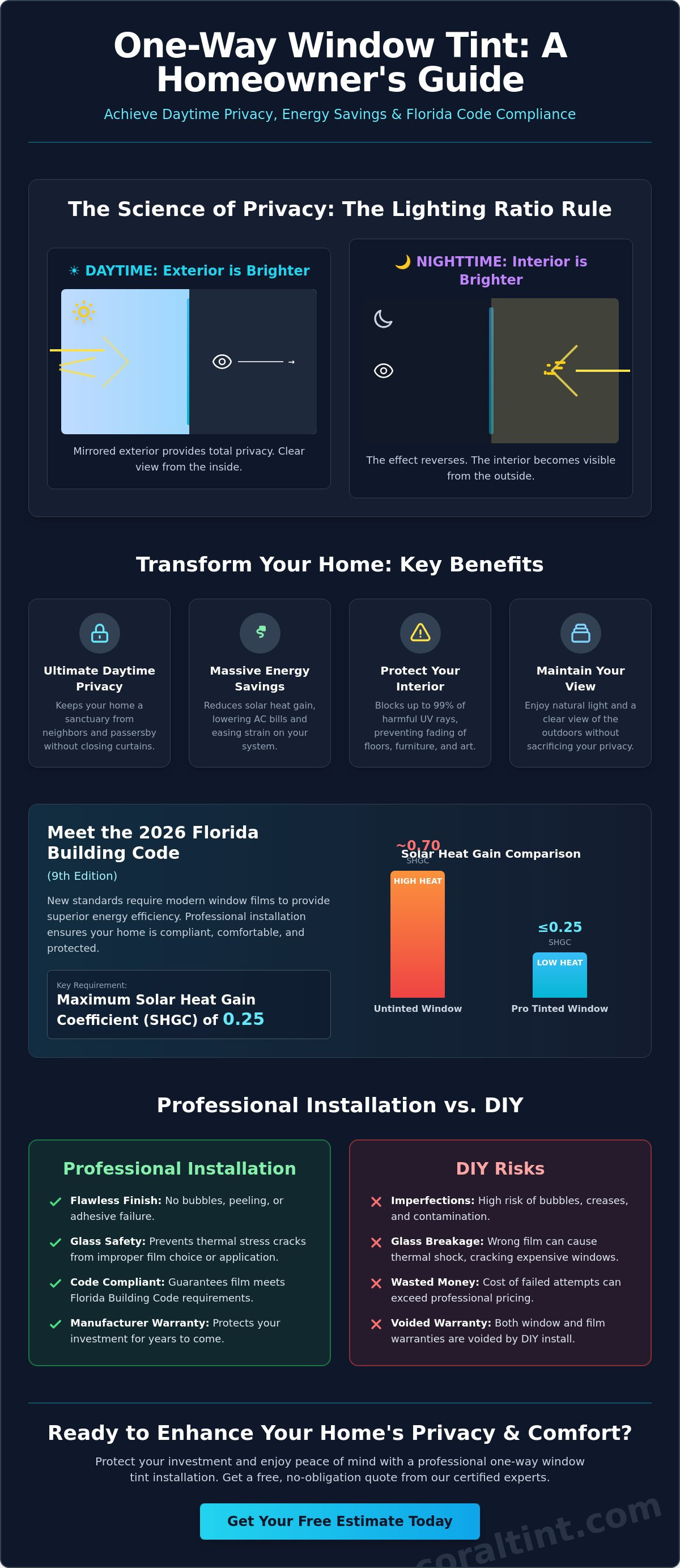
The success of this technology relies on a physics principle called the "Lighting Ratio." The film creates a mirrored effect on the side of the glass that is brightest. In South Florida, our intense tropical sun provides the perfect conditions for this. Because the exterior light is significantly stronger than the light inside your home, the outside of the glass looks like a sleek mirror to passersby. Meanwhile, you maintain a clear, crisp view of your patio or pool from the inside. This makes one-way options far more effective in our local climate than in northern regions where overcast skies are more common.
Compared to standard window privacy film, which often uses frost or patterns to block views in both directions, one-way tint is designed for transparency. It's the ideal choice for homeowners who want to keep their home feeling open and airy while preventing the "fishbowl" feeling of being watched by neighbors.
The Science of Reflective Surfaces
Modern 2026 films utilize advanced sputtering processes to embed metallic particles within the polyester. We measure the performance of these films using Visible Light Transmission (VLT) percentages. A lower VLT provides a stronger mirror effect and higher heat rejection. While traditional mirrored films were once shiny on both sides, today's dual-reflective technology is different. These films are highly reflective on the exterior but have a neutral interior finish. This ensures you don't see your own reflection when looking out your windows at dusk, providing a much more natural viewing experience for your family.
Why It Is the Ultimate Daytime Privacy Solution
Imagine enjoying your morning coffee while looking out at the Parkland greenery or your backyard landscaping without ever needing to pull the shades. One-way tint eliminates the need for heavy curtains or dusty blinds during daylight hours. It allows for beautiful natural light integration without the "cave-like" darkness associated with cheap, old-fashioned tints. You get the best of both worlds: a bright, sun-filled home and the peace of mind that your private life stays private. It's a sophisticated upgrade that protects your interior while keeping you connected to the beautiful Florida scenery outside.
The Nighttime Challenge: Managing Expectations and Solutions
Imagine the sun has set over your South Florida neighborhood. Inside, you've flipped on the kitchen lights to start dinner. Outside, it's pitch black. This is the exact moment when the physics of one way tint for house windows shifts. While these films are unbeatable during the day, they rely entirely on a light differential to function. When the interior of your home becomes brighter than the exterior, the mirrored effect reverses. Instead of neighbors seeing a reflection of their own yards, they see directly into your brightly lit living spaces.
We often call this the "Goldfish Bowl" effect. It can be a jarring realization for homeowners who expect a permanent, 24/7 mirror. Because the film reflects the side with the most light, you might find yourself looking at your own reflection while someone on the sidewalk has a clear view of your interior. According to the International Window Film Association, window films are precision tools for managing solar energy and visible light, but they cannot defy the laws of optics. Understanding this transition is vital for anyone living in a Florida suburban home where houses are built close together.
Professional Workarounds for 24/7 Privacy
You don't have to give up on your privacy goals just because the sun goes down. One effective strategy involves installing exterior floodlighting or landscape lights directed toward your windows. By increasing the light levels on the outside of the glass, you can help maintain the reflective balance longer into the evening. Many of our clients also find success by integrating motorized shades with their smart home systems. These can be programmed to lower automatically at sunset, providing a physical barrier the moment the film's one-way effect begins to fade. If you want a more permanent visual soften, adding a sheer decorative overlay can provide a layer of obscuration that works even when the lights are on. If you're curious about how these layers look in person, checking out the options at coraltint.com can give you a better idea of the aesthetic.
When to Choose Frosted vs. One-Way Film
Not every window in your home requires the same solution. For high-exposure areas like bathrooms, side-lights at the entryway, or laundry rooms, one-way tint might not be the safest bet. In these specific spots, we often recommend a decorative or frosted film. Frosted options provide 24/7 privacy by scattering light, though they do sacrifice your view of the backyard. A seasoned pro can help you mix-and-match film types across your property. You might choose a high-performance one-way film for your large patio doors to keep that pool view, while opting for frosted textures in the master bath. This hybrid approach ensures your home remains a private sanctuary at every hour of the day.
Choosing the Best One-Way Film for Florida Homes
Selecting the right one way tint for house windows involves more than just picking a shade from a catalog. In our unique South Florida environment, you need a film that can stand up to relentless UV exposure and salt-heavy air. While many homeowners focus on the mirror effect, the most critical metric for your comfort is Total Solar Energy Rejected (TSER). This number tells you exactly how much heat is being bounced away before it enters your living room. For maximum cooling, look for films that help your home meet the 9th Edition Florida Building Code's Solar Heat Gain Coefficient (SHGC) requirement of 0.25 or lower.
Location plays a massive role in your product choice. If your home is near the Pompano or Boca beaches, standard metallic films can sometimes struggle with corrosion over time. We recommend high-performance, non-corrosive films for coastal properties to ensure your investment looks pristine for decades. This durability is why the window film vs tinted glass debate is so relevant for 2026 renovations. Unlike factory-tinted glass, professional film can be upgraded as technology improves, providing better heat rejection without the cost of full window replacement.
Reflective vs. Dual-Reflective Films
Traditional reflective films were the industry standard for years. They provide excellent privacy, but they create a "black mirror" effect on the inside at night. This makes it impossible to see your patio once the sun goes down. Dual-reflective films are the modern solution for single-family homes. These products feature a high-reflection exterior to block neighbors' views, but they utilize a low-reflection interior coating. This allows you to look out at your landscape lighting or pool area even when your interior lights are on. It is the superior choice for homeowners who value their nighttime views.
Ceramic One-Way Hybrids
The biggest innovation for 2026 is the rise of ceramic-hybrid films. These premium products combine the incredible heat-blocking power of ceramic technology with a subtle reflective layer for privacy. They offer the highest TSER ratings available without looking like a harsh commercial mirror. Because they don't rely solely on metal layers, they won't interfere with your home's Wi-Fi or cell signals. These films often come with robust manufacturer warranties, making them a wise long-term choice for high-end South Florida estates where performance and aesthetics are equally important.
Professional Installation vs. DIY: The Florida Reality Check
It is tempting to look at a roll of film from a big-box store and think of it as a simple weekend project. However, installing one way tint for house windows in South Florida requires more than just a squeegee and a steady hand. Our local climate is notoriously unforgiving. High humidity levels often cause DIY adhesives to bubble or peel away within 12 months of application. Even worse, choosing the wrong film for your specific glass type can lead to "thermal shock." This happens when the reflective layer traps too much heat, causing the glass to expand rapidly and eventually crack. Professional installers understand the glass-to-film compatibility charts necessary to keep your windows safe.
Achieving total daytime seclusion also demands "edge-to-edge" precision. Even a tiny light gap at the corner of a window can ruin the mirrored effect and create distracting glares inside your home. When you choose the best window tint for house windows, you are paying for an airtight seal that DIY kits simply cannot provide. Vetting your installer ensures they use professional-grade materials that meet the updated 2026 energy standards while providing the clarity you expect.
The Risks of Cheap DIY Kits
- Orange Peel Texture: Low-quality films often have a grainy finish that blurs your view of the backyard or pool area.
- UV Degradation: Most consumer-grade kits lack the heavy-duty UV inhibitors needed to survive the 2026 Florida sun intensity.
- Large Scale Difficulty: Attempting to shrink and cut film for massive sliding glass doors often results in permanent creases and wasted material.
The Coral Tint Installation Process
We approach every home with the discipline of a master craftsman. Our process begins with surgical-grade glass decontamination to remove microscopic debris that causes bubbles. We then perform the application in an environmentally controlled manner to ensure a "factory" finish that looks like it's part of the glass. Since 1987, our family-run business has prioritized these specialized methods to protect your investment. We don't just apply film; we provide a long-term solution backed by a lifetime warranty. This commitment to excellence is why neighbors have trusted us for decades. To see the difference a professional touch makes for your home, schedule your residential window tinting consultation today.
Enhancing Your Home with Professional One-Way Tinting
Investing in one way tint for house windows is about more than just solving a single problem; it is a holistic upgrade for your South Florida lifestyle. By choosing a professional application, you secure a dual-benefit system that provides unmatched daytime seclusion while significantly driving down monthly cooling costs. This high-performance barrier acts as a shield for your family, blocking up to 99% of harmful UV rays that otherwise cause skin damage and accelerate the fading of your expensive hardwood floors and upholstery. These results align perfectly with the broader residential window film installation goals of creating a safer, more efficient, and more comfortable living environment.
Beyond the functional advantages, there is an undeniable aesthetic appeal to modern one-way films. They provide your property with a sleek, uniform exterior look that hides the visual clutter of mismatched blinds or half-drawn curtains from the street. It gives your home a polished, contemporary edge that enhances curb appeal. You can finally enjoy the full architectural beauty of your large windows without feeling like you've sacrificed your personal space to the prying eyes of the neighborhood.
Local Expertise in Coral Springs and Beyond
Our team brings specialized local knowledge to every project in Parkland, Boca Raton, and Coconut Creek. We understand the specific architectural styles of these communities and, perhaps more importantly, the strict HOA requirements regarding reflective films. Navigating these regulations can be tricky, but our 35 plus years of experience in the region ensures you select a film that remains compliant while delivering maximum performance. Since 1987, we've built our reputation on being a stable, reliable fixture in the community, helping thousands of neighbors protect their most valuable assets with precision and care.
Taking the Next Step for Your Home
When you're ready to transform your home, the process is designed to be frictionless and transparent. It begins with an on-site consultation where we evaluate your glass type, orientation to the sun, and specific privacy needs. We take the guesswork out of the selection process by showing you how different 2026 film technologies look under your actual lighting conditions. To get started, you can easily request a detailed tint quote tailored to your specific windows. Join the generations of South Florida homeowners who trust Coral Tint to deliver excellence, reliability, and the peace of mind that comes with a perfectly protected home.
Protect Your Sanctuary and Your Savings
Transforming your home with one way tint for house windows is a strategic move for any South Florida homeowner. You've discovered how the right film balances intense solar heat with total daytime seclusion; keeping your living spaces cool and your private life hidden. By selecting a dual-reflective or ceramic-hybrid option, you ensure your home meets the latest energy standards while preserving your view of the outdoors. It's about creating a modern, efficient environment where your family feels truly at ease.
Since 1987, our family has provided Coral Springs with the technical precision required for our unique tropical climate. We understand the local challenges and provide a Lifetime Warranty on residential installations to guarantee your peace of mind. Our team is ready to help you navigate HOA rules and technical specs to find the perfect fit for your property. Secure Your Privacy with a Professional One-Way Tint Quote Today and start enjoying the benefits of a more comfortable, private home.
Frequently Asked Questions
Is there a one-way window film that works at night?
No true one-way film works at night without specific external lighting conditions. The technology operates on a light differential; the side with more light becomes the mirrored surface. To maintain privacy after the sun goes down, you should utilize exterior floodlights to brighten the outside of the glass or use traditional window treatments like motorized shades or curtains.
Will one-way tint make my house too dark inside?
Modern films are engineered to balance light transmission with heat rejection. While the film reduces intense glare, you can choose a Visible Light Transmission level that keeps your rooms feeling bright and airy. It's about filtering the harshness of the Florida sun to create a comfortable glow rather than turning your home into a dark space.
Can people see through one-way tint if the lights are on inside?
Yes, people can see inside if your interior lights are brighter than the exterior environment. This is often called the "goldfish bowl" effect. Because one way tint for house windows relies on the brightest side being the mirrored side, the privacy effect reverses once the sun sets and you turn on your interior lamps.
How long does professional one-way window film last in Florida?
High-quality professional films typically last between 15 and 20 years in our local climate. While the intense UV rays and humidity in South Florida are notoriously harsh, professional-grade materials include advanced inhibitors that prevent bubbling and peeling. Our residential installations are backed by a lifetime warranty to ensure your investment remains protected for the long haul.
Does one-way window film block heat as well as privacy?
Yes, one-way films are among the most effective options for solar heat rejection. Because they are reflective, they bounce solar energy away before it can pass through the glass and heat up your home. This helps homeowners meet the 0.25 Solar Heat Gain Coefficient requirements in the 2026 Florida Building Code while providing daytime seclusion.
Can I install one-way tint on double-pane (dual-pane) windows?
Yes, but you must select a film specifically rated for dual-pane glass to avoid thermal stress. Standard films can trap too much heat between the two layers of glass, which might lead to seal failure or even breakage. A professional installer will use compatibility charts to ensure the film is safe for your specific window construction.
Is one-way window film allowed by most Florida HOAs?
Most HOAs allow window tinting, but many have specific rules regarding how reflective or dark the film can be. Some associations prohibit highly mirrored "silver" films but allow "dual-reflective" options that look more neutral from the sidewalk. It is always best to check your specific bylaws or consult with an expert who knows the local community standards.
How do I clean my windows after the one-way film is installed?
You should wait at least 30 days for the film to fully cure before your first cleaning. After that, use a soft microfiber cloth and a mild, ammonia-free soap solution. Avoid using abrasive pads, squeegees with metal edges, or harsh chemicals that could scratch the protective hard coat. Simple, gentle maintenance will keep the film surface looking crisp and clear.