The darkest windows might actually be the least effective at keeping you cool. While deep-colored glass provides a sense of privacy, it often does little to stop the actual thermal energy that turns your car or living room into an oven. Many homeowners and drivers find themselves frustrated when their furniture continues to fade or their energy bills climb despite having dark windows. When comparing window film vs tinted glass, it's essential to understand that shade is not the same thing as a true thermal barrier.
Maintenance is straightforward but specific. To keep your film looking pristine, you only need a soft microfiber cloth and ammonia-free cleaners. Ammonia can break down the protective top coat and adhesive over time; sticking to mild soap or dedicated tint cleaners is the key to longevity. This small adjustment ensures your investment remains crystal clear for a decade or more. If the glass ever gets damaged, the film also helps hold the shards together, providing a safety benefit that standard glass simply can't match; however, for glass that is beyond repair, a professional Windshield Replacement will restore the safety and structural integrity of your vehicle.
We've spent years helping our neighbors protect their most valuable assets from the heat, and we know that comfort is a top priority. You deserve to discover the critical performance differences between factory-tinted glass and high-performance aftermarket window film so you can maximize your heat rejection and UV protection. We'll explain how specialized ceramic and UV films offer up to 99% UV defense and keep your interiors cool while maintaining the clear visibility you expect from a professional installation.
Key Takeaways
- Learn why factory-tinted glass is just a pigment in the pane, while high-performance film is a multi-layered shield built for the South Florida sun.
- Understand the power of Total Solar Energy Rejection (TSER) to stop your windows from acting like a radiator that heats up your interior.
- Discover why professional ceramic films don't bubble or purple, offering you a durable solution that protects your furniture and skin for years.
- Evaluate the cost and performance of window film vs tinted glass to find the best way to meet HOA standards while slashing your cooling costs.
- See how custom shade levels provide the perfect balance of aesthetic privacy and crystal-clear visibility for your home, car, or boat.
The Core Difference: Factory Tinted Glass vs. Aftermarket Window Film
Many Florida drivers and homeowners assume that if a window looks dark, it must be blocking the heat. This is a common misconception that leads to hot car cabins and high energy bills. The reality of window film vs tinted glass comes down to how the glass was made versus how it has been upgraded. While they might look similar from the curb, their internal chemistry and performance capabilities are worlds apart. One is a structural choice made at a factory, while the other is a high-performance upgrade designed for the demanding South Florida climate.
What Exactly is Factory Privacy Glass?
Factory tinted glass, often called "privacy glass," is created by adding pigments and dyes directly into the glass melt during production. This process changes the color of the pane permanently. While this provides excellent privacy, it's often limited to the rear windows of trucks and SUVs. Most importantly, these dyes are designed to block visible light, not solar heat. They lack the specialized layers needed to stop infrared radiation and ultraviolet rays from entering your space. It's a common sight in our neighborhood to see a beautiful SUV with dark rear windows that still feels like a sauna inside because the glass is absorbing heat rather than reflecting it.
The Versatility of Modern Window Film
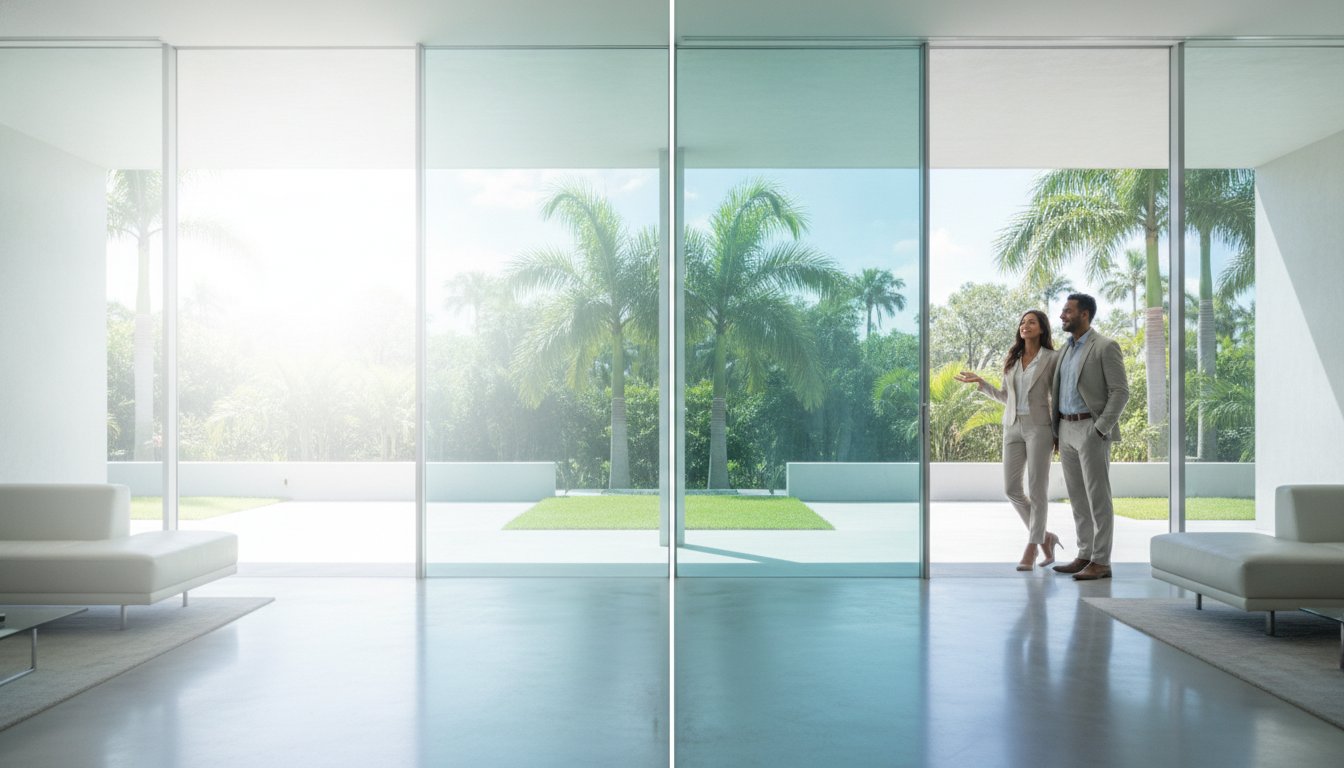
Unlike factory glass, window film is a sophisticated, multi-layered polyester laminate. You can apply it to any existing window without the need for costly glass replacement. This Window Film Technology has evolved significantly over the decades. Modern options, such as ceramic films, use nanotechnology to target specific parts of the solar spectrum. This means you can choose a film that blocks nearly all heat while remaining almost clear, or you can opt for a darker shade to gain privacy alongside thermal protection. It's a flexible, precision-engineered solution that adapts to your specific lifestyle needs, whether you are on the road or at home.
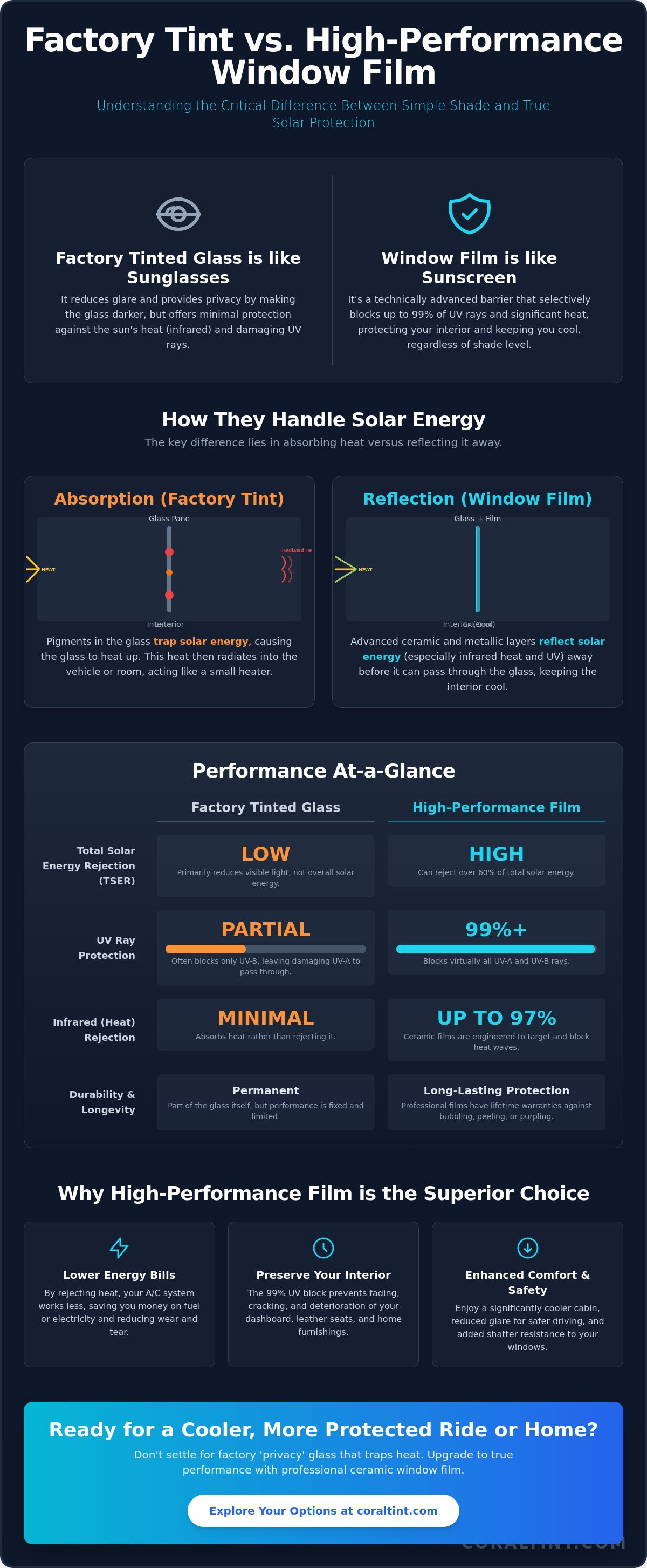
The easiest way to understand the performance gap is the "Sunglasses vs. Sunscreen" analogy. Factory tinted glass acts like dark sunglasses. It helps with glare and makes the interior look sleek, but it doesn't stop the sun from damaging your skin or your car's upholstery. High-performance window film is your sunscreen. It provides a functional barrier against the 99% of UV rays that cause fading and health concerns. When evaluating window film vs tinted glass, remember that shade is a visual preference, but protection is a technical requirement that requires the right materials.
Performance Breakdown: Heat Rejection, UV Protection, and Clarity
When you evaluate window film vs tinted glass, the most important number to look for isn't the darkness of the shade. It's the Total Solar Energy Rejection, or TSER. This metric is the gold standard for measuring how well a window blocks heat, visible light, and UV rays combined. While factory tinted glass might look the part, its TSER rating is often surprisingly low because it's designed for privacy rather than thermal performance. High-quality ceramic films are engineered to tackle the specific wavelengths of light that cause the most discomfort, providing a much higher level of protection than standard glass alone.
The Science of Heat: Absorption vs. Reflection
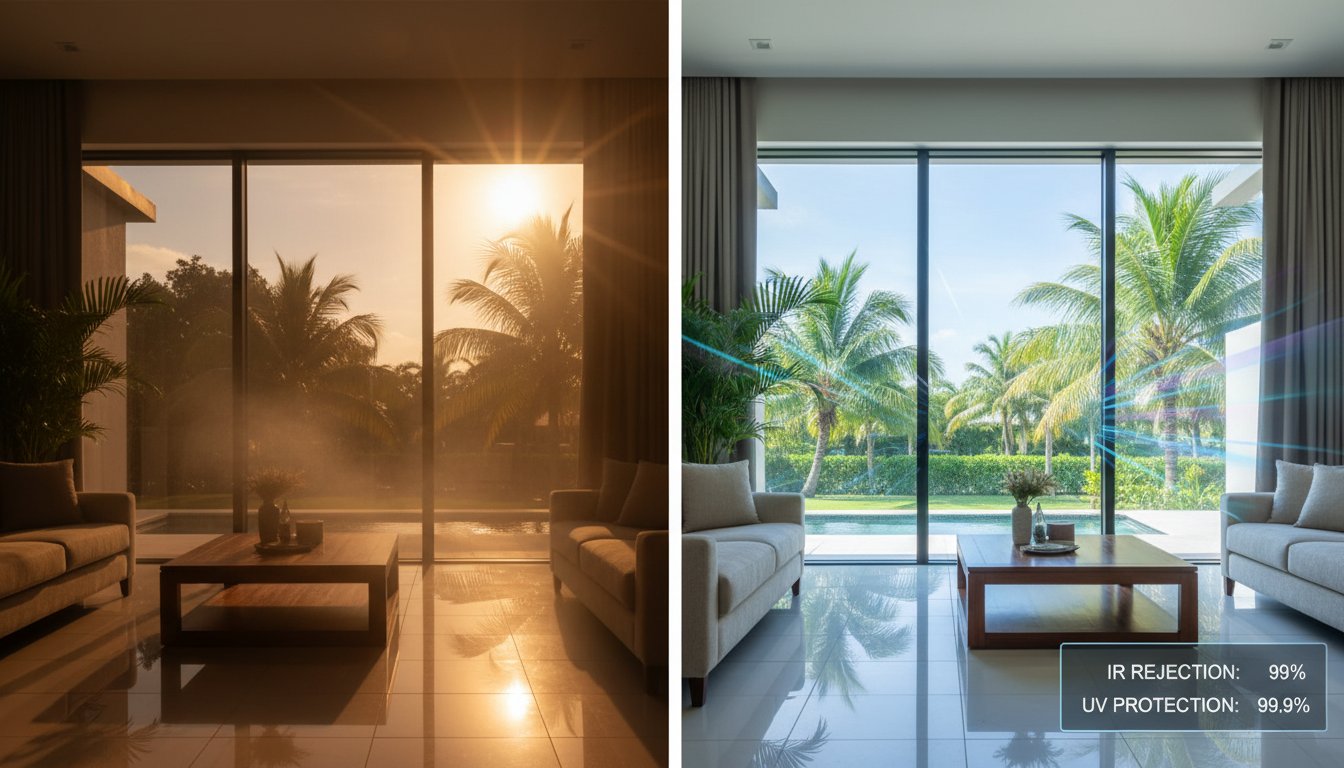
Standard tinted glass works primarily through absorption. The dark pigment in the glass traps solar energy, which causes the pane itself to become incredibly hot to the touch. In the peak of a Florida summer, that glass eventually acts like a radiator, pumping heat directly into your home or car cabin. This "heat trap" effect forces your HVAC system to work overtime and kills your fuel efficiency. Professional window film takes a different approach by reflecting that energy away before it ever passes through the glass. Advanced ceramic films can block over 90% of specific infrared heat wavelengths, ensuring the interior stays significantly cooler even when the sun is at its brightest. This thermal barrier is what keeps your cabin temperature stable without needing to blast the air conditioning constantly.
UV Protection and Interior Longevity
Many of our neighbors are shocked to find their leather seats cracking or their hardwood floors fading despite having dark windows. This happens because most factory glass only blocks UV-B rays, leaving you vulnerable to UV-A rays that penetrate deeper and cause long-term damage. Professional-grade films offer a consistent 99% UV rejection standard across the entire spectrum. This level of protection is vital for preserving your investments and protecting your family's skin from daily exposure. If you've heard conflicting information about how these materials work, you might want to read our guide on Sunlight Tint: Busting the 5 Biggest Myths to get the facts. Investing in high-performance Ceramic Films can make a world of difference in your daily comfort and the overall lifespan of your property.
The difference in clarity is also a major factor for Florida residents who want to enjoy the view. Because window film uses advanced nanotechnology, it can provide massive heat rejection without being excessively dark. This allows you to maintain crystal-clear visibility during evening drives or while looking out at the water from your living room. You get the benefits of a powerful solar barrier without the "closed-in" feeling that often comes with heavy factory tints.
Durability and Maintenance: Debunking the Bubbling Myth
One of the biggest concerns we hear from our Florida neighbors involves those unsightly purple bubbles often seen on older cars. It's a valid worry, but it's one rooted in the past. When comparing window film vs tinted glass, durability is often the deciding factor for many. Factory tinted glass is a lifetime component because the color is part of the glass itself. However, modern, professional-grade window film is designed to last 10 to 15 years or longer without losing its integrity. The bubbling people fear is almost always the result of low-quality adhesive in bargain kits or poor installation techniques rather than the film technology itself.
Maintenance is straightforward but specific. To keep your film looking pristine, you only need a soft microfiber cloth and ammonia-free cleaners. Ammonia can break down the protective top coat and adhesive over time; sticking to mild soap or dedicated tint cleaners is the key to longevity. This small adjustment ensures your investment remains crystal clear for a decade or more. If the glass ever gets damaged, the film also helps hold the shards together, providing a safety benefit that standard glass simply can't match.
Why Quality Installation Matters
The environment where your film is applied makes all the difference. We operate with a level of precision that mirrors a factory setting to prevent dust and contaminants from getting trapped under the laminate. Our team has spent over 30 years perfecting the art of edge-to-edge filing here in Coral Springs. This specialized technique ensures the film reaches the very edge of the glass, making it nearly indistinguishable from factory-colored panes. Unlike amateur attempts that leave gaps or jagged edges, a professional application creates a seamless finish that stands up to the constant cycling of Florida's humidity and intense heat.
Warranty and Long-Term Value
A major advantage of choosing high-end film is the protection it offers the glass itself. It acts as a sacrificial layer, absorbing minor surface scratches and pitting that would otherwise permanently damage an expensive window. Most professional installations come with robust manufacturer warranties that specifically cover bubbling, peeling, and delamination. This gives you peace of mind that your home or vehicle is protected by a product backed by industry leaders. Additionally, the replaceability of film is a hidden benefit. If window technology improves or your needs change, you can update your film without the massive expense of replacing the entire glass unit. This flexibility makes window film vs tinted glass a clear win for those who value long-term adaptability and cost-effective maintenance.
The Florida Decision Matrix: When to Choose Film Over Glass
Deciding between window film vs tinted glass often depends on your specific property and local regulations. In South Florida communities like Parkland and Boca Raton, homeowners frequently face strict HOA guidelines that require a uniform exterior appearance across the neighborhood. Replacing every window in a house with factory-tinted panes is an astronomically expensive project that might even clash with those community standards. High-performance film offers a way to get the protection you need without altering the architectural look of your home, allowing you to stay compliant while staying cool.
The "Hybrid Approach" is another strategy we often recommend to our neighbors. This involves adding high-performance film on top of windows that already have a factory tint. By doing this, you keep the privacy of the original glass but add the thermal barrier and UV protection that the factory pigment lacks. This is especially effective for south-facing rooms or vehicles that sit in the sun all day. It's about layering your protection to handle the unique intensity of the Florida sun.
For Homeowners: Retrofitting vs. Replacement
Replacing modern windows in Broward County is a massive undertaking. Most homes already have high-impact glass for hurricane protection, so swapping them out just to change the color isn't a smart financial move. Retrofitting with specialized film provides the same privacy and heat rejection at a fraction of the cost of new glass. Plus, security films add an extra layer of shatter resistance that standard tinted glass lacks. This allows you to upgrade your home's performance without the construction mess. For a deeper look at your options, check out our guide on How to Choose the Best Window Tint for House Windows.
For Car Owners: Is Privacy Glass Enough?
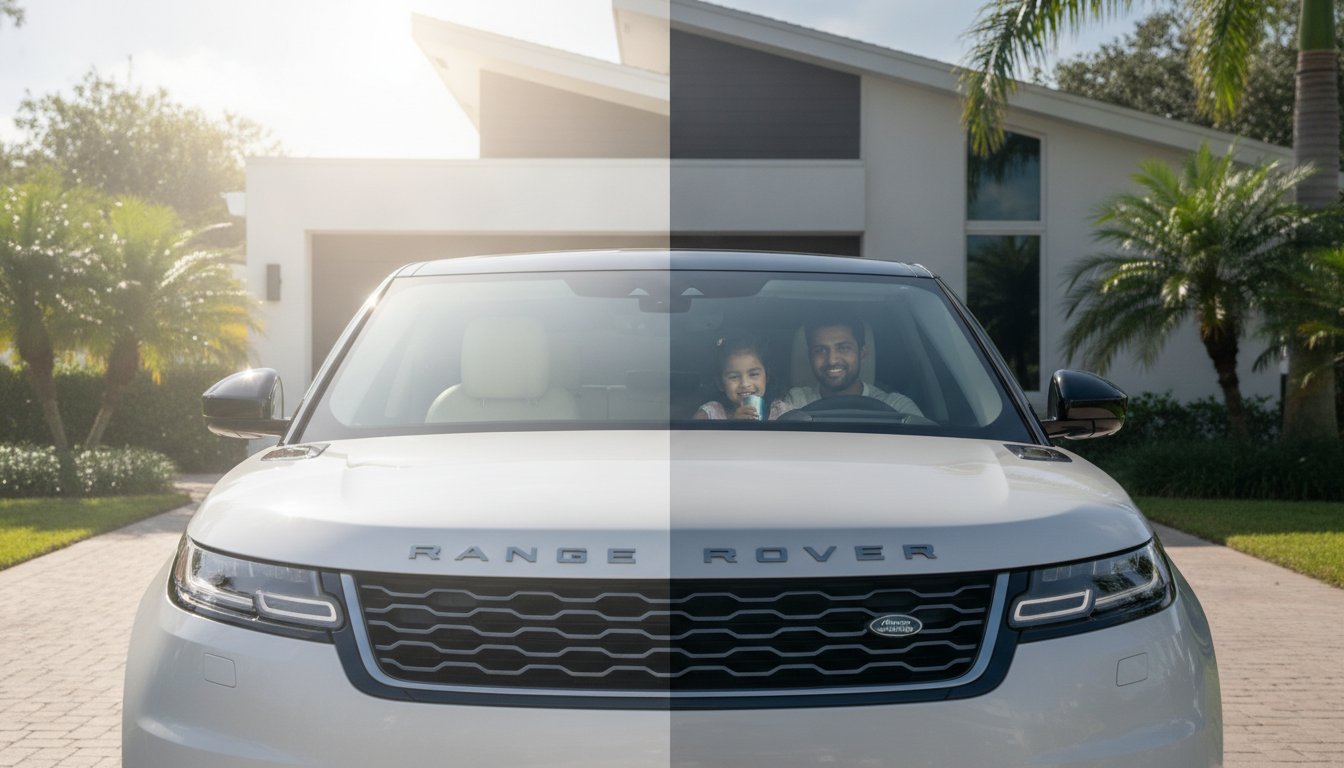
Most SUVs and trucks come with "privacy glass" on the back half of the vehicle, but the front two windows are usually left clear. This leaves the driver and passenger exposed to the sun's full force. To stay comfortable, you can apply film to the front windows to meet Florida's legal limits for Visible Light Transmission (VLT). Adding a clear ceramic film over the existing factory glass in the rear is also a popular choice. It blocks the infrared heat that the factory pigment misses without making the windows dangerously dark for night driving. If you're ready to upgrade your comfort, our team can help you find the perfect Automotive Window Tinting solution for your vehicle.
Understanding the balance between aesthetics and performance is key. While factory glass is a "set it and forget it" feature, it lacks the technical precision of modern laminates. When you look at the long-term energy savings and the protection of your interior surfaces, the choice between window film vs tinted glass becomes much clearer for those living in the Sunshine State.
Why Coral Tint’s Professional Installation Beats Factory Options
Choosing between window film vs tinted glass isn't just a technical decision; it's a choice about who you trust with your property. Factory options are mass-produced to meet a broad range of global climates, which often leaves them underpowered for the extreme South Florida heat. When you work with a professional installer, you gain the ability to customize every pane of glass to your specific lifestyle. Whether you need maximum heat rejection for a sun-drenched living room or a clear UV protection film for your car's windshield, a tailored application provides performance that factory glass simply cannot match.
A professional installation also offers a level of comprehensive protection that a single pane of colored glass can't provide. We don't just add shade; we add a functional barrier. Our specialized ceramic films are engineered to address solar heat, security, and UV damage all at once. This multi-layered approach ensures your assets are protected from every angle, giving you peace of mind that your family and your investments are safe from the elements. It's a level of precision that comes from decades of focusing on the unique needs of our local neighbors.
The Benefit of Local Expertise
We've been a part of this community since 1987, and we've seen how the local climate can punish unprotected interiors. Our team understands the specific sun angles and heat loads that affect homes in Coral Springs and Pompano. This deep-rooted local knowledge allows us to recommend the exact ceramic films that will provide the best return on your investment. We offer access to high-performance materials that aren't available in big-box stores or as standard factory options. This ensures your home, car, or boat is equipped with the latest technology designed specifically for the Sunshine State.
Next Steps for Your Property or Vehicle
Every piece of glass is different, and a professional assessment is the only way to guarantee the best results. Our specialists look at your current glass type, its orientation to the sun, and your primary goals, whether that's lower energy bills or better privacy. The installation process is quick and non-disruptive, allowing you to enjoy a cooler environment almost immediately. If you're ready to see the difference that professional craftsmanship makes, you can Request a professional tint quote from Coral Tint today to get started. When comparing window film vs tinted glass, the local touch makes all the difference in long-term comfort and protection.
Secure Your Comfort with Expert Protection
Living in South Florida means dealing with relentless sun every single day. We've explored the critical differences in window film vs tinted glass, highlighting that while factory glass offers style, only high-performance film provides the thermal barrier your home or vehicle actually needs. You don't have to settle for a hot interior or fading furniture when a specialized solution is available right here in your neighborhood. By choosing the right materials, you ensure your investment remains protected for years to come.
Our family owned and operated business has been a stable fixture in Coral Springs and Parkland for over 30 years. Since 1987, we've specialized in high-performance Ceramic Films that stand up to the unique demands of our local climate. We take pride in our heritage as expert craftsmen who treat every project with the precision it deserves. If you're ready to lower your energy bills and protect your family from 99% of harmful UV rays, we're here to help you make the right choice for your property.
Get a Free Quote for Professional Window Film Installation and start enjoying a cooler, more protected lifestyle today.
Frequently Asked Questions
Can I put window film over factory-tinted "privacy" glass?
Yes, you can absolutely apply window film over factory-tinted glass to enhance its performance. While privacy glass provides shade, it doesn't block infrared heat effectively. Adding a ceramic film on top creates a powerful thermal barrier that keeps your interior much cooler without necessarily making the windows darker. This is a common strategy for Florida drivers who want to keep their cabin temperatures stable.
Does window film provide better heat rejection than tinted glass?
High-performance window film typically offers superior heat rejection compared to standard tinted glass. Most factory glass works by absorbing solar energy, which eventually radiates into your home or car. In the comparison of window film vs tinted glass, film wins on efficiency because it uses advanced technology to reflect infrared heat away from the surface entirely rather than just trapping it in the pane.
Will window film make my home or car windows too dark to see out of at night?
Modern window films don't have to be dark to be effective. You can choose high-performance ceramic options that are virtually clear but still block massive amounts of heat and UV rays. This allows you to maintain excellent visibility during night driving or while looking out of your home windows at twilight. You get all the protection you need without sacrificing the clarity of your view.
Is it cheaper to buy tinted glass or apply window film?
Applying window film is significantly more cost-effective than purchasing and installing new tinted glass units. Retrofitting your existing windows with a professional film avoids the high labor and material costs associated with full glass replacement. It's a faster, less intrusive way to upgrade your property's energy efficiency. This makes it the preferred choice for most homeowners in our local South Florida communities.
Does window film cause home windows to crack or break?
Professional installation ensures that the film you choose is compatible with your specific glass type to prevent thermal stress. While improper film on certain dual-pane windows can cause issues, our experts assess your glass before any application. We select specialized films that safely manage heat absorption and reflection to protect the structural integrity of your windows while providing maximum solar defense.
How long does professional window film last compared to factory tint?
Factory-tinted glass lasts for the life of the pane, while professional-grade window film typically lasts between 10 and 15 years. Modern films are engineered with advanced adhesives that resist the peeling and bubbling seen in older products. This makes them a durable, long-term solution for residents who want to maintain high solar protection and aesthetic quality over a decade or more of use.
Does factory-tinted glass protect against UV rays and furniture fading?
Standard factory-tinted glass often fails to block the full spectrum of UV rays that cause furniture and flooring to fade. Most privacy glass only filters visible light for privacy and aesthetics. Professional-grade window film vs tinted glass offers a clear advantage here, as it's specifically designed to achieve a 99% UV rejection rate. This is essential for preserving your interior investments in the Florida sun.
Is window film allowed by most HOAs in Coral Springs and Parkland?
Most HOAs in Coral Springs and Parkland allow window film, especially when you choose non-reflective or neutral options. Because many modern films are designed to be nearly invisible, they provide heat rejection without changing the neighborhood's uniform exterior look. We always recommend checking your specific bylaws, but we've helped many neighbors find solutions that meet HOA standards while significantly improving their indoor comfort.