 comparison
Is Coral Tint Worth It? Compare Your Options
Last Updated: November 4, 2026
Quick Summary
The best window film alternatives for a home depend on the problem you need to solve: retail DIY film suits small accessible windows, decorative or privacy film suits bathrooms and street-facing rooms, professionally installed solar film suits large or west-facing windows, and curtains, shades, exterior screens or shutters solve heat and privacy without film. Start by identifying whether heat, glare or privacy matters most.
- Start with the problem: heat, glare or privacy determines which option fits.
- Professional installation is usually safer for large panes, curved glass and high windows.
- Ask for visible light transmission and heat-rejection figures before comparing films.
- Exterior solar screens block sun before it reaches the glass, so they cut solar heat most effectively.
- Compare installed cost per square foot against expected years of service, not sticker price alone.
Table of Contents
- Home Window Film Alternatives Compared
- Professional vs DIY Window Tinting
- How Long Does Window Tinting Last?
- Solar Control Window Film Benefits for Homes
- Non-Film Options and Cost Comparison
- Booking a Residential Tint Consultation in Coral Springs
- Frequently Asked Questions
Homeowners searching for a window film alternative for homes usually have one of three problems: the price feels unclear, the installation timeline doesn't fit their schedule, or they want a film that suits a house rather than a car or a commercial storefront. Finding the right window film alternatives starts with knowing which of these problems matters most. This guide walks through the options a South Florida homeowner can realistically consider, including retail films, decorative films, professional installation and non-film alternatives.
This comparison is built around the questions homeowners ask most often. The goal is to help you decide what fits your windows, your budget and your priorities, even if the final choice is not our service.
Window film is a thin, adhesive-backed layer applied to the interior surface of glass to change how it handles heat, light, glare and privacy. Residential film comes in several types, and each one trades off different performance factors against cost and appearance.
Many homeowners look beyond a single supplier because their needs are specific. A room facing west may need heat rejection more than privacy, while a bathroom window needs privacy without much concern for solar gain.
Home Window Film Alternatives Compared
Search results often mix service providers, big-box retailers, advice threads and general guides, and a clear side-by-side view of the alternatives can be hard to find. This section does that: it sorts the realistic options by the job they do, then compares them on the factors that actually decide the purchase, performance, privacy, appearance, installation and cost transparency.
The four alternative routes for a home
- Retail DIY film. Sold through large home-improvement retailers, these films are aimed at homeowners who want to apply film themselves.
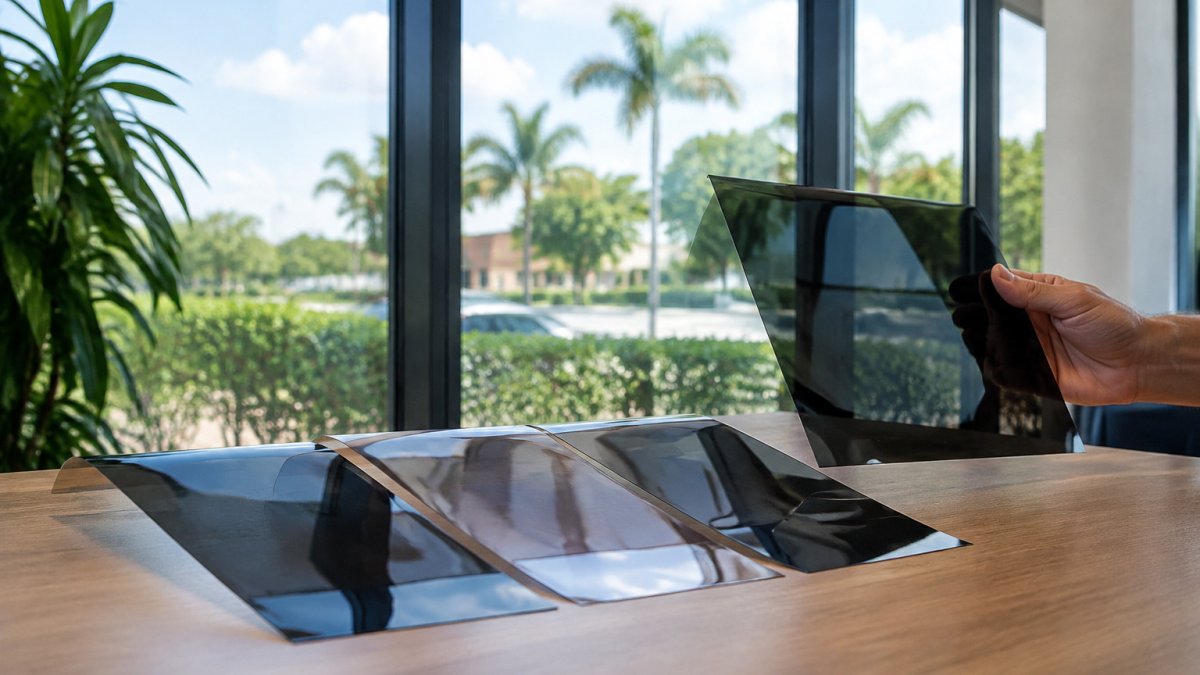
- Decorative and privacy film. Artscape Window Film is listed as a decorative option in The Home Depot's window-film category, and Coavas Window Privacy Film adds a textured look to glass. The supplied Window Film Depot result says Coavas blocks 96% of UV rays, though that figure comes from a single listing and should be verified against the manufacturer's data.
- Professionally installed solar film. Professional installation involves measuring, cutting and seating solar-control film, a route often chosen when heat and glare are the main concern.
- Non-film alternatives. Curtains, cellular shades, exterior solar screens, shutters and privacy glass solve overlapping problems without film; they are compared in the next section.
Side-by-side comparison
| Factor | Retail DIY film | Decorative/privacy film | Pro-installed solar film | Non-film options |
|---|---|---|---|---|
| Best for | Small, flat, accessible windows | Bathrooms, entryways, street-facing rooms | Large or west-facing windows, whole-home heat and glare | Whole-room light and privacy control |
| Heat and glare | Limited unless rated; verify specs | Minimal | Strong when rated; ask for VLT and heat-rejection figures | Varies; exterior screens strongest |
| Privacy | Depends on film | Good, especially frosted/textured | Not the primary purpose | Strong when closed |
| Daylight and views | Retained if clear film | Reduced where frosted | Reduced depending on VLT | Reduced when closed |
| Installation | DIY; skill-dependent | DIY; skill-dependent | Professional | DIY or professional |
| Cost transparency | Product price visible | Product price visible | Written estimate needed | Product or installed price |
How to choose between them
Start with the problem, not the product. If a room facing west overheats and glares onto screens, solar film or exterior shading addresses the cause; a decorative film will not. If a bathroom window needs privacy without losing much light, a frosted or textured film is the simplest fix. If the goal is flexible control of light and privacy across a whole room, shades or curtains usually win. When heat and glare are the problem, the choice between solar film vs screens comes down to how each fits the window and the room.
A common pattern is that homeowners buy a retail film for a large west-facing window, then discover a seam or wrinkle undermines both the look and the performance. For large panes, curved glass and high windows, professional installation is usually the safer route because bubbles and creases are hard to fix once the adhesive sets.
Watch out: one-way or mirrored films depend on the light differential between inside and outside, they can appear to reverse at night when interior lights are on, so do not rely on them as the only privacy measure for bedrooms or bathrooms.
Professional vs DIY Window Tinting
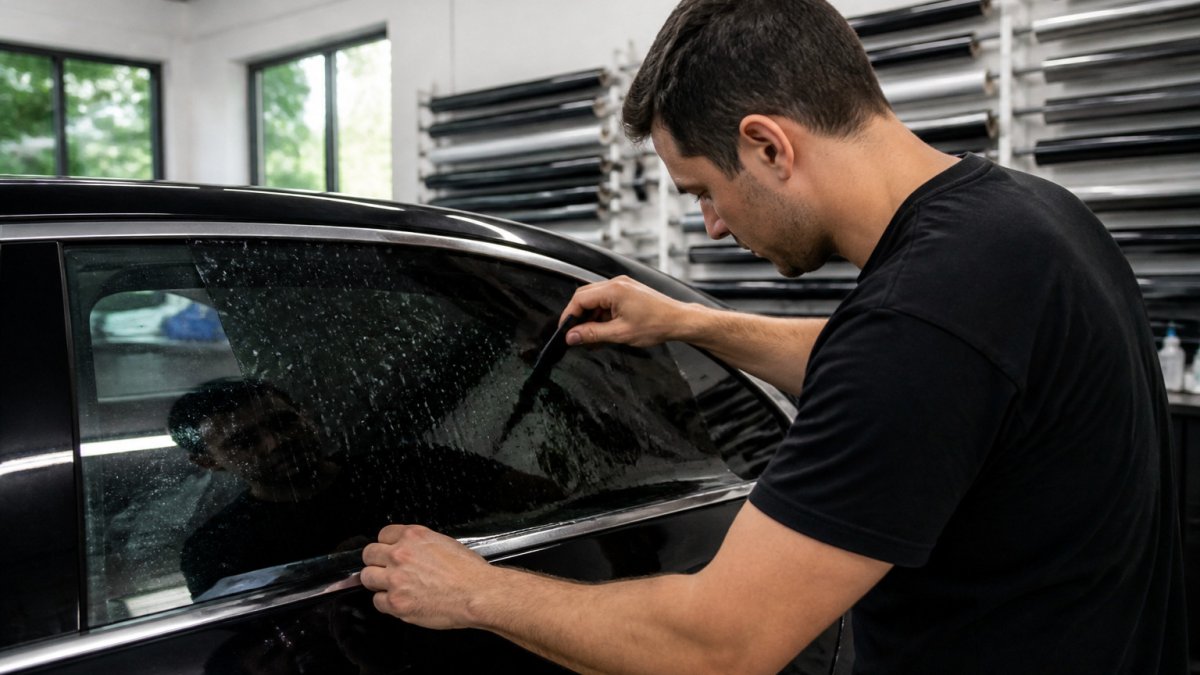
Do-it-yourself installation can work well on small, flat windows with good access. Larger panes, curved glass and high windows are harder to handle, and bubbles or creases are difficult to fix once the adhesive sets.
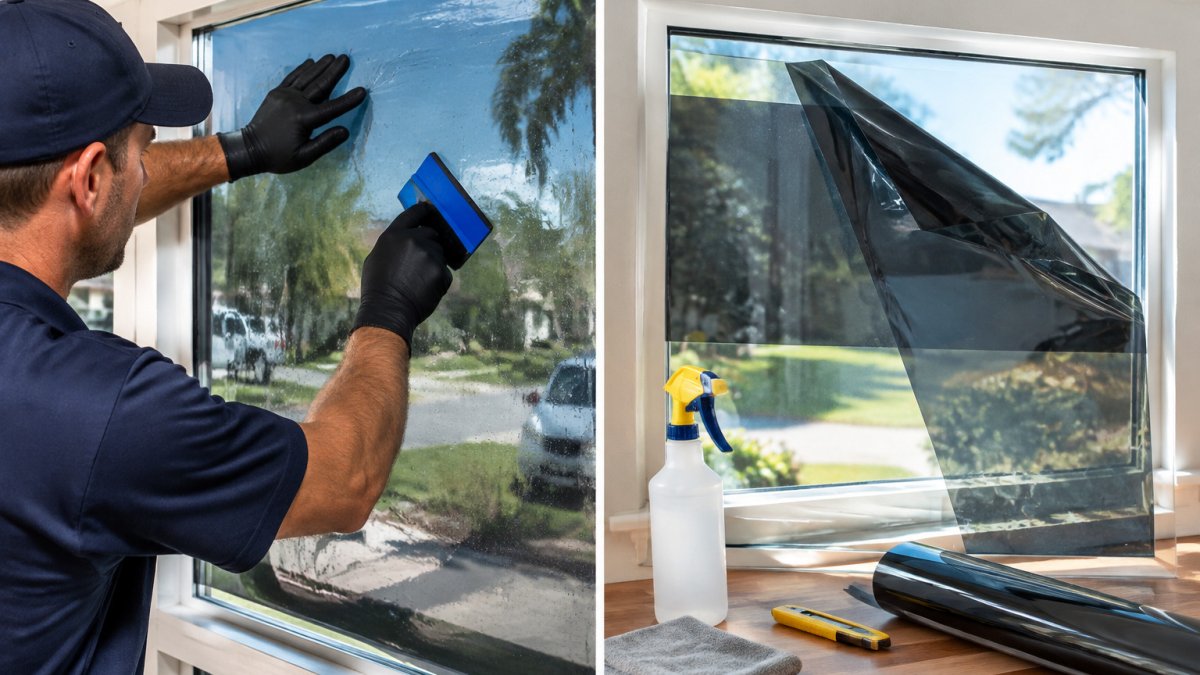
Professional installation usually costs more upfront, but installers can measure, cut and seat the film with fewer errors. A common mistake is choosing a DIY film for a large west-facing window and then discovering that a seam or wrinkle undermines the look and performance.
How Long Does Window Tinting Last?
Window film lifespan depends on film quality, installation technique, sun exposure and cleaning habits. Films applied to protected windows generally last longer than those facing direct afternoon sun all day. Peeling, bubbling and edge lifting are the most common signs that film has reached the end of its useful life.
Solar Control Window Film Benefits for Homes
Solar control film reduces the heat that enters through glass and lowers glare on screens and furniture. Homeowners often notice the difference most in rooms with large unshaded windows facing the afternoon sun.
The benefits depend on the film's rating, the window's orientation and how the home is cooled. Ask any provider for the visible light transmission and heat-rejection figures before comparing products, because a darker film is not always a better one.
Non-Film Options and Cost Comparison
Window film competes with several non-film ways to cut heat, glare and unwanted visibility. Each option trades off daylight, views, maintenance and upfront cost differently, so the right choice depends on which of those you value most.
How the non-film options stack up
- Interior curtains and drapes. Insulated or blackout curtains are the lowest-effort retrofit. They cut glare and add privacy at night, but they also block daylight and views when closed, and they do little for heat once the sun has already warmed the glass.
- Blinds and cellular shades. Honeycomb (cellular) shades trap air at the window and can reduce heat loss in winter and solar gain in summer. They preserve more view control than curtains but still require operation and can collect dust.
- Exterior shades and solar screens. Mounted outside the glass, these block sun before it reaches the window, which is more effective at cutting solar heat than interior coverings. They need periodic cleaning and can be affected by wind and HOA rules.
- Shutters. Plantation shutters and rolling shutters offer strong privacy and, for rolling shutters, storm protection. They are heavier, more expensive, and reduce daylight when closed.
- Privacy glass and window replacement. Switching to privacy or low-e glazing solves heat and privacy at the source, but it is the highest-cost route and disruptive to install. It makes sense mainly when windows are being replaced anyway.
A practical cost framework
Exact pricing depends on window count, size, film type, access and labor, so treat any single number as a starting point rather than a quote. A useful way to compare is to look at three cost layers:
- Product cost. Retail DIY film is the cheapest entry point per window, but performance data is often limited and results depend on application skill. Decorative and privacy films sit in a similar range.
- Installed cost. Professionally installed solar film adds labor and measurement on top of the product cost.
- Lifetime cost. Factor in expected service life, cleaning, and replacement. A cheaper film that peels or bubbles in a few years can cost more over time than a higher-rated film that lasts longer. Non-film options carry their own lifetime costs: curtains and shades need cleaning and occasional replacement, exterior screens need maintenance, and window replacement is a one-time high cost with long service life.
A common pattern is that homeowners compare only the sticker price of film against the sticker price of curtains, when the fair comparison is installed cost per square foot of glass against expected years of service. Ask every provider, film or otherwise, for a written estimate that states the square footage covered, the warranty term, and what is excluded.
Watch out: a per-square-foot figure quoted without stating whether it includes labor, removal of old film, or edge sealing can understate the real installed cost by a wide margin.
Booking a Residential Tint Consultation in Coral Springs
If you want a quote for your own home, the most useful next step is a consultation where an installer measures the windows, checks sun exposure and explains the film options. Current prices and availability are best confirmed by requesting a quote.
Frequently Asked Questions
What is the best window tinting film for homes?
The best choice depends on your goal. Solar control films reduce heat and UV exposure while keeping the view clear, while decorative or frosted films mainly add privacy. Ask any provider for the film's visible light transmission and heat rejection ratings so you can compare products on measurable performance rather than appearance alone. Professional installers can recommend a film suited to your window orientation and how much afternoon sun the room receives.
How much does professional window tinting cost compared to DIY film?
Professional installation adds labor on top of film cost. DIY retail film costs less upfront, yet bubbles, creases and dust are common on large or curved panes. Pricing depends on window count, size, film type and access, so request a written quote for current rates.
What is a cheap way to cover windows for privacy?
Frosted or decorative privacy films are a lower-cost option than full solar control film and can be applied without professional help. Cellular shades, blinds and curtains are also inexpensive and easy to adjust. Film gives a permanent, see-through-from-one-side look, while window coverings let you change privacy levels throughout the day. Choose based on how much privacy you need and how often you want to change it.
How long does window tinting last?
Quality professional window film often lasts many years, but lifespan depends on film grade, sun exposure, cleaning habits and installation quality. Lower-grade films can fade, bubble or peel sooner, especially on south- and west-facing windows in South Florida's intense sun. Ask about warranty terms before you buy.
Automotive, Residential, Commercial & Marine Window Tinting Services serves homeowners, vehicle owners and businesses across South Florida. Request a quote to discuss film options for your windows and a schedule that fits your household.