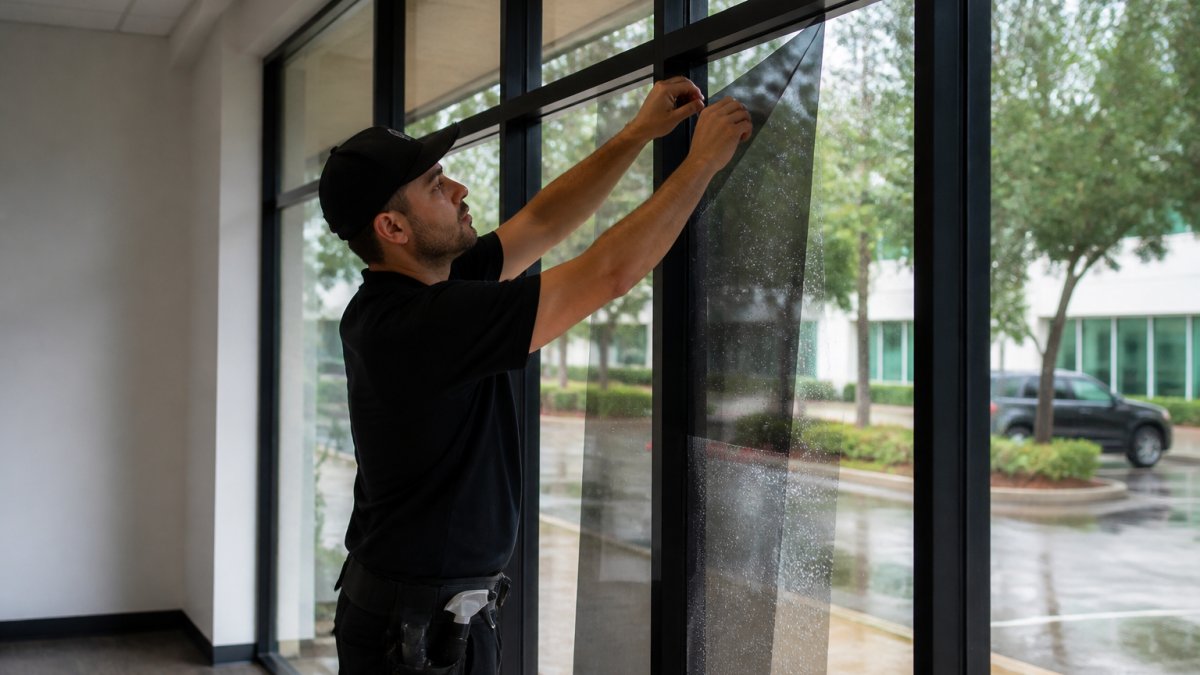
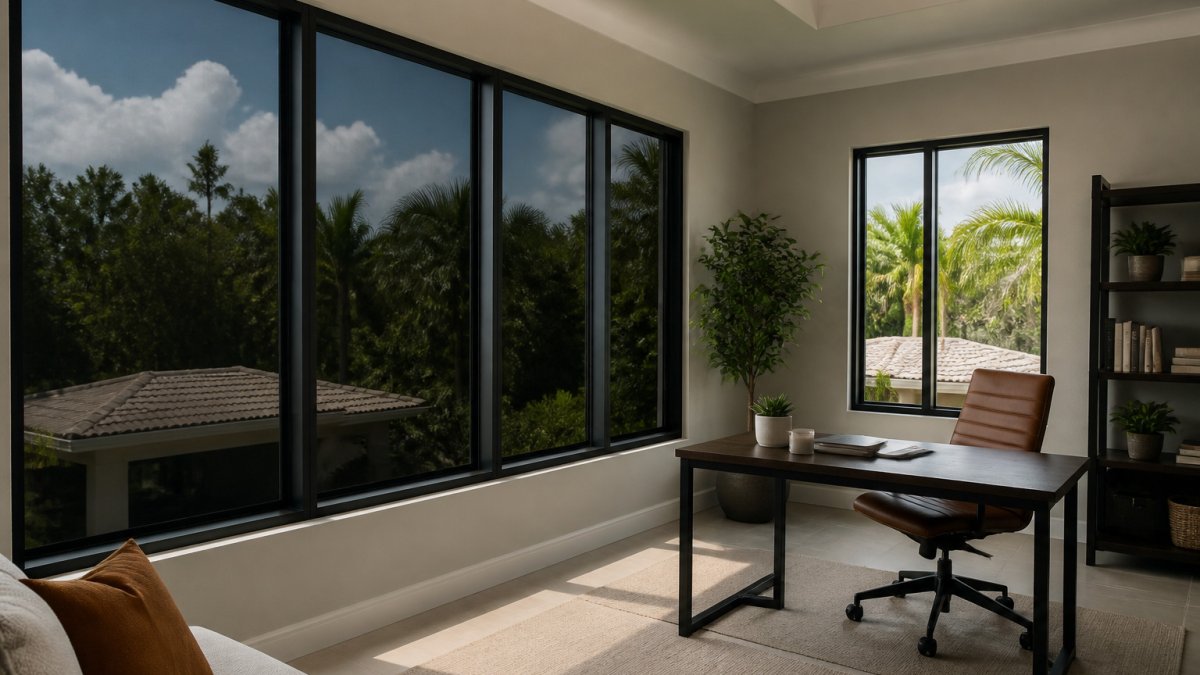
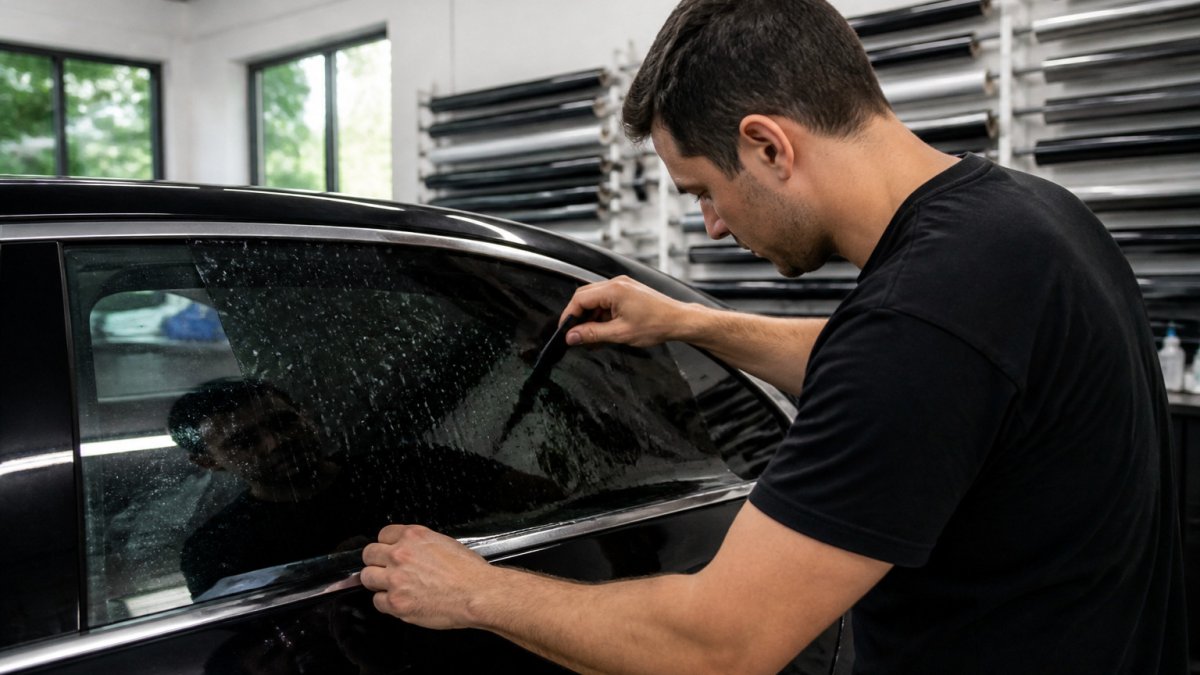
 comparison
Why Choose Local Window Tinting Over a Chain Shop
Last Updated: November 1, 2026
Quick Summary
Local window tinting gives you an installer you can reach in person when a warranty claim or film problem comes up. A local shop based in your service area can inspect the work, handle replacements directly, and choose film suited to your sun exposure. Compare quotes on the same film line, warranty terms, and removal scope.
- A local installer can inspect the film and handle warranty replacement without a long trip.
- Get the warranty terms in writing, including what it covers and how long it lasts.
- Compare quotes on the same film line, window count, and scope, including old-film removal.
- Ask for the film's VLT and spec sheet, not just the brand name and price.
- Confirm state tint regulations for your vehicle before choosing a darkness level.
Table of Contents
- What Local Window Tinting Actually Means for You
- Local vs. National Window Tinting: What Changes in Practice
- Warranty Support and Aftercare You Can Reach in Person
- How to Choose a Window Tinting Company You Can Trust
- Window Tint Percentage Guide: Matching Darkness to Your Needs
- Professional vs. DIY Window Tinting: Where the Risks Sit
- Local Laws, Florida Heat and Getting Your Quote
- Booking Your Local Window Tint Appointment
- Frequently Asked Questions
Choosing a window tinting shop is more than picking the one with the lowest quote. A local shop that installs film in your area, stands behind its work, and answers the phone when something goes wrong offers advantages that a distant chain often cannot match. For vehicle owners and homeowners in South Florida, why choose local window tinting becomes a practical question about warranty follow-through, installer accountability, and whether the film will hold up in intense sun. This guide from Automotive, Residential, Commercial & Marine Window Tinting Services walks through the decision so you can judge the options for yourself. Prioritizing long-term reliability and community-based support remains the most effective strategy when choosing local auto services for your vehicle maintenance needs.
What Local Window Tinting Actually Means for You
Local window tinting means the installer is based in your community, works in your service area, and can see your vehicle or home in person when questions come up. The distinction matters because window film is a product that can fail: bubbling, peeling, or discoloring over time. A local shop can inspect the problem and address the issue without a long trip to a distant location.
For a car, that can mean a same-day appointment. For a home or commercial building, it means a crew that can assess the glass before recommending a film.
Local vs. National Window Tinting: What Changes in Practice
National chains offer consistent branding, but the experience can vary by location. A local shop is part of the community it serves.
The practical differences tend to show up in several places. Use this as a side-by-side framework when you compare a local installer against a chain or a distant provider.
- Warranty handling: Ask each provider: who inspects the film, who approves the replacement, and how long the process typically takes?
- Climate knowledge: Film choice should reflect your actual sun exposure and typical driving conditions. Ask what film they recommend for west-facing windows or a vehicle that sits outside all day, and why.
- Accountability and service continuity: Ask how long the current team has been at the location and who will handle follow-up on your film. Ask how long the current team has been at that location.
- Convenience and turnaround: Ask what appointment times are available for your project and whether a return visit is included if an edge lifts.
- Quote transparency: A low advertised price can hide differences in film grade, warranty length, or add-on charges for old-film removal. Ask every provider, local or national, for a written quote that lists the film brand and product line, the visible light transmission (VLT), the number of windows covered, whether old film removal is included, and the exact warranty terms. Compare those line items, not just the bottom line.
A local shop is not automatically better than a chain, and a chain is not automatically worse. The point is to compare on the factors that actually affect your outcome: who inspects the work, how claims are handled, how well the installer knows your climate, and whether the quote is transparent enough to compare fairly.
The practical differences between a local installer and a national chain show up in several places, as summarised below.
| Factor | Local shop | National chain |
|---|---|---|
| Warranty handling | Inspection and replacement handled locally | Process may vary by location |
| Climate knowledge | Film chosen for your sun exposure | Consistent branding across locations |
| Accountability | Team at the location; follow-up with you | Varies by location |
| Turnaround | Same-day auto appointments available | Depends on location |
| Quote transparency | Compare film line, VLT, warranty, removal | Compare the same line items |
Warranty Support and Aftercare You Can Reach in Person
A warranty is only as useful as the company that backs it. Before you book, ask how claims are processed, who inspects the film, and whether you can have the work reviewed in person.
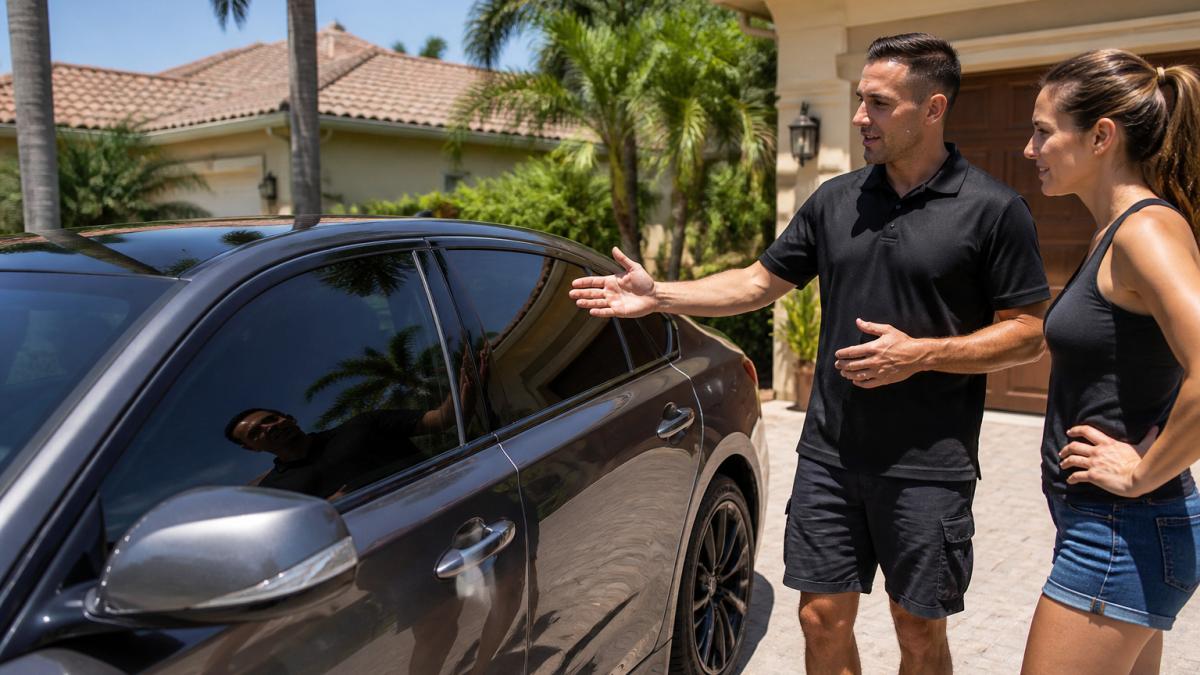
Ask about aftercare too. Learn how long window tint lasts and what to expect over its lifespan. Proper curing time after installation, safe cleaning methods, and the signs of a failing film are all details a good local installer will explain before you leave. Your installer's willingness to answer these questions tells you a lot about the service you will receive.
How to Choose a Window Tinting Company You Can Trust
Here is a practical vetting process you can run in about 20 minutes per installer, whether you are comparing a local shop, a chain, or a mobile installer.
1. Verify the film specification, not just the brand. Ask for the film's product line and its published specifications: visible light transmission (VLT), total solar energy rejected (TSER), ultraviolet (UV) rejection, and infrared (IR) rejection. A reputable installer will share the manufacturer's spec sheet. If a quote names only a brand and a price, ask which product line and request the spec sheet in writing.
2. Confirm installation experience with your specific job. A shop that mostly tints vehicles may not be the right fit for a home with arched or double-pane windows. Ask how many jobs like yours they complete in a typical month, and ask to see photos of comparable work, same window type, same film line.
3. Get the warranty terms in writing before you book. Ask what the warranty covers (bubbling, peeling, discoloration, adhesive failure), how long it runs, whether it is prorated, whether labor is included, and who honors it if the shop closes or changes ownership. A manufacturer-backed warranty and a shop-backed warranty are not the same thing. Request the written terms, not a verbal summary.
4. Check credentials and business history. Confirm the business is licensed and insured as required for work in your area, and ask how long it has operated under the current ownership. Reviews are useful, but read the negative ones first, how a shop responds to a complaint tells you more than a five-star average.
5. Compare quotes on equal terms. Ask each provider to quote the same film line, the same window count, and the same scope, including old-film removal if you have existing tint. A quote that looks low may use a lower-grade film, skip removal, or exclude labor from the warranty. Put the quotes side by side and compare line items, not just totals.
6. Ask how the work will be done. Reputable installers explain their cleaning, cutting, and application process, how they handle dust and contamination, and what curing time to expect. They will also tell you honestly if a film is not the right fit for your windows, for example, if a pane is double-pane and the film could affect the seal, or if a very dark film would violate local rules for your vehicle.
Automotive, Residential, Commercial & Marine Window Tinting Services has served South Florida since 1995 and has a 4.7 rating across 138 reviews. Use that same standard, documented history, written specifications, and a portfolio of comparable work, when you vet any installer, local or national.
Window Tint Percentage Guide: Matching Darkness to Your Needs
Tint darkness is usually described by visible light transmission (VLT), the percentage of visible light that passes through the film. A lower percentage means a darker appearance and more privacy, while a higher percentage keeps more natural light in the room.
For a home, many owners prefer lighter films that reduce heat and glare without making rooms feel closed in. Compare film options for cars, homes and boats to see how each darkness level suits your needs. For a vehicle, the right darkness depends on privacy needs, personal preference, and local rules. Always confirm the legal limits for your vehicle before choosing a shade, because requirements differ by state.
Professional vs. DIY Window Tinting: Where the Risks Sit
Do-it-yourself film kits are available, but they carry risks. Dust, air bubbles, and poor edge sealing are common problems, and a mistake can be difficult to correct. Professional installers have the tools, the clean environment, and the experience to avoid these issues.
Watch out: DIY installs often look acceptable at first, then fail within months as edges lift or bubbles form, leaving you to pay for removal and reinstallation.
Local Laws, Florida Heat and Getting Your Quote
South Florida's sun is intense, and film choice should reflect that. See which tint film performs best in Florida's climate. Ask your installer which film type fits your windows and exposure. Before you commit, confirm the state tint regulations that apply to your vehicle, since rules vary by window and by vehicle type.
When you request a quote, provide the vehicle make and model, the number of windows, and any specific goals such as heat reduction, privacy, or UV protection. Pricing depends on the film type, the size of the job, and the scope of work. Contact Automotive, Residential, Commercial & Marine Window Tinting Services to request a quote tailored to your project.
Booking Your Local Window Tint Appointment
Booking with a local shop is usually straightforward. Call or request a quote online, describe what you need, and confirm the appointment time and any preparation steps. Automotive, Residential, Commercial & Marine Window Tinting Services offers same-day auto window tinting.
Before the appointment, clean the glass where possible and clear the area around the windows. Ask about the expected curing time so you know how to care for the film during the first few days.
Frequently Asked Questions
What are the advantages of tinting car windows?
Window tint reduces the amount of UV light and solar heat entering the cabin, which helps slow interior fading on dashboards and seats and can make the car more comfortable to enter on hot afternoons. Tint also adds privacy and reduces glare while driving. Benefits depend on the film type and shade you choose, so ask your installer which film fits your windows and your daily driving conditions before you book.
Is local window tinting better than using a national chain?
Ask any installer, local or national, how you can reach them after the job if a film edge lifts or a warranty question comes up. National chains can offer wide availability, but service quality can vary by location. Compare both on warranty terms, reviews and how clearly they explain their quote.
What should I ask a window tint installer before booking?
Ask what film brand and type they use, whether the warranty covers peeling, bubbling and color change, and who handles warranty claims. Confirm how long the installation takes and whether your vehicle or home will be affected. Request a written quote that lists the film, the shade and any extra fees. Ask to see completed local work so you can judge the finish before you commit.
Is professional window tinting better than DIY?
DIY kits cost less up front, but film can be difficult to cut and seat without wrinkles, and mistakes can be costly to remove. For most drivers, professional installation is the lower-risk choice.
Choosing a local window tinting company gives you a partner you can reach, a warranty you can actually use, and an installer who understands South Florida conditions. Request a quote from Automotive, Residential, Commercial & Marine Window Tinting Services to discuss the right film for your vehicle, home, commercial property, or boat.