 how-to
7 Window Tint Film Care Steps That Prevent Peeling
Last Updated: November 2, 2026
Quick Summary
To maintain window tint film, let it cure for three to seven days in warm weather before cleaning, then use only a soft microfiber cloth with mild soap and water. Avoid ammonia, alcohol, and abrasives, and never scrub or press hard on the film.
- Wait at least a week after installation before the first cleaning of your tint.
- Small water pockets and light haze are normal during the first week of curing.
- Rear defroster lines should be wiped parallel to the lines with very light pressure.
- Most aftermarket film warranties exclude scratches from cleaning tools and ammonia-based cleaners.
- Wipe tinted glass weekly with a dry microfiber cloth and clean monthly with mild soap.
Table of Contents
- How Long Window Tint Takes to Cure Before You Touch It
- How to Clean Tinted Windows Without Scratching the Film
- Choosing a Window Tint Safe Cleaner: Ingredient Check
- How to Fix Peeling Window Tint: What You Can and Cannot Do
- Care Instructions by Film Type
- Long-Term Prevention and Inspection Schedule
- What to Ignore: Common Bad Advice About Window Tint Film
- Booking a Professional Tint Inspection
- Frequently Asked Questions
How Long Window Tint Takes to Cure Before You Touch It
Learning how to maintain window tint film starts with patience, not cleaning products. Fresh adhesive needs time to bond to glass, and touching it too soon is the fastest way to trap debris under the film.
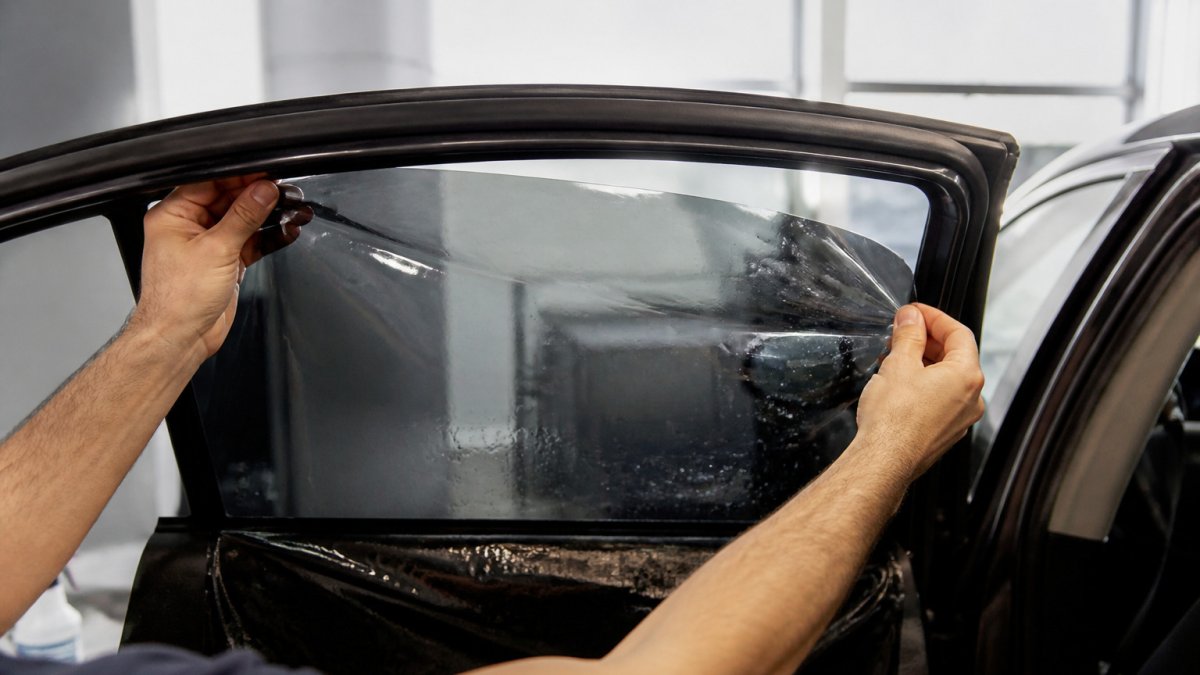
Curing is the process of the adhesive drying and bonding to the glass after installation. During this window, the film is fragile. Moisture sits trapped under the surface, and the edges haven't sealed yet.
Curing Timelines by Weather and Installation Conditions
Most tint film needs about three to seven days to cure in warm, dry weather. Cooler or humid conditions stretch that to two weeks or more. South Florida heat usually speeds things up, but afternoon humidity can slow the process at the edges.
- Hot, dry days: 3-5 days before washing
- Humid or rainy stretches: 7-14 days
- Cooler months: up to 2-3 weeks
Park in direct sun when you can. Heat helps the adhesive set. Skip the car wash, and keep the windows up.
Defects Versus Normal Curing: What to Expect
Small water pockets, light haze, and tiny bubbles are normal in the first week. They usually clear on their own as moisture evaporates through the film. A common mistake is poking at these spots to "fix" them.
Real defects look different:
- Bubbles that stay put after two weeks
- Lifting or peeling at the film edges
- A milky, cloudy look that never fades
If you spot these, call your installer before you touch anything. Warranty coverage varies by film maker and installer, so check your paperwork.
How to Clean Tinted Windows Without Scratching the Film
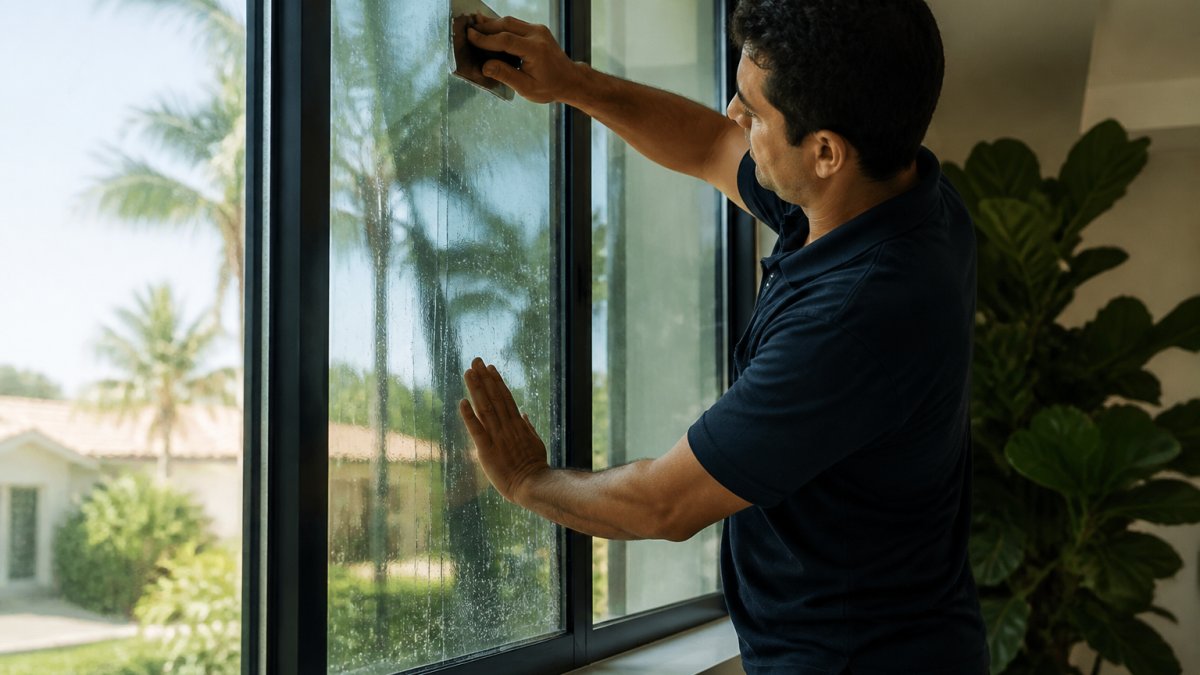
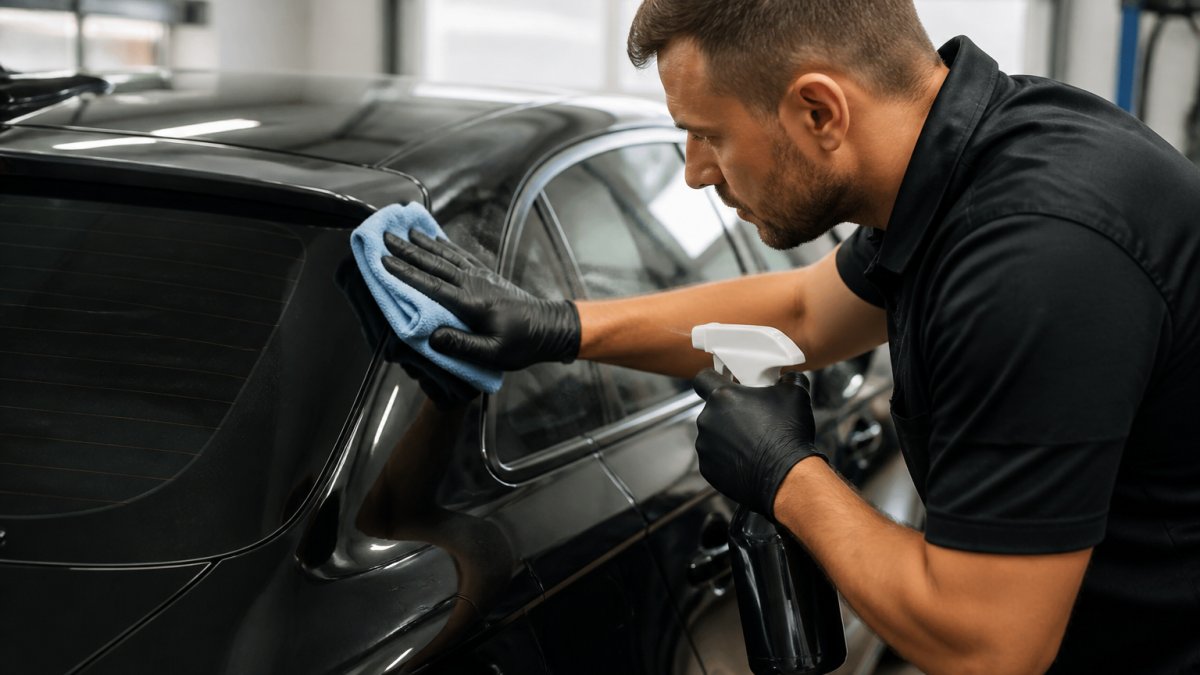
The safest way to clean tinted windows is a soft microfiber cloth, a mild soap and water mix, and light pressure. No ammonia, no paper towels, no scrubbing.
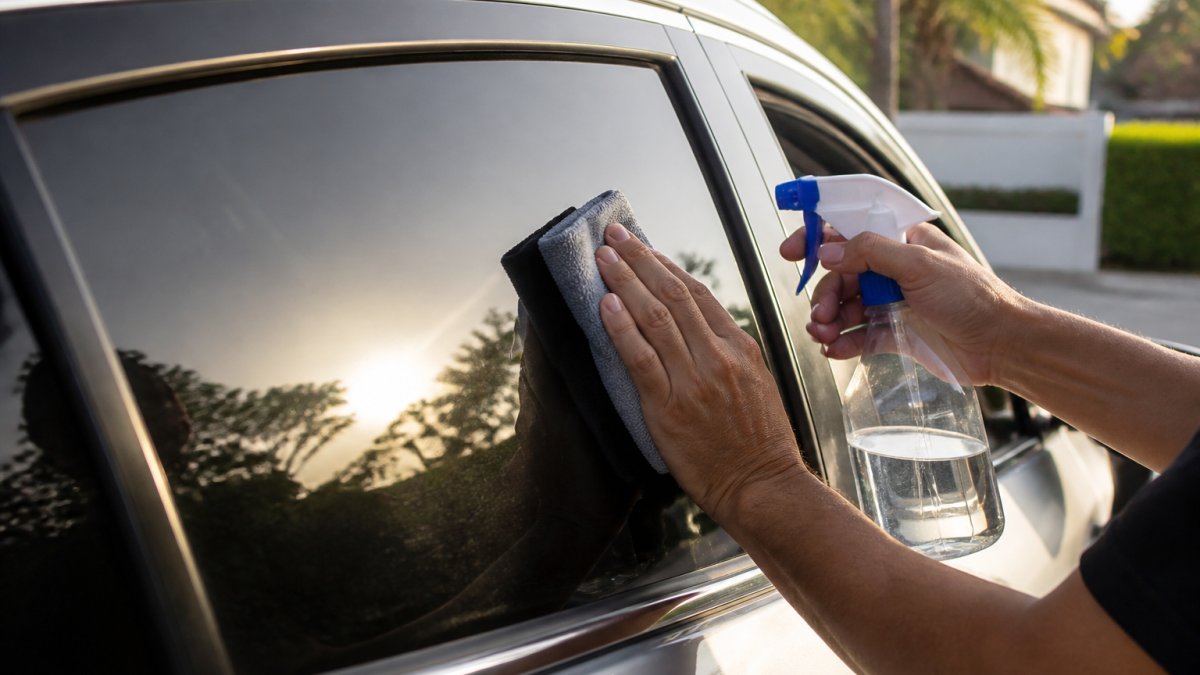
Here is the routine we recommend to every customer:
- Wait for full cure. Give the film at least a week before the first cleaning.
- Mix a mild solution. A few drops of gentle dish soap in a spray bottle of water works fine.
- Spray lightly. Dampen the glass, don't soak it.
- Wipe with a microfiber cloth. Use straight, gentle strokes.
- Dry with a second clean cloth. Avoid letting water sit at the edges.
- Rinse and repeat only if needed. One pass usually does it.
Watch out: pressing hard to remove a stubborn spot is how most scratches happen. Soften the spot first, then wipe again.
Safe Cleaning of Interior Components and Defroster Lines
The inside of your windows needs extra care. Rear defroster lines are thin conductive strips, and scrubbing them can break the connection. Wipe parallel to the lines, never across them, and use very light pressure.
For interior trim and dashboard surfaces, a damp microfiber cloth is enough. Keep cleaners off the film edges, where liquid can work its way under the adhesive.
Choosing a Window Tint Safe Cleaner: Ingredient Check
A window tint safe cleaner is any product free of ammonia, alcohol, and abrasives. Read the label before you spray. Ammonia is the biggest offender, and it's in most blue glass cleaners on the shelf.
Check for these ingredients to avoid:
- Ammonia and ammonia-based glass cleaners
- Abrasives like baking soda or powdered cleansers
- Acids, including vinegar in strong concentrations
A simple mix of mild soap and water remains the safest choice. Many installers also suggest a diluted isopropyl alcohol and water mix for tough spots, applied with a soft cloth, per Rapid Window Tinting's 2026 care guide.
The FTC's guidance on product claims is a useful reminder that "tint safe" on a label is a marketing claim, not a guarantee. The ingredient list tells the real story.
How to Fix Peeling Window Tint: What You Can and Cannot Do
Peeling tint is rarely a DIY fix. Once film lifts at the edge, dirt gets underneath and the adhesive loses its grip. Pressing it back down might hold for a day, but it won't last.
What you can do:
- Stop touching the lifted edge
- Keep the area dry and clean
- Note when the peeling started
What you cannot do is re-glue a lifted edge with household adhesive. It leaves a residue that makes a proper repair harder. If the peeling comes from an installation defect, most warranties cover a redo.
Symptom Guide: Wait, Watch, or Call the Installer
Most tint problems fall into three buckets. Use this guide before you touch anything.
| Symptom | Normal Curing (wait) | Watch (document) | Defect (call installer) |
|---|---|---|---|
| Light haze | First 7-14 days | Fades slowly after 2 weeks | Milky look persists past 30 days |
| Small water pockets | First 7-14 days, especially in cool weather | Shrink but don't clear by day 21 | Pockets grow or merge after 2 weeks |
| Bubbles | Tiny specks in first week | Stay same size past day 14 | Grow, or appear along edges after cure |
| Edge lift | None, never normal | Lift under 1/8 inch that stops | Lift spreads, or film curls back |
| Scratches | None, never normal | Faint swirls from cleaning | Deep scratches or creases from install |
| Discoloration | Slight color shift in first month | Purple/brown tint after 2-3 years | Patchy fading within warranty period |
A common pattern is that genuine installation defects show up at the edges first, while cleaning damage shows up in the middle of the glass where pressure was applied. If you can't tell which you're looking at, photograph the area with a date reference before you call.
Warranty Mechanics: What's Usually Covered
Most aftermarket film warranties run from the film maker, not the shop, and they typically cover:
- Bubbling, blistering, or delamination not caused by physical damage
- Peeling or edge lift from adhesive failure
- Color shift or fading beyond a stated threshold
They typically exclude:
- Scratches from cleaning tools or abrasives
- Damage from ammonia-based or solvent cleaners
- Peeling caused by rolling windows down during cure
Watch out: warranty terms vary by film brand and by installer, and some shops offer their own labor warranty on top of the film maker's coverage. Keep your installation receipt and the film maker's care sheet, most claims require both. If your installer can't produce the film's warranty document, ask why before you book.
Care Instructions by Film Type
Different films need slightly different care. If you're unsure which film you have, ask your installer.
Most care guides treat all tint as identical. It isn't.
| Film Type | Construction | Cleaning Need | Watch For | Manufacturer Guidance Varies On |
|---|---|---|---|---|
| Standard dyed film | Dye suspended in adhesive | Mild soap, water, microfiber only | Fading, color shift after 3-5 years | Some makers prohibit alcohol entirely; others allow diluted isopropyl |
| Metalized film | Thin metal layer | Ammonia-free cleaner, soft cloth | Edge corrosion, hazing at seams | Metal-layer films often carry stricter edge-drying instructions |
| Carbon film | Carbon particles, no metal | Mild soap, water | Little; mostly scratch risk | Carbon makers typically allow a wider cleaner range than dyed |
| Ceramic film | Ceramic nanoparticles | Gentle microfiber wipe, pH-neutral cleaner | Almost none; still scratches | Ceramic makers often specify pH range (commonly 6-8) on the label |
| Crystalline / high-end | Multi-layer optical film | Mild soap, water, no solvents | Harsh chemicals, abrasion | Premium films frequently require installer-applied top coats |
| Factory tint | Dye in glass, not film | Standard glass cleaner safe | Scratch from abrasives only | No film warranty; glass-maker guidance applies |
Ceramic and high-end films hold up best to cleaning, but they still scratch. Treat every film like it's delicate.
Where manufacturer guidance actually differs. Three points cause most of the confusion:
- Ammonia. Nearly every aftermarket film maker says no ammonia, but a few metalized films tolerate it in low concentrations. Don't assume, read the sheet.
- Alcohol. Some ceramic and carbon films allow a diluted isopropyl wipe for stubborn spots; dyed films usually don't, because alcohol can pull dye from the adhesive layer.
- Edge drying. Metalized films are the most sensitive to moisture trapped at the edge, and several makers specify blotting rather than air-drying the perimeter.
Watch out: a cleaner labeled "tint safe" is a marketing claim, not a film-specific guarantee.
Long-Term Prevention and Inspection Schedule
A simple schedule keeps tint film healthy for years. How long tint film should realistically last depends on film type and care. Film lifespan depends on film type and care.
- Weekly: quick dust wipe with a dry microfiber cloth
- Monthly: full clean with mild soap and water
- Seasonally: check edges for lifting or bubbles
- Yearly: inspect for scratches, fading, or discoloration
Park in shade when possible to slow UV wear. Avoid rolling windows down on dirty tracks, since grit grinds against the film edge.
What to Ignore: Common Bad Advice About Window Tint Film
Plenty of online tips will ruin your tint. Skip these:
- "Use vinegar to cut grime." Strong acids can damage the film coating.
- "Newspaper works great." The ink and fibers scratch.
- "Roll windows down right after install." The edges haven't sealed.
- "Scrub hard to remove spots." Pressure causes swirls and scratches.
If a tip sounds aggressive, it probably is. Gentle and patient wins every time.
Booking a Professional Tint Inspection
Some problems are worth a professional look. If you see persistent bubbles, lifting edges, or scratches you can't explain, an inspection settles it fast. Contact us to request a quote and get a straight answer.
Frequently Asked Questions
How soon can you clean windows after tinting?
Wait at least three to seven days after installation before cleaning newly tinted windows. In cooler or humid weather, the film may need up to two weeks to cure fully. During this time, keep windows rolled up and avoid wiping the glass. Once the film is fully adhered with no water pockets or haze, you can clean gently with a microfiber cloth and an ammonia-free cleaner. If you are unsure whether your window tint film has finished curing, ask your installer before you touch it.
Which cleaners are safe for window tint film?
Use a window tint safe cleaner that is ammonia-free and alcohol-free. A mixture of mild soap and water works well for routine cleaning. Avoid glass cleaners that contain ammonia, vinegar, or abrasive particles, since these can break down the adhesive and cause discoloration over time. Always spray onto your cloth rather than directly onto the film, and wipe gently to protect the edges.
How do you fix peeling window tint?
Small lifts at the edge can sometimes be pressed back with a soft squeegee, but most peeling indicates an adhesive failure that will return. Do not use glue or tape, which can damage the film and void your warranty. For how to fix peeling window tint properly, take the vehicle to a professional installer. They can assess whether the film can be re-seated or needs replacement. Check your paperwork for any warranty coverage before paying for a fix.
How can you tell whether window tint is still curing?
During curing, you may see small water pockets, light haze, or tiny bubbles near the edges. These are normal and typically clear within one to two weeks, longer in cool or humid conditions. What is not normal: large bubbles that grow, film that lifts at the edges, or a milky haze that persists past three weeks. If you see those signs, contact your installer. Knowing how long window tint takes to cure helps you tell the difference between normal drying and a defect that needs professional attention.
Maintaining window tint film comes down to patience, the right products, and knowing when to call a pro. At Coral Tint, we've served South Florida since 1995 with same-day auto tinting, precision-cut films, and a nationwide lifetime warranty. Our team handles automotive, residential, commercial, and marine projects, and first responders and military members get a discount. Get started with Coral Tint and request a quote to keep your tint looking new for years.