 Comparison
Are Window Film Alternatives Worth It in South Florida?
Last Updated: November 6, 2026
Quick Summary
Window film alternatives such as solar shades, exterior solar screens, low-E glass and tinted impact windows can outperform film in South Florida, depending on your goal. Exterior screens block heat before it reaches the glass, while shades keep the view and let you adjust light. Matching the option to each window's main problem works best.
- Exterior solar screens block heat before it reaches the glass.
- Solar shades let you control light and keep a clear view.
- Film can lose nighttime privacy when interior lights are on.
- Replacing glass makes sense when windows are already being replaced.
- Compare SHGC, VLT and UV figures on the same basis before deciding.
Table of Contents
- Why South Florida Homeowners Look for Window Film Alternatives
- Solar Shades: Blocking Sun While Keeping the View
- Exterior Solar Screens: Stopping Heat Before It Reaches the Glass
- Window Film Options: Heat, Glare, Privacy and UV Compared
- Choosing the Right Coral Tint Film for Your Home
- Window Film Cost: What Changes the Price
- Choosing the Right Option for Your Home, Car or Building
- Frequently Asked Questions
Why South Florida Homeowners Look for Window Film Alternatives
Window film, whether ceramic, carbon or dyed, is the usual answer to South Florida's relentless sun, but it is not the only one. At Automotive, Residential, Commercial & Marine Window Tinting Services, we hear the same question from homeowners: is a film alternative a better fit for my home? The short answer is that it depends on what you are trying to fix, whether that is heat, glare, privacy, or fading.
Window film alternative options include solar shades, exterior solar screens, low-E glass, and tinted impact windows. Each one handles heat and light differently, and each comes with trade-offs. Most homeowners who look past film are trying to keep the view, avoid a darkened room, or get more protection than a film can give.
This guide compares those options side by side. We cover what each one does well, where it falls short, and what to weigh before you choose.
Solar Shades: Blocking Sun While Keeping the View
Solar shades are an interior covering that cuts incoming sunlight while letting you see outside. Unlike film, they can be raised or lowered, so you control how much light comes in at different times of day. They also allow partial view retention.
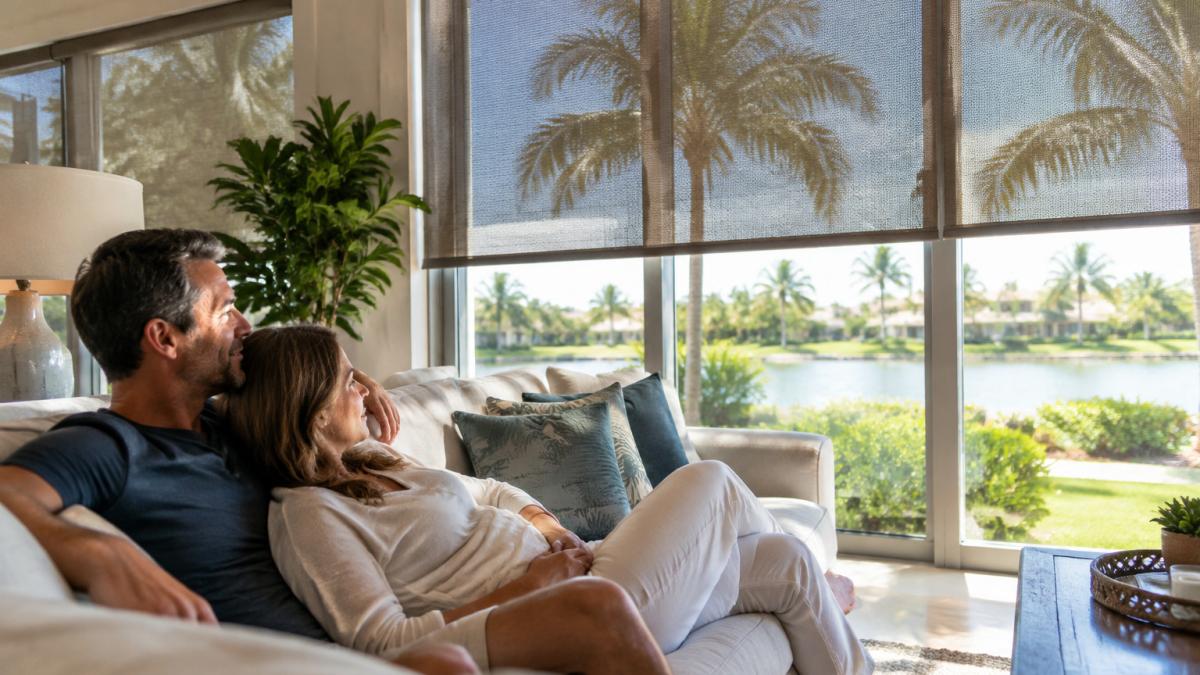
The main limitation is that shades sit inside the glass, so they block heat only after it has already entered the window. Exterior solutions stop more of it before it reaches the glass.
Our take: shades can work well in rooms where you want flexibility and a clear view, such as living rooms with a water or landscape outlook. But because shades sit inside the glass, heat has already entered before they block it. Coral Tint's ceramic, carbon and dyed window film blocks heat at the glass itself, so it stands as the primary solution for rooms that take the worst afternoon heat, with shades as an optional layer on top.
Exterior Solar Screens: Stopping Heat Before It Reaches the Glass
Exterior solar screens mount outside the window and intercept sunlight before it hits the glass. Because the heat is blocked at the surface, indoor temperatures tend to stay lower than with interior treatments alone.
A common mistake is choosing screen openness based on privacy alone. Openness levels vary: a tighter weave blocks more heat but reduces the view. Tighter screens block more direct sun, while more open weaves keep more of the view.
Screens do need maintenance. They collect dirt, can be damaged by storms, and must be installed to fit your windows and local requirements.
Window Film Options: Heat, Glare, Privacy and UV Compared
Window film comes in different types, and each one handles heat, glare, privacy and UV differently. Coral Tint offers ceramic film, carbon film and regular (dyed) tint, so the right choice depends on which of these matters most in your home.
Here is how the three film types compare on the main factors:
| Factor | Ceramic Film | Carbon Film | Regular (Dyed) Tint |
|---|---|---|---|
| Heat reduction | Strong, blocks the most heat | Good, solid heat rejection | Moderate, less heat rejection than ceramic or carbon |
| Glare control | Strong | Good | Good |
| Daytime privacy | Good, depends on shade selected | Good, depends on shade selected | Good, depends on shade selected |
| Nighttime privacy | Limited, like most films | Limited, like most films | Limited, like most films |
| UV protection | Strong | Strong | Moderate |
Ceramic film gives the strongest heat and UV protection and will not interfere with radio, cell or GPS signals. Carbon film offers solid heat rejection with a matte finish that resists fading. Regular (dyed) tint is a straightforward option for glare control and daytime privacy. Many homeowners pair ceramic film on the sunniest windows with carbon or dyed tint elsewhere in the home.
For a deeper look at privacy, our guide on window tinting for privacy at home covers the trade-offs in more detail, and does window tinting block UV rays explains what film can and cannot filter out.
Choosing the Right Coral Tint Film for Your Home
If heat and UV protection matter most, ceramic film gives the strongest performance. If you want a more affordable option that still helps with glare and daytime privacy, regular (dyed) tint is a good fit. Carbon film sits in between, with solid heat rejection and a finish that will not fade.
Coral Tint can walk through which film type best matches your windows, budget and goals before you decide, so you are not guessing which option fits your home.
Window Film Cost: What Changes the Price
Cost is where most quotes differ, because our film options are not priced the same way. Ceramic film, carbon film, and regular (dyed) tint are each priced on a different basis, so compare quotes for the specific film type before deciding.
A useful way to think about it is in tiers rather than exact numbers. Pricing depends on your window count, sizes, glass type, access, and product line, so request a written quote for your home rather than relying on general averages.
The factors that move price the most:
- Number of windows and their size, since ceramic film, carbon film, and regular (dyed) tint are all priced per opening or per square foot of glass.
- Film type, since ceramic, carbon, and regular (dyed) tint carry different material costs and offer different levels of heat rejection and UV protection.
- Glass type and whether it can accept film, since some coated, insulated, or laminated panes require a different product or are not recommended for film at all.
- Impact or storm ratings, which add product testing, labeling, and sometimes permitting to the cost of glazing.
- Installation complexity and access, including second-story windows, screened enclosures, and furniture or landscaping that must be moved.
Long-term value is not the same as upfront cost. Ask our team what the expected service life is for each film type, what the warranty covers, and what maintenance is required, then compare total cost over that service life rather than the first invoice.
Request a quote from our team for current pricing on your home or vehicle. We will walk through the options and explain the cost differences for your situation.
Choosing the Right Option for Your Home, Car or Building
Start with the problem you want to solve, then match the solution to each window rather than picking one approach for the whole house. The matrix below is the practical version of that advice.
| Room or window type | Primary problem | Best-fit film type | Why |
|---|---|---|---|
| Living room with a water or landscape view | Glare and heat without losing the view | Ceramic film | Low-VLT ceramic film cuts heat and glare while staying clear enough to preserve the view |
| West- or south-facing bedroom | Afternoon heat and early-morning glare | Carbon or ceramic film | Both block heat at the glass before it reaches the room, with ceramic offering the strongest heat rejection |
| Bathroom or street-facing window | Daytime privacy and glare | Dyed (regular) tint | A darker dyed tint reduces visibility into the room during the day and softens glare |
| Home office | Screen glare and fading | Ceramic film | Cuts glare and blocks UV without darkening the room too much |
| Rental or historic home | Reversible, low-damage improvement | Removable film | No permanent change to the glass or frame |
Nighttime privacy deserves its own note. Daytime-reflective films work because the outside is brighter than the inside. After dark, that relationship flips, and a film that looked private at noon can look transparent from the street. If nighttime privacy is the goal, ask our team which film option best suits your needs and test it at night before committing to a whole-house installation.
Performance metrics are the other half of choosing well. Ask for the solar heat gain coefficient (SHGC), visible light transmission (VLT), UV rejection, and glare-reduction figures for any product you consider, and compare them on the same basis. A lower SHGC means less solar heat enters; a lower VLT means a darker room. A lower SHGC means less solar heat enters, and a lower VLT means a darker room, so the right balance depends on whether daylight or heat control matters more in each space. Across our ceramic, carbon and dyed (regular) tint options, ceramic typically delivers the lowest SHGC without darkening the glass, carbon sits in the middle on both heat rejection and cost, and dyed tint is the most economical choice when glare and privacy matter more than heat performance.
Watch out: choosing based on darkness alone. A darker film can cut your view and natural light more than you expected, so test our ceramic, carbon and dyed options before committing to the strongest one.
Matching the solution to each window, rather than picking one approach for the whole house, is a practical starting point. Our team at Automotive, Residential, Commercial & Marine Window Tinting Services can assess your windows and help you choose.
Stop guessing which option will keep your home cooler. Request a quote from Automotive, Residential, Commercial & Marine Window Tinting Services and get a clear recommendation for your windows.
Frequently Asked Questions
What types of window film does Automotive, Residential, Commercial & Marine Window Tinting Services offer?
We install ceramic film, carbon film and dyed (regular) tint. Ceramic film delivers the strongest heat and UV rejection without darkening the glass as much as the other options. Carbon film sits in the middle on heat rejection and cost. Dyed tint is the most economical choice when glare reduction and privacy matter more than heat performance. Our team can recommend the right film for each window based on its exposure and your priorities.
Which window film cuts the most heat?
Ceramic film generally rejects the most solar heat because of its coating, followed by carbon film, with dyed tint offering the least heat rejection of the three. The right choice depends on how much heat control you need balanced against cost and how dark you want the glass. Ask our team for the SHGC and VLT figures for each film so you can compare them directly.
Can window film reduce heat without darkening my view?
Yes. Ceramic film has a low solar heat gain coefficient while keeping visible light transmission high enough to preserve the view, which is why it is often the best fit for rooms with a water or landscape view. Carbon and dyed tint also cut glare, but typically darken the glass more for the same level of heat rejection.
How do I compare the cost of ceramic, carbon and dyed window film?
Pricing depends on the film type, the size of your project and the number of windows involved. Ceramic film costs more upfront but delivers the highest heat rejection and UV protection per window. Carbon and dyed tint cost less and still reduce glare and fading. Request a quote directly from Automotive, Residential, Commercial & Marine Window Tinting Services for current pricing on each film type.