 Comparison
Is Professional Car Window Tinting Worth the Cost?
Quick Summary
Professional car window tinting cost depends mainly on film type, vehicle size, and how many windows are covered. Dyed film is the cheapest option, while ceramic and nano-ceramic film cost more but offer stronger heat rejection. Always compare itemized quotes covering the same windows and warranty.
- Dyed film generally installs for $50 to $250 and mainly reduces glare.
- Ceramic film typically installs for $150 to $550 with the highest heat rejection.
- Ask for the film's spec sheet, checking VLT, IR rejection, and TSER numbers.
- Confirm in writing whether the rear windshield and quarter windows are included.
- Request removal of old film as a separate line item in the quote.
Table of Contents
- What Professional Car Window Tinting Typically Costs
- Price Ranges by Film Type: Dyed, Carbon, and Ceramic
- How Much Does It Cost to Tint a 4 Door Car?
- What Drives the Final Quote: Vehicle Size, Window Count, and Labor
- Car Window Tint Cost Calculator: Building Your Own Estimate
- Car Window Tint Removal Cost and Replacing Old Film
- Booking Your Install: What to Ask for in an Itemized Quote
- Frequently Asked Questions
What Professional Car Window Tinting Typically Costs
Pricing for professional car window tinting depends on film type, vehicle size, and how many windows are covered. Local shops and chains quote differently, so treat any published figure as a general reference rather than a promise. Our team at Automotive, Residential, Commercial & Marine Window Tinting Services in Coral Springs can give you a quote for your specific vehicle.
A low quote is not automatically a bargain, and a high quote is not automatically a premium product.
Before comparing numbers, make sure every quote covers the same scope. Check whether it includes the film, the labor, the number of windows, and any warranty. Our book a professional window tinting consultation walks through what a complete quote should contain.
Price Ranges by Film Type: Dyed, Carbon, and Ceramic
Film type is the biggest lever on what you pay, but the label alone does not tell you what you are buying. Look at the film specification, not only the label.
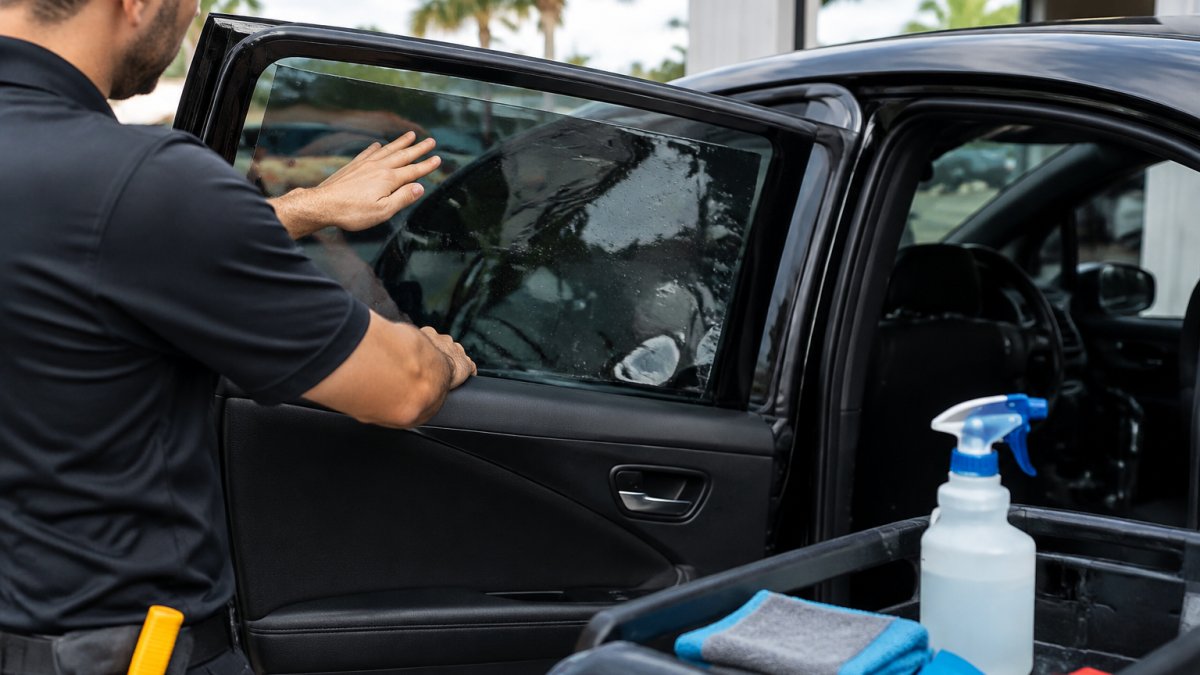
Ceramic and nano-ceramic films are often chosen for their heat rejection, which can be valuable for a car that sits in direct sun. Dyed film is generally the more budget-oriented choice, and it blocks glare well but does less for heat.
What the Film Labels Actually Mean
Three specifications separate a $180 job from a $650 job, and every reputable shop can quote them for the film it installs:
- Visible light transmission (VLT): the percentage of visible light that passes through the film. A 35% VLT film lets in 35% of visible light; a 5% VLT film is nearly opaque. State tint laws set the legal minimum VLT for front side windows, so confirm the limit before you choose a shade.
- Infrared (IR) rejection: the share of invisible heat energy the film blocks. Ceramic films commonly advertise high IR rejection, which is why they cost more than dyed film even at the same VLT.
- Total solar energy rejected (TSER): the combined share of all solar energy, visible, infrared, and ultraviolet, that the film keeps out. TSER is the fairest single number for comparing films, because a film can post a strong IR number and still underperform on total heat.
Two films with the same VLT and similar IR claims can still differ meaningfully in TSER, which is why you should ask for the spec sheet rather than the marketing name.
Dyed, Carbon, and Ceramic Compared
| Film Type | Typical Installed Range | Main Strength | Main Trade-off |
|---|---|---|---|
| Dyed | $50 - $250 | Lowest cost, reduces glare | Fades and turns purple sooner; weakest heat rejection |
| Carbon | $100 - $450 | Good heat rejection, no metallic look | Mid-tier performance; fewer high-TSER options |
| Ceramic | $150 - $550 | Highest heat rejection, best clarity | Highest upfront price; not all ceramic films are equal |
| Nano-ceramic | $400 - $800+ | Top-tier IR and TSER numbers | Premium price; verify the spec sheet, not the badge |
Ask for the film's specification sheet and the warranty terms in writing before you approve any job.
Choosing the right film depends on your vehicle and priorities. Our guide to how to choose window tint film for your car, home or boat compares the options side by side.
How Much Does It Cost to Tint a 4 Door Car?
A four-door sedan has more glass than a coupe, so coverage and window count matter when comparing quotes. The exact figure depends on film type and whether the rear glass is included. The reason four-door vehicles get their own question is glass count: front doors, rear doors, and the rear windshield all add labor, and each side window takes time to cut and fit cleanly.
A Coverage-Based Price Matrix
Most quotes are built from coverage, not from a single whole-car number. The matrix below crosses vehicle size with the four coverage options shops most often sell. Ranges reflect dyed through ceramic film; add for premium ceramic and subtract for dyed-only work.
| Vehicle Size | Front Two Windows | Full Sides + Rear | Full Car (Sides + Rear) | Windshield |
|---|---|---|---|---|
| Coupe / compact | $60 - $140 | $120 - $260 | $150 - $350 | $150 - $300 |
| Sedan (4-door) | $70 - $160 | $140 - $300 | $180 - $400 | $150 - $300 |
| Mid-size SUV | $80 - $180 | $160 - $340 | $220 - $480 | $180 - $350 |
| Large SUV / truck | $90 - $200 | $180 - $380 | $250 - $550 | $200 - $400 |
| Minivan | $90 - $200 | $180 - $380 | $250 - $550 | $200 - $400 |
Full Car (Sides + Rear)
These ranges are directional, not quoted prices. They are built from the film ranges above and the common per-window labor pattern most shops use, and they are meant to help you sanity-check a quote before you approve it. A shop that quotes far below the low end of the matrix is usually leaving something out, removal, the rear windshield, or a warranty.
What Counts as a Window
Coverage language varies by shop, and that is where quotes stop being comparable. Ask whether the quote counts the rear windshield as a separate item, whether the small quarter windows behind the rear doors are included, and whether a windshield strip is priced as part of the windshield or as its own line.
Confirm the window list in writing before you compare two quotes side by side.
Our team at Automotive, Residential, Commercial & Marine Window Tinting Services can provide a quote that lists each window before any work begins.
What Drives the Final Quote: Vehicle Size, Window Count, and Labor
Several factors move most quotes, including vehicle size, the number of windows, and film type. A large SUV with more glass takes longer to film than a compact coupe.
Labor deserves its own attention. A clean installation depends on careful technicians who clean the glass thoroughly and cut film precisely. Rushed work can show up later as peeling or haze.
Window count also affects the final number. A windshield-only tint or a rear-only tint generally costs less than a full-car job.
Car Window Tint Cost Calculator: Building Your Own Estimate
You can build a rough estimate yourself before you call anyone. Start with the film type, then count the windows you want covered. This gives you a starting point for discussing your options, not a final price.
Here is a simple way to structure the estimate:
- Pick your film type: dyed, carbon, or ceramic.
- List each window: front doors, rear doors, rear side windows, and rear windshield.
- Decide whether you want a windshield strip, and ask whether it is priced separately.
- Add up your line items and compare them against the written quote you receive.
Keep in mind that calculators can only estimate. Actual quotes depend on your vehicle, your film choice, and local labor rates.
Car Window Tint Removal Cost and Replacing Old Film
If you already have tint that is bubbling, peeling, or turning purple, removal is usually a separate step. Ask for removal as a separate line item in writing.
Replacing old film involves both removal and new installation. Request a separate quote for removal so you can see each cost.
Film lifespan matters here. Knowing how long a given film should last helps you decide whether replacing it is worth the cost. Our article on how long window tinting lasts covers typical film lifespans, and our film care steps that prevent peeling can help you get more years from a new install.
Booking Your Install: What to Ask for in an Itemized Quote
A useful quote lists every cost separately: film type, each window, removal if needed, and any warranty. Ask whether the price includes the film, labor, and cleaning. Ask what the warranty covers and for how long. A quote that bundles everything into one number makes comparison difficult.
Local shops have advantages over national chains for this kind of service. You can see the work in person, ask questions directly, and return if something needs adjustment. If you are weighing options, our piece on why choosing local window tinting beats a chain shop explains the trade-offs.
Our team at Automotive, Residential, Commercial & Marine Window Tinting Services offers a nationwide lifetime warranty, same-day auto window tinting, and a first responder and military discount. Ask for an itemized quote and request your appointment.
Frequently Asked Questions
How much does professional car window tinting cost? Professional car window tinting typically ranges from $150 to $900, with most drivers paying $250 to $600. Film type and vehicle size are the main factors.
Is ceramic tint worth the extra cost? Ceramic film generally costs more than dyed or carbon film but offers stronger heat rejection. Its value depends on how much heat your vehicle absorbs.
Does the cheapest tint last? Lower-cost installations can fail sooner because of weaker film and less careful labor. Compare warranties and film specifications, not only the price.
Frequently Asked Questions
How much should a full car tint cost?
A full professional car tint depends on vehicle size, the number of windows, and the film type chosen. Ceramic film generally costs more than dyed film because of its heat rejection performance. Ask for an itemized quote so you can see what covers film, labor and any old film removal before you commit.
Is professional window tinting worth it?
Professional tinting is worth it when the goal is measurable: reducing interior heat, limiting UV exposure that fades upholstery and dashboards, and cutting glare while driving. Ceramic and carbon films retain their performance over years, while cheap dyed film can bubble or turn purple. Weigh the upfront cost against how long you plan to keep the vehicle. Over several years, the cost per year is often modest for a film that stays clear and intact.
How much does it cost to tint a four-door car?
A four-door sedan usually costs more to tint than a two-door coupe because it has additional rear side windows. Sedans and SUVs often cost more to tint than smaller vehicles because they have more glass. Film type and whether the windshield is included also move the total. Request a quote that lists each window separately so you can compare the cost of each option.
Does removing old window tint add to the installation cost?
Yes. Removing old film takes additional labor, so ask whether removal is billed separately from a new installation. Poorly installed or aging film can be harder and more time-consuming to remove, which can increase the quote. Ask whether the removal is included in the price or added as a line item, and confirm the shop will check the glass for residue before the new film goes on.